dsh-wall-mcp-manager
Run the following command in DeepSeek Harness:
dsh plugin install sduwall/dsh-wall-mcp-manager
Paste the following prompt into your AI chat to install this plugin:
Install the dsh-wall-mcp-manager plugin (source: https://github.com/sduwall/dsh-wall-mcp-manager) in DeepSeek Harness by running: dsh plugin install sduwall/dsh-wall-mcp-manager
About this plugin
Running several MCP services under a DeepSeek Harness instance can feel fragile: editing one service description tears down every other stdio child process, credentials linger in plaintext across config layers, and tool contracts are buried in source. dsh-wall-mcp-manager collapses all three problems into a single surface. Its reconcile-style mounting watches a per-instance config fingerprint, so new services connect on save, modified ones reconnect in isolation, removed ones disconnect cleanly, and untouched ones never waver. Credential fields (secretEnv, secretHeaders) are redacted at the dictionary level in every describe response; the UI can only show set or unset, guaranteeing that secrets never leave the host.
The settings page groups tools by their mcp__ prefix and renders each card with call parameters and an unpacked return schema. Shapes that resist field-level expansion (unions, $ref) fall back to the raw JSON rather than guessing. Saving triggers hot-reload; the UI polls for roughly eight seconds until the badge flips from connecting to connected with the registered tool count, or surfaces a concrete failure. A single half-filled entry or an unreachable endpoint only flags that row, never unloading the whole plugin.
Built for DSH developers juggling three or more MCP services who want centralized config, auditable credentials, and at-a-glance tool contracts. The factory default ships with an empty servers map, so installation starts no subprocess and makes no outbound call; services are added at your own pace.
Use Cases
- Centrally manage multiple MCP service configs and their lifecycle
- Inspect per-service tool parameters and return schemas in the UI
- Apply config changes instantly without restarting and observe connection status
Best For
- Developers running three or more MCP services under DSH
- Teams that need centralized MCP credential management without plaintext sprawl
- Operators who want hot-reload of MCP configs with real-time tool contract visibility
Related Plugins
A service-oriented sidebar framework for DSH, offering a full workbench with file explorer, embedded browser, real terminal, Git panel, and extensible plugin services.
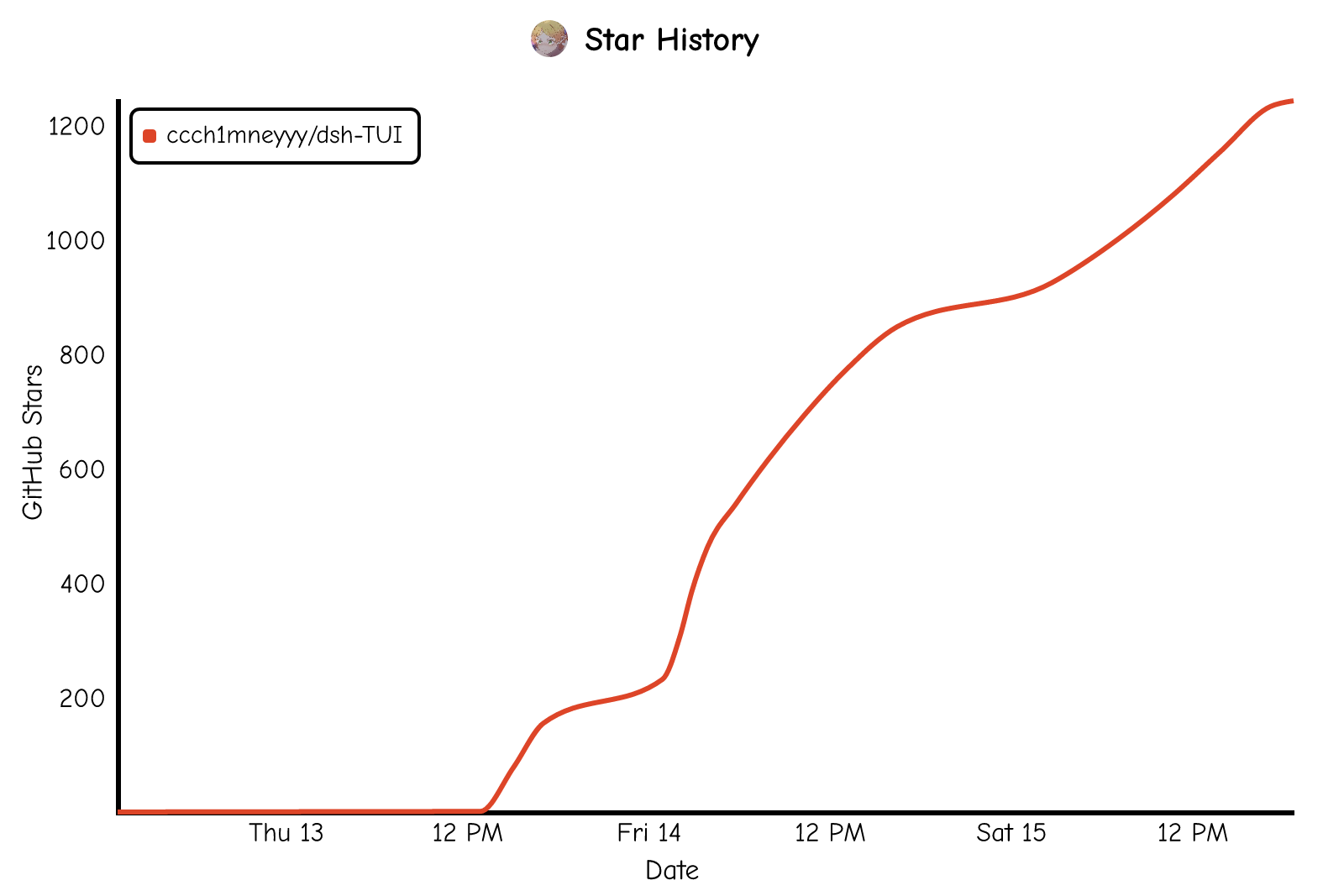
A beautiful, practical Claude Code-style TUI plugin with pixel whale top bar, flowing glow title, real-time status line, streaming thought expansion, time rewind, context progress bar and TPS gauge — zero core changes.
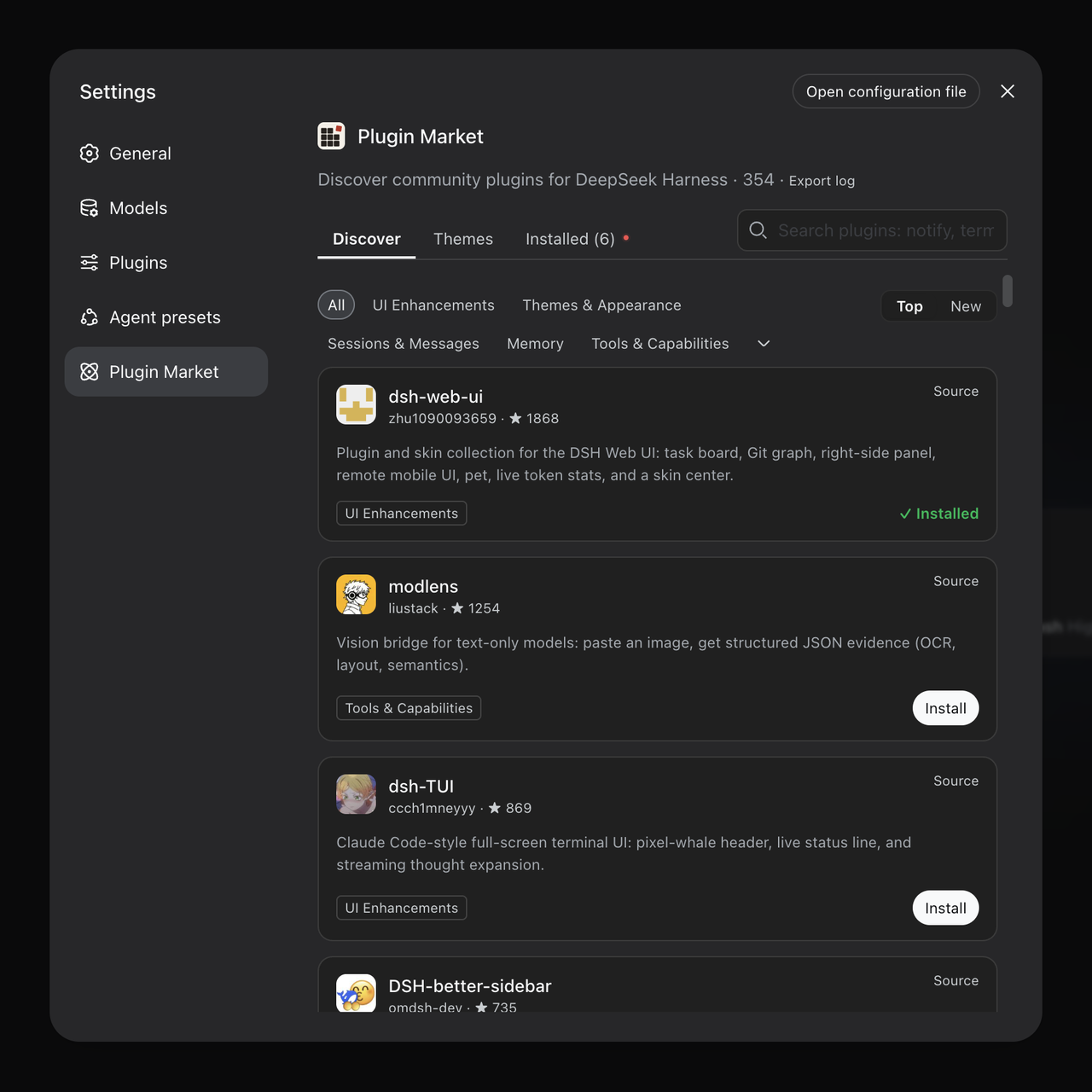
The plugin market for DeepSeek Harness: browse/search/one-click install community plugins and themes, with updates, backup/restore, hot disable, diagnostics, and AI fix.

A persistent whale widget on the DSH web UI that shows DeepSeek balance, today's usage, and per-turn cost, with drag-and-snap and sound effects.