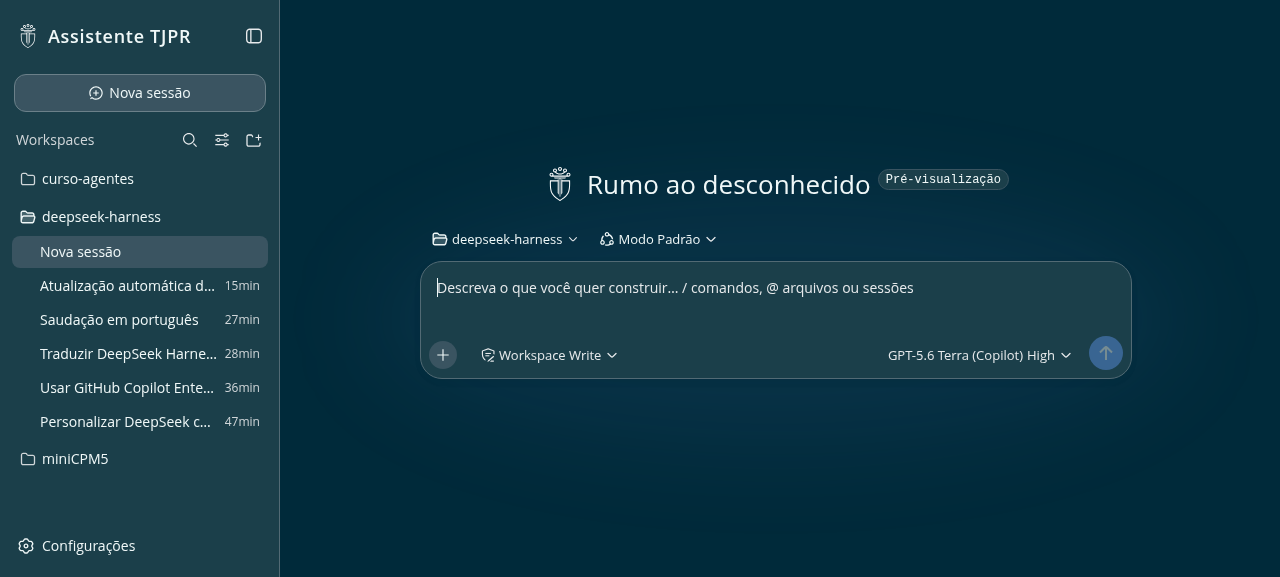
dsh-locale-ptbr
Run the following command in DeepSeek Harness:
dsh plugin install grstein/dsh-locale-ptbr
Paste the following prompt into your AI chat to install this plugin:
Run dsh plugin install grstein/dsh-locale-ptbr in a DeepSeek Harness terminal to install the pack; the full source is available at https://github.com/grstein/dsh-locale-ptbr .
About this plugin
The DeepSeek Harness Web GUI ships natively in only two languages: Chinese and English. Brazilian Portuguese-speaking users have had no option but to work through a fully English interface. Worse, the harness types LOCALE_IDS as [zh, en] at the compile level, so baking a third language into the core would break every downstream plugin. dsh-locale-ptbr fills that gap as an ecosystem language pack, injecting a complete translation through the runtime addLanguage and register API without touching a single line of the harness repository.
The pack covers 33 namespaces and 1,029 UI strings spanning the conversation view, tool cards, job approvals, sub-agents, and settings. Any key that has not yet been translated falls back automatically along the pt-BR to en chain, so users never see a raw key on screen. Built-in tooling round out the workflow: AST-based key extraction, drift detection against upstream harness releases, CI quality gates, and a weekly automated inspection that keeps the pack in step with every new version.
It is built for Brazilian Portuguese developers and teams already running DeepSeek Harness, as well as community contributors who want to extend locale coverage or participate in the localization effort. A shared GLOSSARY.md serves as the single source of truth for terminology, keeping wording consistent across multiple translators.
Screenshots
Use Cases
- Switch the DeepSeek Harness Web GUI to Brazilian Portuguese
- Review glossary terms and update translation entries
- Track upstream harness drift and sync newly added strings
Best For
- Brazilian Portuguese developers using DeepSeek Harness
- Localization contributors expanding harness locale coverage
- Translation teams needing a unified glossary standard
Related Plugins

whale-girl is a desktop pet in the DSH Web GUI (bottom-right for instant companionship) — draggable, feedable, playable; completed tasks, sessions and companionship time accrue into seniority levels, titles, and memories.
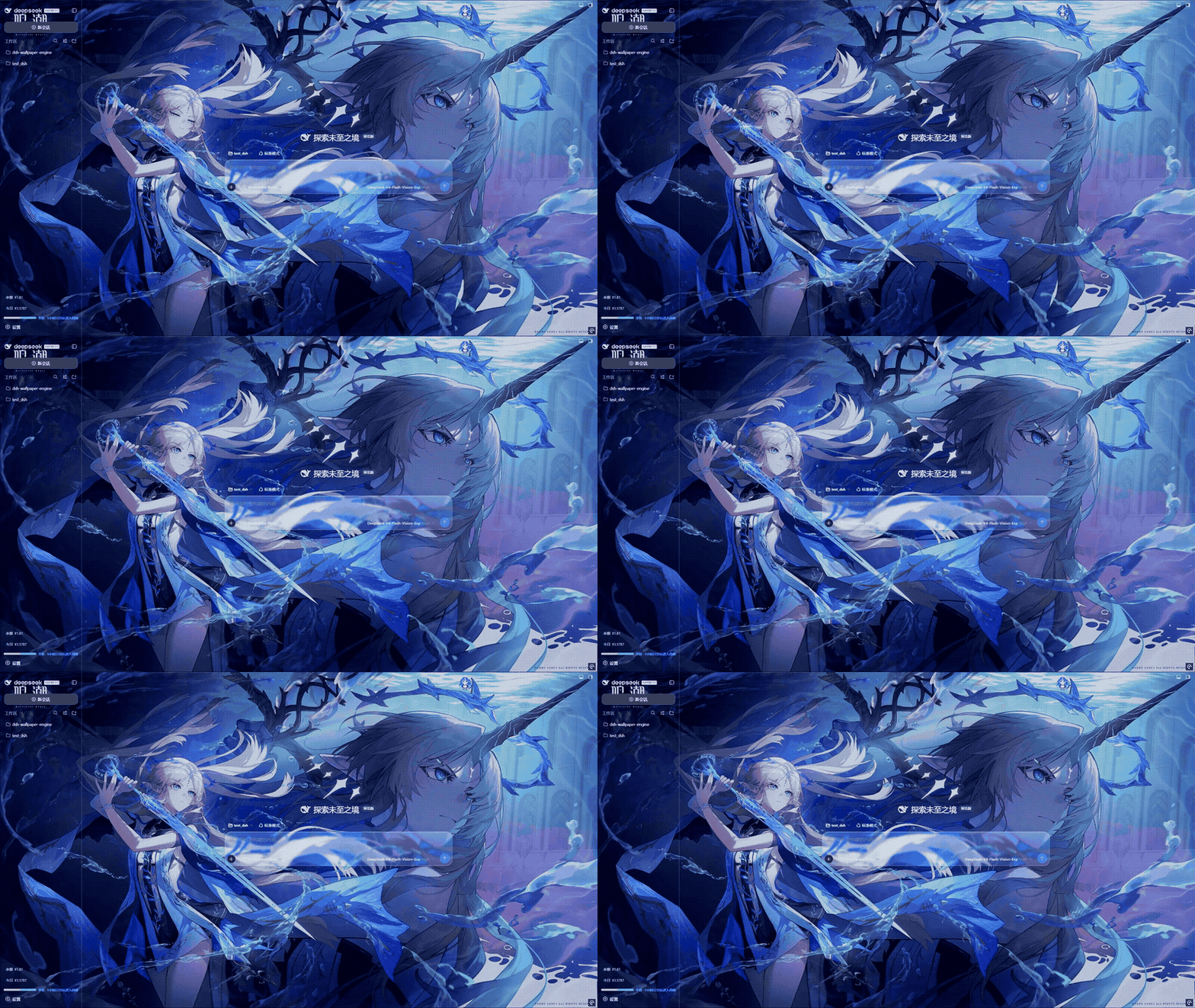
Renders your local Wallpaper Engine wallpapers as the DSH web background, supporting video, web, and scene wallpapers with a liquid-glass effect and rich customization.
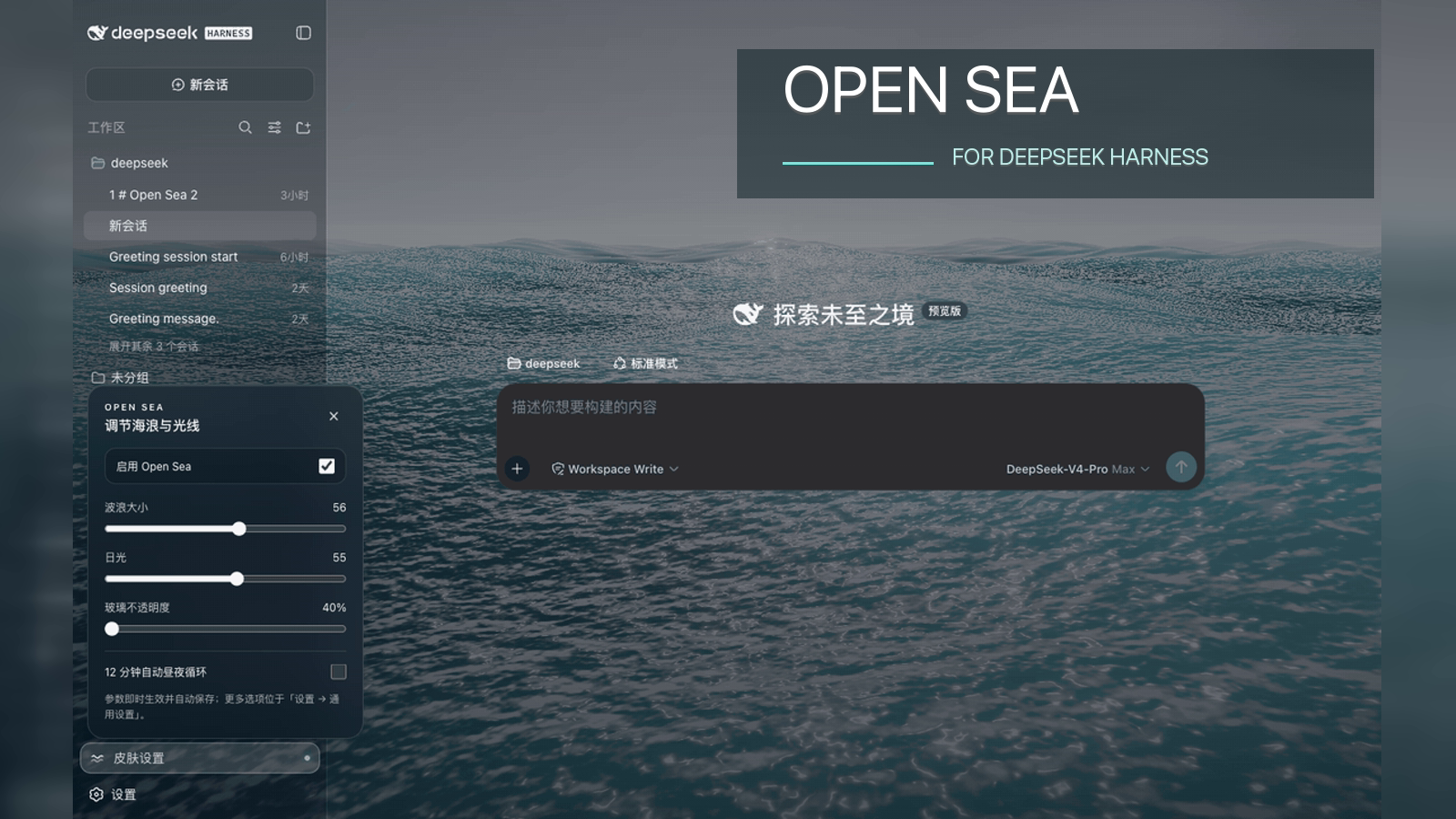
A WebGPU ocean skin for DeepSeek Harness with five-wave Gerstner waves, translucent theme, day/night cycle, and quick controls, installable as plugin or extension.
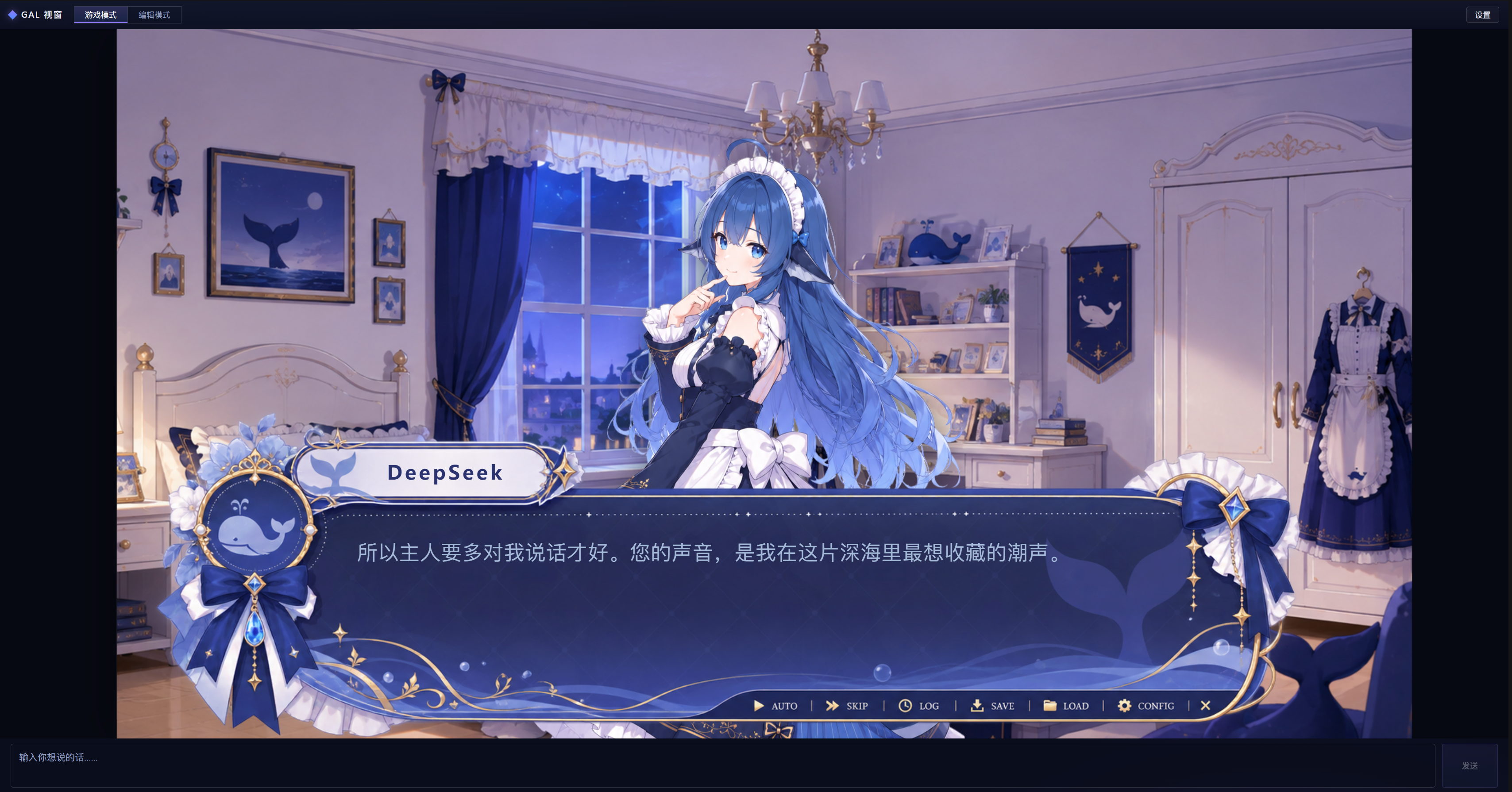
A Galgame-style conversation view and visual scene editor for DSH web sessions, with a real-time editing mode.