dsh-oauth-newapi
Run the following command in DeepSeek Harness:
dsh plugin install hrhgit/dsh-oauth-newapi
Paste the following prompt into your AI chat to install this plugin:
Run dsh plugin install hrhgit/dsh-oauth-newapi in the DeepSeek Harness terminal to install the plugin, available at https://github.com/hrhgit/dsh-oauth-newapi
About this plugin
If you relay models through a New API instance and would rather not paste raw Base URLs and API keys into DeepSeek Harness, dsh-oauth-newapi is the OAuth integration built for exactly that workflow. It folds New API instances, accounts, groups, token selection, model discovery, and model routes into flat OAuth entries in the host Model Center, placing signed-in accounts side by side with direct Base URL/API key providers while preserving New API-specific group, protocol, and model-selection flows.
Security is a hard design constraint: OAuth credentials and New API tokens always live in the host-owned credential and state storage and are never written to localStorage. Only non-sensitive browser drafts such as site fields, model search terms, and wire protocol are kept locally under scoped, versioned keys. The plugin no longer creates a standalone New API settings section; instead it integrates through the modelEntryRegistry service and the settings.modelCenter.entry slot.
It is aimed at developers or teams who relay multiple models via New API and want a one-click OAuth sign-in inside DeepSeek Harness, with flexible group- and protocol-driven model selection.
Use Cases
- Sign in to New API accounts with a single OAuth click instead of pasting raw URLs and keys
- Filter available models by group and wire protocol with token selection alongside direct providers
- Keep credentials in host-owned storage so they never leak through browser localStorage
Best For
- AI developers who aggregate multiple models through New API
- AI application teams managing several accounts within DeepSeek Harness
- Individuals or organizations that require host-managed credential custody for security
Related Plugins
A service-oriented sidebar framework for DSH, offering a full workbench with file explorer, embedded browser, real terminal, Git panel, and extensible plugin services.
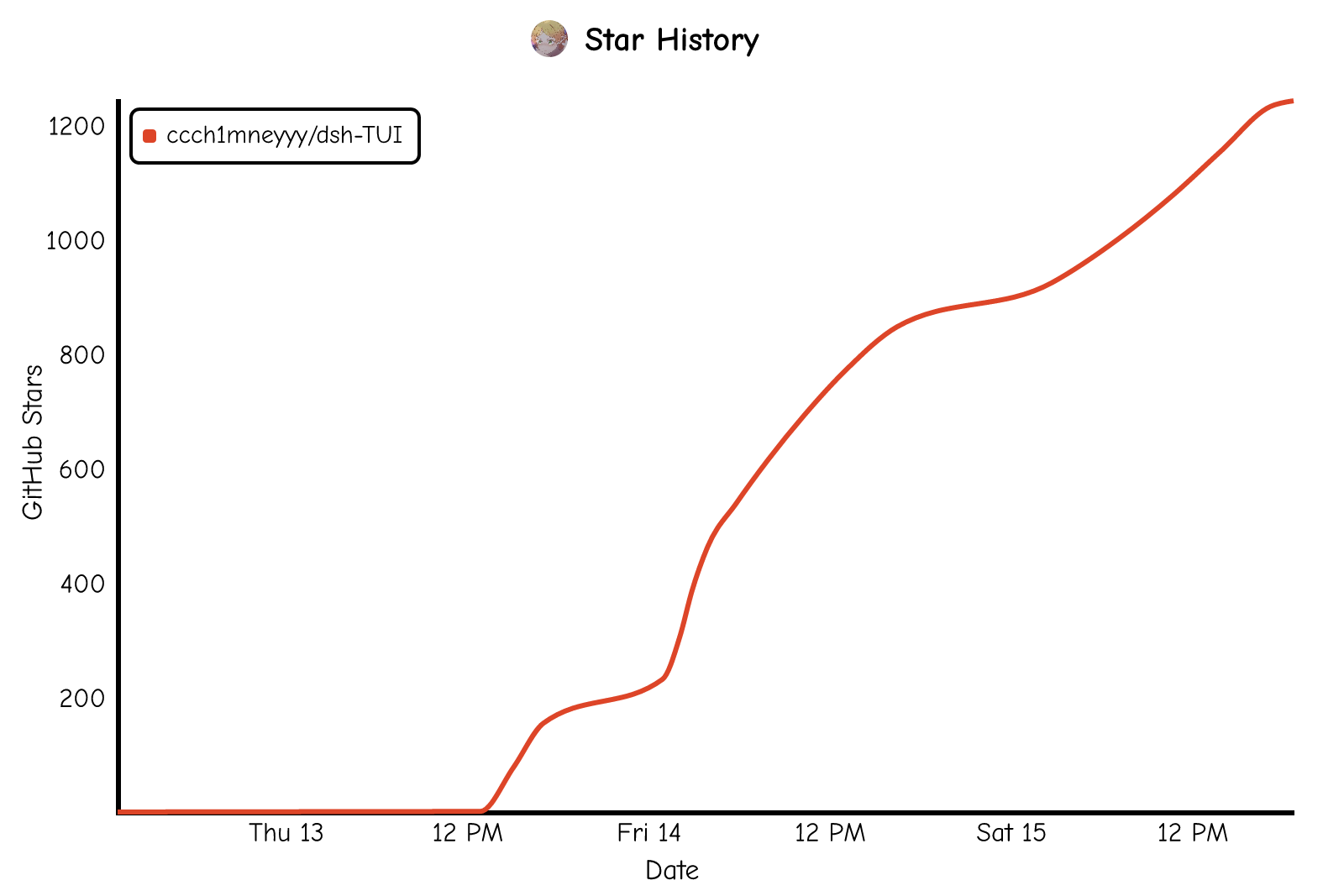
A beautiful, practical Claude Code-style TUI plugin with pixel whale top bar, flowing glow title, real-time status line, streaming thought expansion, time rewind, context progress bar and TPS gauge — zero core changes.
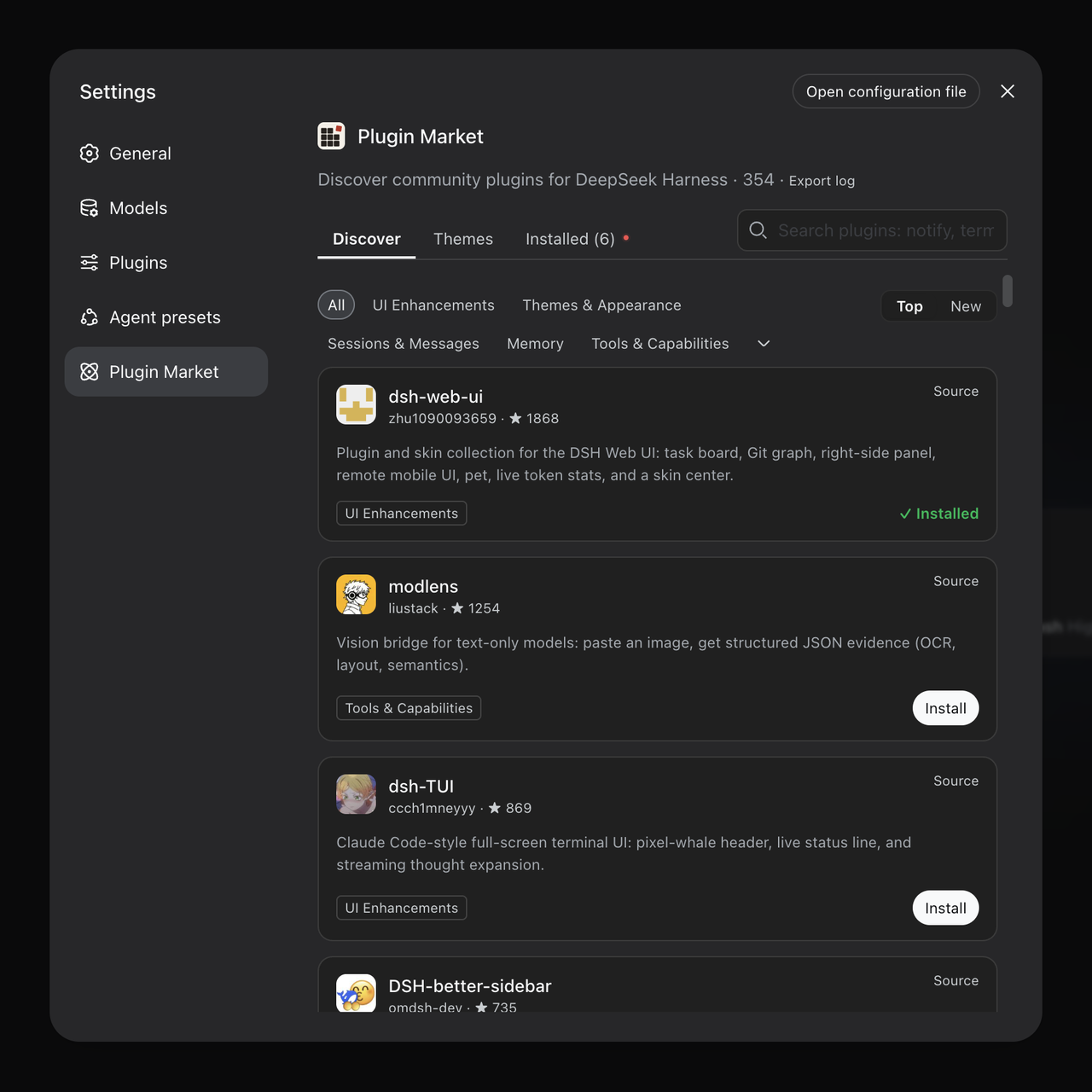
The plugin market for DeepSeek Harness: browse/search/one-click install community plugins and themes, with updates, backup/restore, hot disable, diagnostics, and AI fix.

A persistent whale widget on the DSH web UI that shows DeepSeek balance, today's usage, and per-turn cost, with drag-and-snap and sound effects.