dsh-ds-kanban
Run the following command in DeepSeek Harness:
dsh plugin install Stijnus/dsh-ds-kanban
Paste the following prompt into your AI chat to install this plugin:
Run dsh plugin install Stijnus/dsh-ds-kanban in the DeepSeek Harness terminal to add the kanban plugin from https://github.com/Stijnus/dsh-ds-kanban to your current profile, then restart the Host and select DS Kanban in the sidebar.
About this plugin
When juggling multiple sessions and Workspaces in DeepSeek Harness Web, task states are scattered across individual conversations, forcing operators to constantly switch windows to determine which tasks are stuck, which goals are complete, and which subagents are still running. DS Kanban fills this gap with a pure client-side projection: it does not replace the Harness shell, introduce a second task database, or make any external network calls. Instead, it reuses the existing authenticated Session, Workspace, and settings RPCs to render authoritative state as a real-time board that covers the entire Shell.
The board offers seven columns — Inbox, Ready, Running, Waiting, Blocked/Failed, Idle, and Goal complete — while the sidebar badge aggregates waiting, failed, goal-blocked, and high context-pressure tasks in real time. Each card can expand its subagent hierarchy to show descendant totals, running counts, model, and usage; goal projections display objective, phase, rounds used, and blocker explanation. Search, Workspace grouping, status filters, density and timestamp controls are all built in. JSON/CSV export contains only card summary fields, never prompts, transcripts, credentials, or file contents. Manual drag-and-drop applies solely to blank Inbox/Ready cards; running, failed, and completed states cannot be overridden, preserving data integrity.
It is ideal for operators and engineers who manage multiple Harness sessions concurrently or need to report task progress to their team. Open the board to identify tasks requiring human intervention, inspect live subagent status, and export summaries for standups or weekly reports — all without leaving the Harness shell or manually assembling data.
Use Cases
- Overseeing multiple Harness sessions from a single real-time board
- Exporting JSON/CSV summaries for team standups or weekly reports
- Identifying blocked, failed, or high-pressure tasks for quick intervention
Best For
- Operators managing multiple concurrent Harness sessions
- Engineers tracking subagent status and goal progress
- Users who need a global task overview without leaving the Harness shell
Related Plugins
A service-oriented sidebar framework for DSH, offering a full workbench with file explorer, embedded browser, real terminal, Git panel, and extensible plugin services.
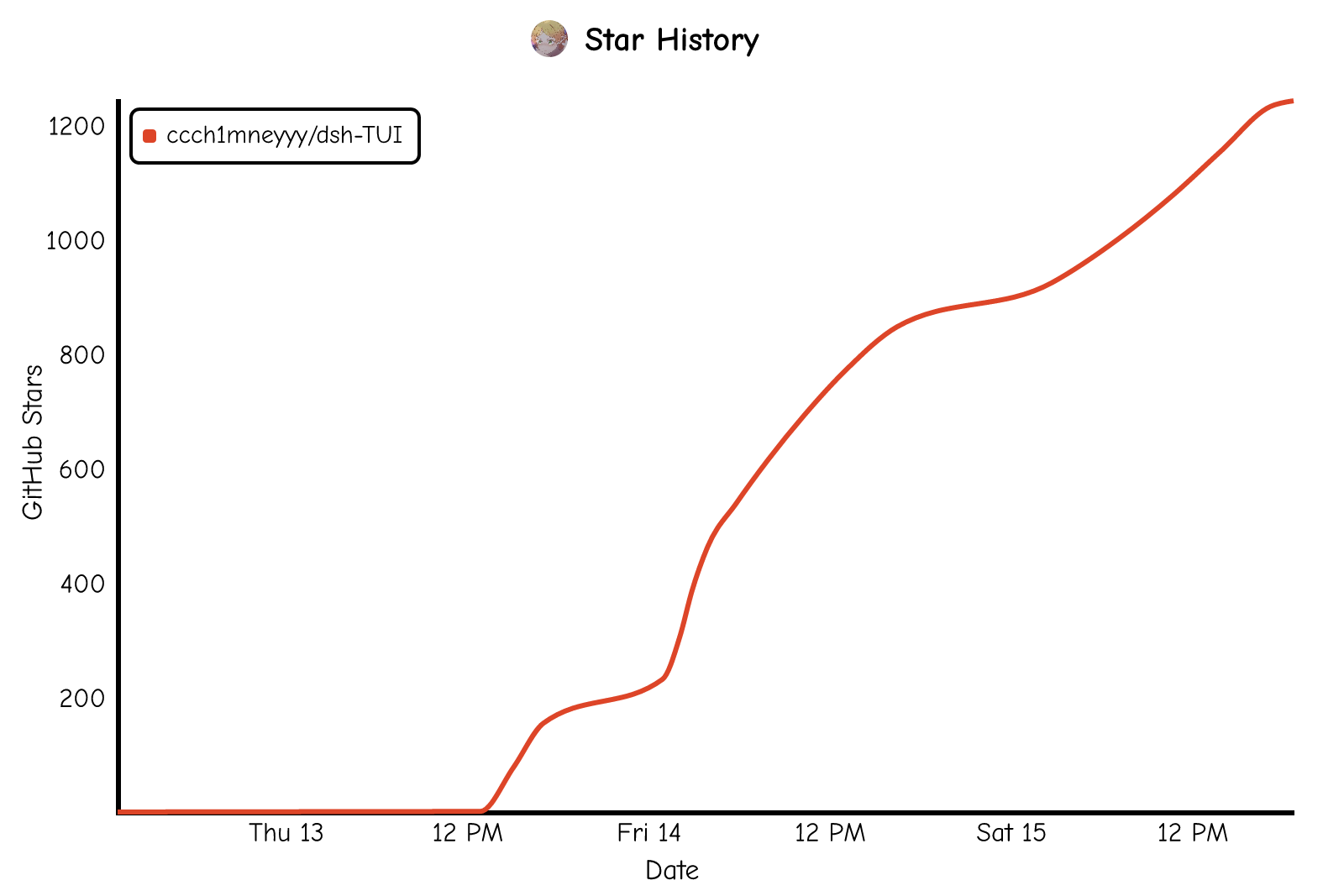
A beautiful, practical Claude Code-style TUI plugin with pixel whale top bar, flowing glow title, real-time status line, streaming thought expansion, time rewind, context progress bar and TPS gauge — zero core changes.
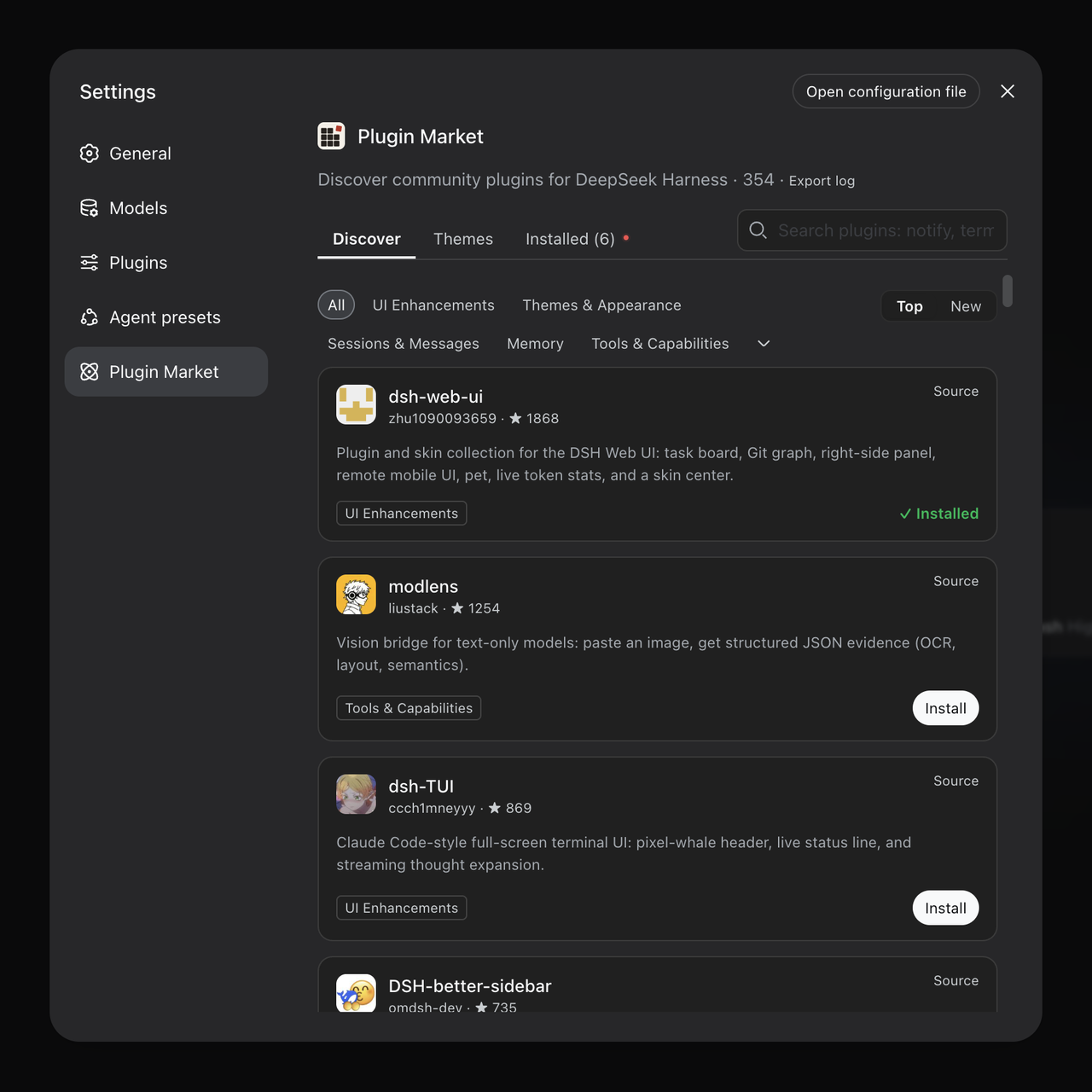
The plugin market for DeepSeek Harness: browse/search/one-click install community plugins and themes, with updates, backup/restore, hot disable, diagnostics, and AI fix.

A persistent whale widget on the DSH web UI that shows DeepSeek balance, today's usage, and per-turn cost, with drag-and-snap and sound effects.