dsh-sensenova-provider
Run the following command in DeepSeek Harness:
dsh plugin install alaxrpg/dsh-sensenova-provider
Paste the following prompt into your AI chat to install this plugin:
Run the install command in DeepSeek Harness to add this plugin (source: https://github.com/alaxrpg/dsh-sensenova-provider), then configure the SenseNova provider on the Models page.
About this plugin
DeepSeek Harness (DSH) centers its provider ecosystem on official channels, so plugging in an OpenAI-compatible service like SenseNova usually means hand-rolling request scripts or retyping environment variables after every restart. dsh-sensenova-provider collapses that into a single standard sensenova provider route you select directly from the Models page, eliminating the repetitive integration work.
The headline feature is multi-account API-key rotation over one shared base URL. Configure several keys and the plugin will automatically cool down a key on 429 (honoring Retry-After with a 60-second fallback), disable a key on 401, and surface the earliest reset time when all keys are exhausted. It also fetches a live model catalog, streams responses via SSE, and ships a dedicated Web settings section. All credentials are stored through the DSH credentials service and are never logged or forwarded to the model directly.
If you are running DSH 0.1.2-alpha or later and want SenseNova folded into your unified LLM routing, need load-balancing across multiple keys, or simply want to stop maintaining environment variables by hand, this lightweight plugin is built for exactly that.
Use Cases
- Select SenseNova as an LLM backend directly from the DSH Models page
- Set up multiple API keys for automatic cooldown and failover
- Integrate OpenAI-compatible third-party model services through a unified interface
Best For
- Developers orchestrating multi-model workflows in DSH
- SenseNova users who need load-balancing across multiple keys
- Integration developers who prefer OpenAI-compatible interfaces
Related Plugins
A service-oriented sidebar framework for DSH, offering a full workbench with file explorer, embedded browser, real terminal, Git panel, and extensible plugin services.
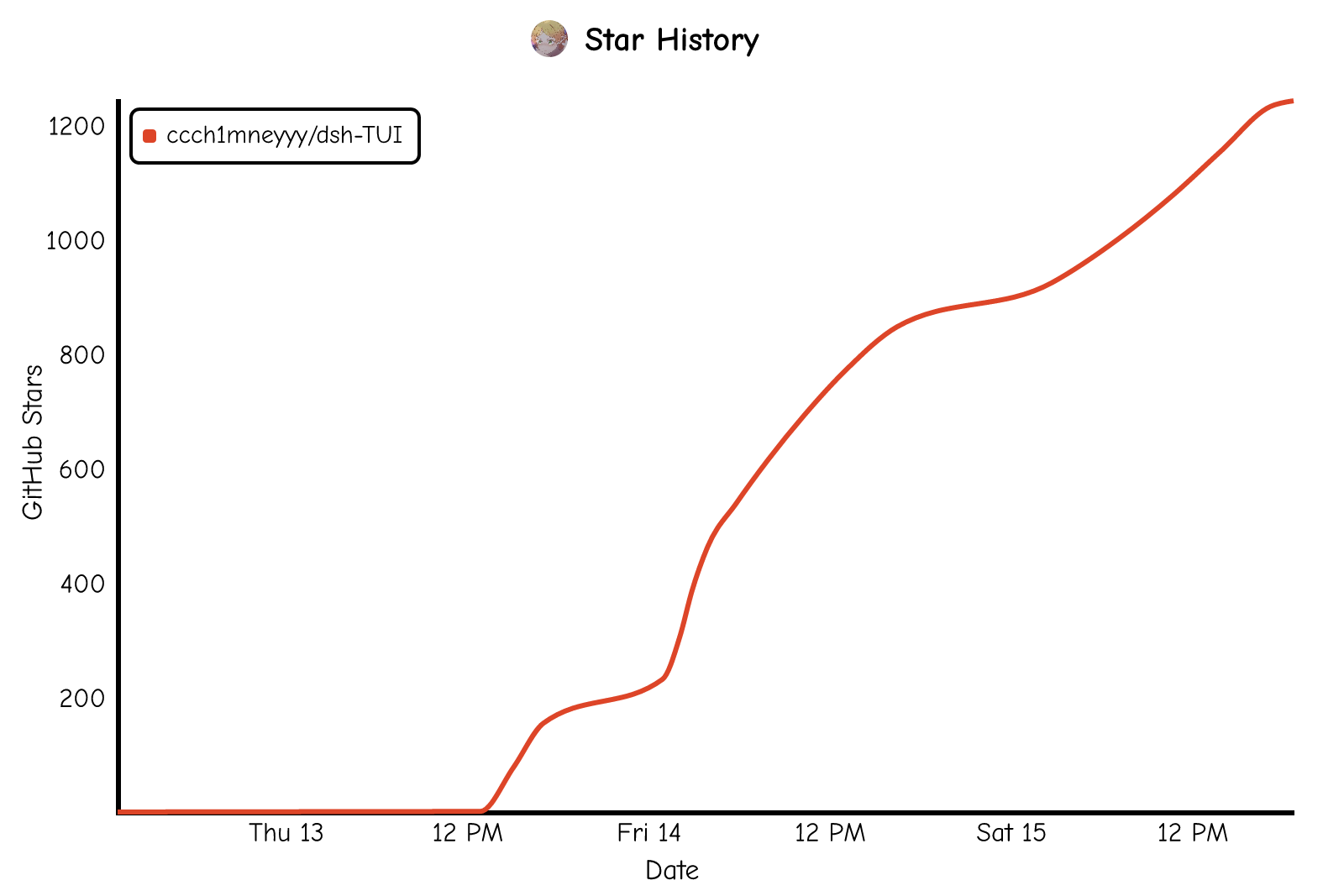
A beautiful, practical Claude Code-style TUI plugin with pixel whale top bar, flowing glow title, real-time status line, streaming thought expansion, time rewind, context progress bar and TPS gauge — zero core changes.
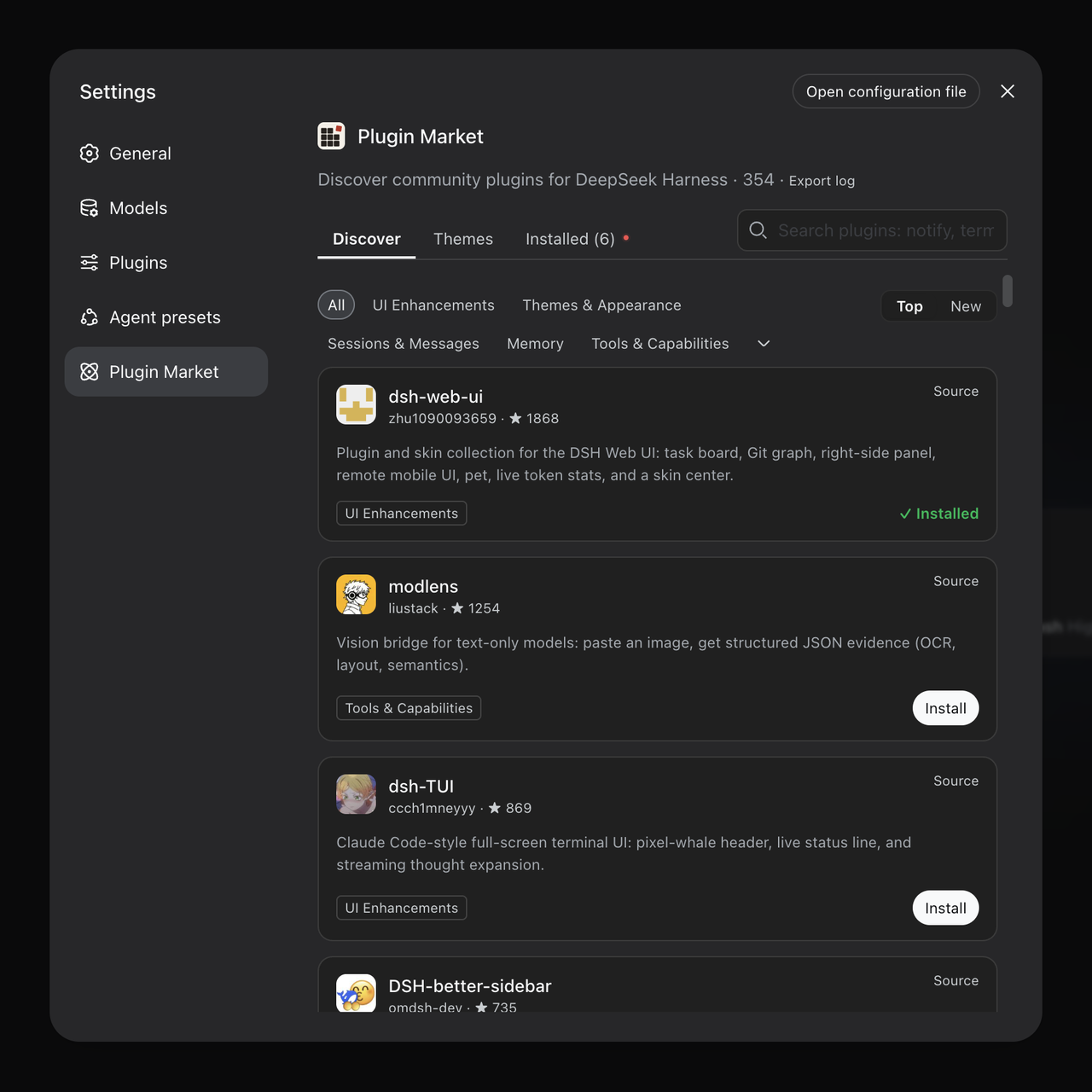
The plugin market for DeepSeek Harness: browse/search/one-click install community plugins and themes, with updates, backup/restore, hot disable, diagnostics, and AI fix.

A persistent whale widget on the DSH web UI that shows DeepSeek balance, today's usage, and per-turn cost, with drag-and-snap and sound effects.