dsh-model-account-login
Run the following command in DeepSeek Harness:
dsh plugin install hongbaiqi/dsh-model-account-login
Paste the following prompt into your AI chat to install this plugin:
Run dsh plugin install hongbaiqi/dsh-model-account-login in DeepSeek Harness to install this plugin. Source repository: https://github.com/hongbaiqi/dsh-model-account-login
About this plugin
DeepSeek Harness ships its authorization service and credential store out of the box, yet it has never included a native UI for interactive provider login flows — device codes, external authorization URLs, and text/secret/select prompts. dsh-model-account-login closes that gap: sign in once and the session persists across restarts, eliminating the need to re-enter credentials every time.
The plugin composes two sides that work together through a private JSON-RPC channel. The Host side bridges the official authorization service and drives a shared state machine that tracks each login attempt — notices, external URLs, device codes, prompts, cancellation, and settle states — persisting the outcome via credentials and settings. The Web side registers a Model Accounts section in the Settings page where every login flow appears as a card showing signed-in and route-enabled status. Actions cover login, re-login, sign-out, and enable/disable route; an in-flight attempt expands into an inline panel to walk through the interactive steps.
If you operate a DSH deployment and need a one-time, long-lived authorization for ChatGPT, Claude, or any other llm-pi-ai provider, this is the plugin for you. It mounts as a standard Cordis composition plugin, joins the web module graph automatically, and requires no architectural changes to your existing setup.
Use Cases
- Sign in to multiple LLM providers once and keep sessions alive across restarts
- Handle interactive login flows such as device codes and external authorization URLs in a DSH deployment
- Manage provider login status and route toggles from a unified settings panel
Best For
- Operators and admins running DSH deployments
- Teams integrating multiple LLM providers on a unified platform
- Developers extending DSH with Cordis composition plugins
Related Plugins
A service-oriented sidebar framework for DSH, offering a full workbench with file explorer, embedded browser, real terminal, Git panel, and extensible plugin services.
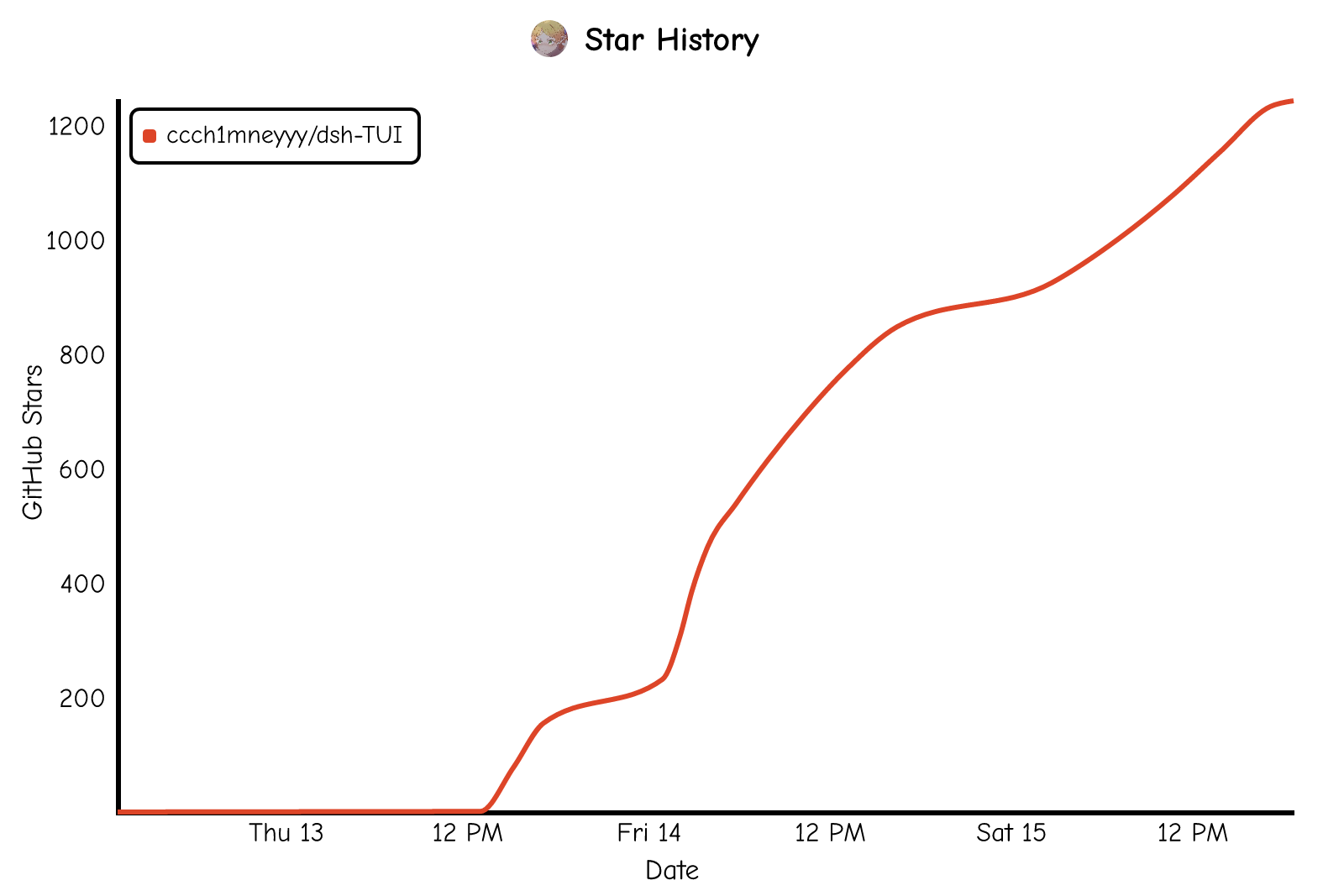
A beautiful, practical Claude Code-style TUI plugin with pixel whale top bar, flowing glow title, real-time status line, streaming thought expansion, time rewind, context progress bar and TPS gauge — zero core changes.
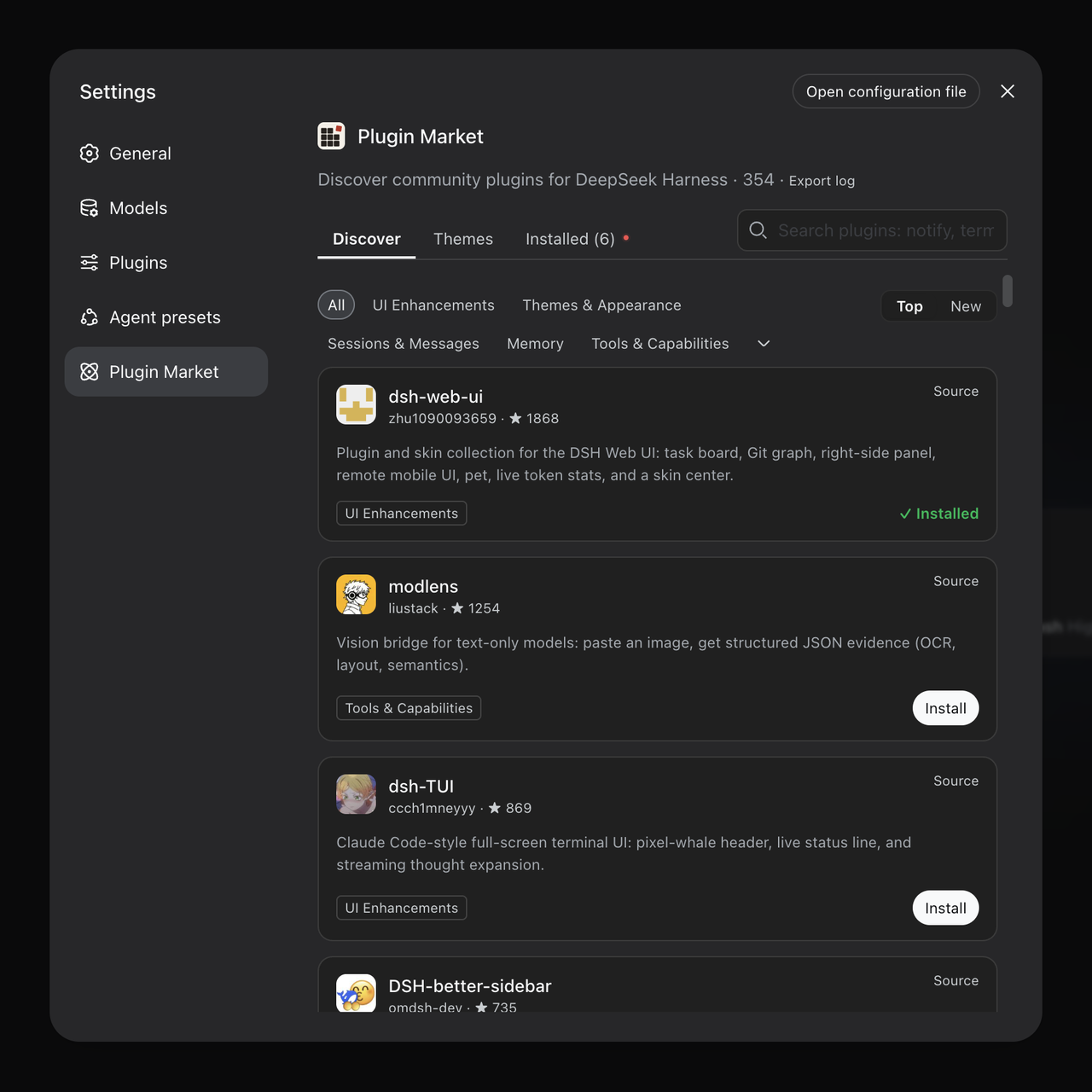
The plugin market for DeepSeek Harness: browse/search/one-click install community plugins and themes, with updates, backup/restore, hot disable, diagnostics, and AI fix.

A persistent whale widget on the DSH web UI that shows DeepSeek balance, today's usage, and per-turn cost, with drag-and-snap and sound effects.