dsh-visualizer-widget
Run the following command in DeepSeek Harness:
dsh plugin install lovezi0/dsh-visualizer-widget
Paste the following prompt into your AI chat to install this plugin:
Run dsh plugin install lovezi0/dsh-visualizer-widget in DeepSeek Harness to install this plugin; the full source repository is available at https://github.com/lovezi0/dsh-visualizer-widget .
About this plugin
When a model produces SVG or HTML source for a chart or prototype in DeepSeek Harness, that code can quickly bloat the context window while the user still sees only raw markup. dsh-visualizer-widget closes that loop: after the model calls render_visual, the plugin renders the source inside a sandboxed iframe and surfaces it as an interactive inline card right in the chat flow. The tool response carries only a one-line summary (format, character count, height), so the full source stays in the card and tool result without re-entering the model context.
The card itself supports toggling between preview and source views, multiple height presets, light and dark backgrounds, one-click re-render, and copy-to-clipboard, making it easy to iterate on visuals mid-conversation. For more complex charts the model can first call get_visualizer_spec to retrieve a bundled rendering spec covering the 680-unit viewBox baseline, font-size and weight constraints, a 9x7 color palette, light/dark schemes, and chart-type routing, keeping every generation visually consistent.
On the security side, the iframe only grants allow-scripts, allow-popups, and allow-forms; allow-same-origin is intentionally absent, so scripts inside the card cannot reach the host page DOM or storage. This plugin is well suited for Harness users who frequently ask their model to produce visual prototypes, dashboard snippets, or HTML mockups and want a clean context window with a unified, safe visual output.
Use Cases
- Ask the model to build a bar-chart dashboard and see it rendered as an inline card in the chat
- Render an SVG prototype card, toggle light/dark background, or switch height presets
- Call the spec endpoint before generating a complex chart to keep palette, typography, and viewBox consistent
Best For
- Harness users who frequently ask their model to produce charts or HTML mockups
- Developers who need visual consistency across multiple generations
- Workflow users who care about keeping the model context clean and source code out of context
Related Plugins
A service-oriented sidebar framework for DSH, offering a full workbench with file explorer, embedded browser, real terminal, Git panel, and extensible plugin services.
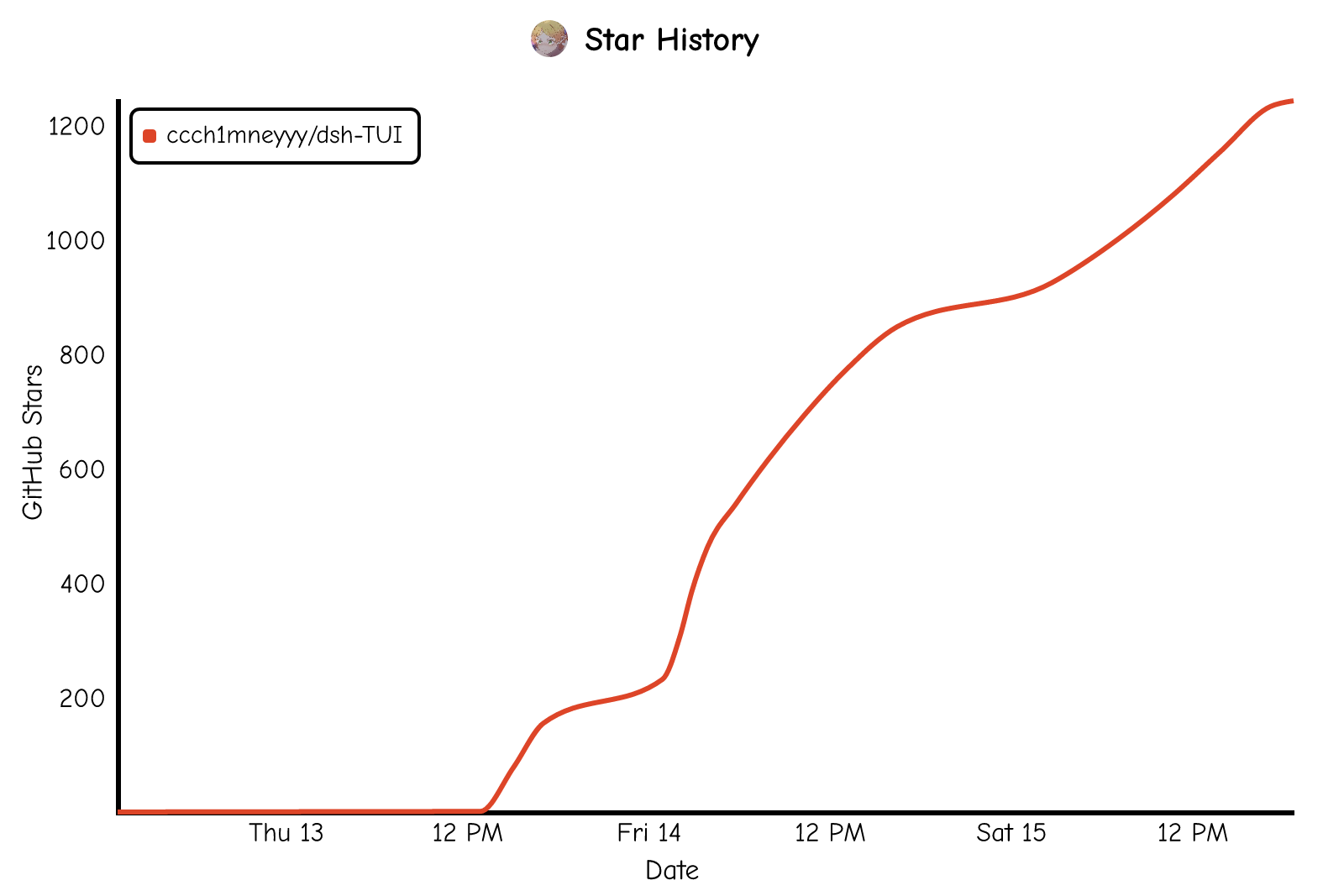
A beautiful, practical Claude Code-style TUI plugin with pixel whale top bar, flowing glow title, real-time status line, streaming thought expansion, time rewind, context progress bar and TPS gauge — zero core changes.
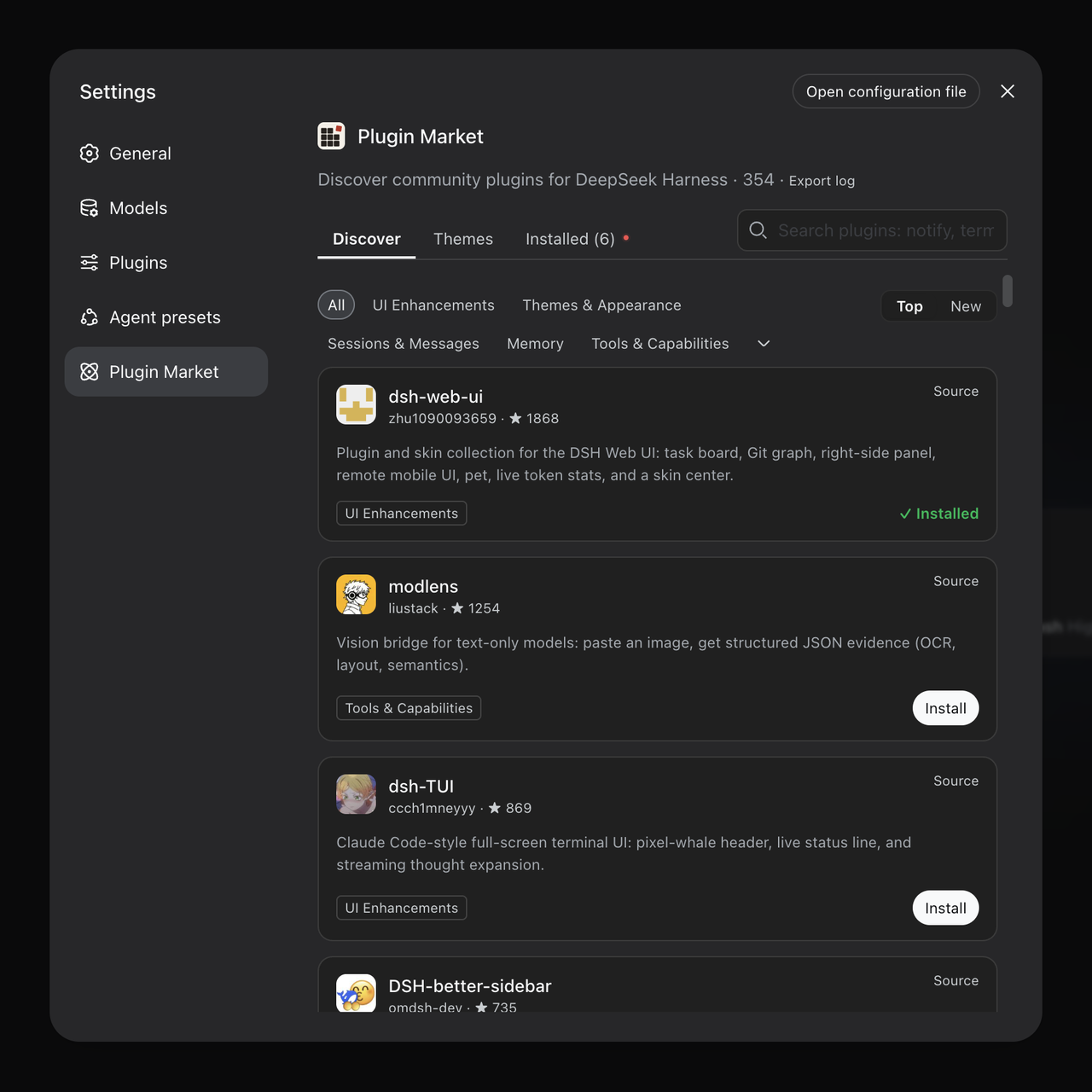
The plugin market for DeepSeek Harness: browse/search/one-click install community plugins and themes, with updates, backup/restore, hot disable, diagnostics, and AI fix.

A persistent whale widget on the DSH web UI that shows DeepSeek balance, today's usage, and per-turn cost, with drag-and-snap and sound effects.