dsh-xmap
Run the following command in DeepSeek Harness:
dsh plugin install lvguqingyou/dsh-xmap
Paste the following prompt into your AI chat to install this plugin:
Run dsh plugin install lvguqingyou/dsh-xmap in DeepSeek Harness to install this plugin; the source is available at https://github.com/lvguqingyou/dsh-xmap . Restart dsh web after installation to activate the new tools.
About this plugin
Feeding a hundreds-of-rows Excel sheet straight into a model context is the most obvious approach, yet the token cost blows up fast, and irregular layouts make it worse.
dsh-xmap takes the opposite path: the model never dumps the full table. It writes a few hundred bytes of column-mapping spec and glances at a short preview; the engine then reads every cell outside the model context via Excel COM. Sheets that share a header fingerprint automatically reuse an existing spec with zero model involvement, so each table costs only the tokens for one spec plus a few preview rows. Seven tools cover the full pipeline: listing sheets, previewing headers, extracting normalized JSONL, verifying numeric column sums, and aggregating results across files.
Built for developers and analysts on Windows who use DeepSeek Harness to work with Excel data, particularly when the same table layout recurs, single sheets are large, or extraction and validation need to happen inside a conversation.
Use Cases
- Reprocessing sheets with the same layout in a conversation without re-describing column structure every time
- Extracting large sheets into normalized JSONL without blowing up the model context window
- Aggregating multiple similar tables by field, verifying numeric sums, and exporting results
Best For
- Developers processing Excel data pipelines on Windows with DeepSeek Harness
- Data analysts who need to extract, verify, and aggregate tables inside a conversation
- AI application builders who want to control token cost and avoid dumping entire sheets into context
Related Plugins
A service-oriented sidebar framework for DSH, offering a full workbench with file explorer, embedded browser, real terminal, Git panel, and extensible plugin services.
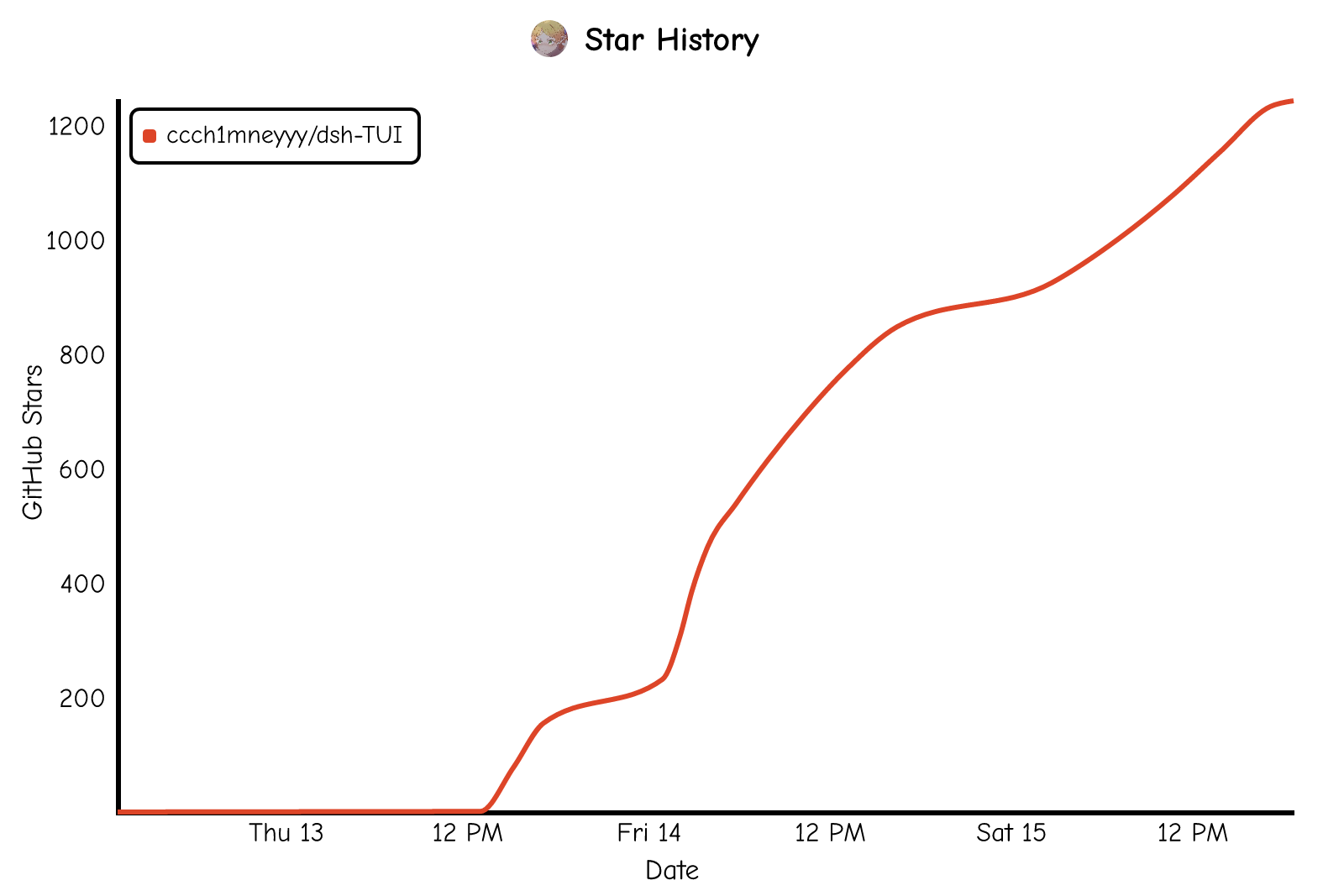
A beautiful, practical Claude Code-style TUI plugin with pixel whale top bar, flowing glow title, real-time status line, streaming thought expansion, time rewind, context progress bar and TPS gauge — zero core changes.
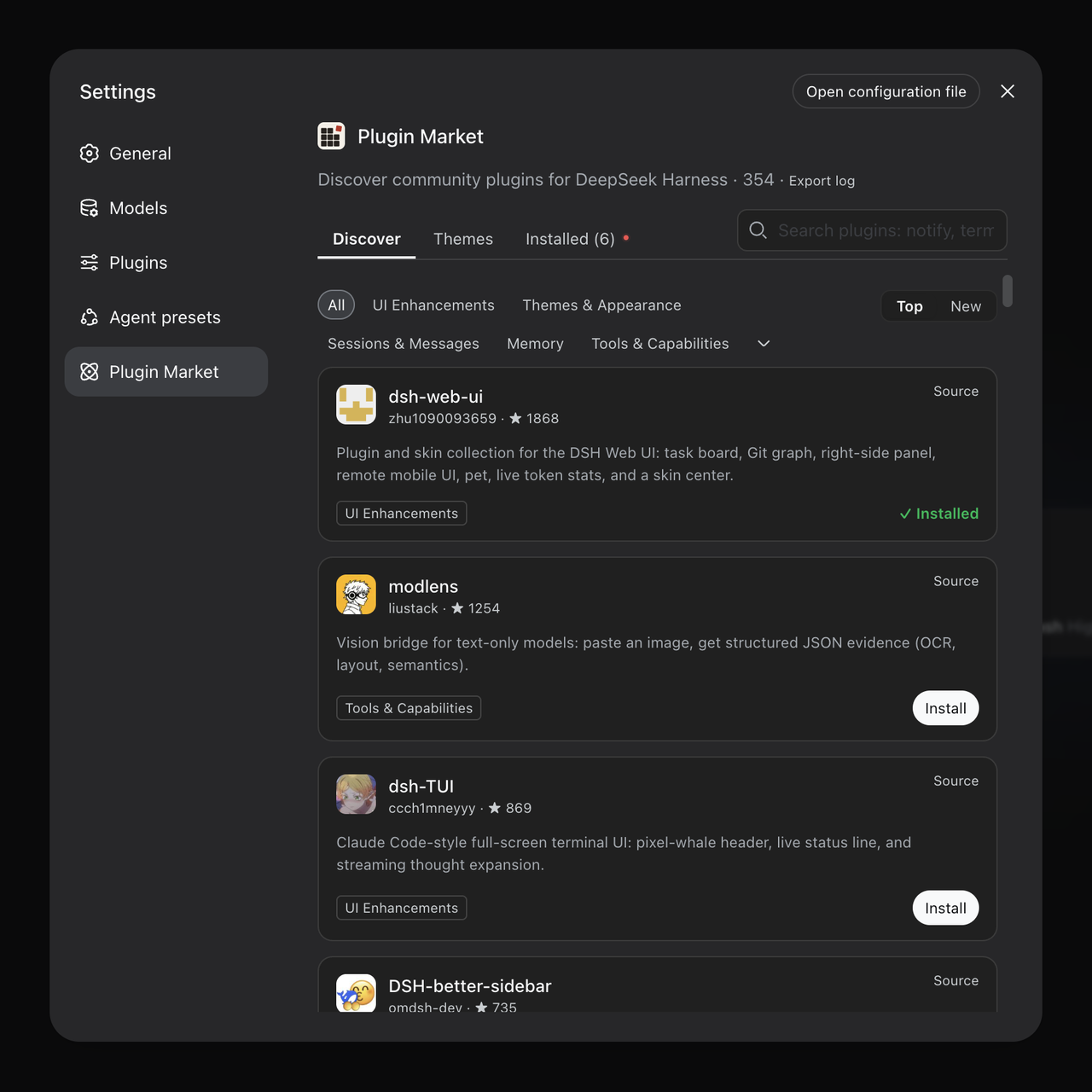
The plugin market for DeepSeek Harness: browse/search/one-click install community plugins and themes, with updates, backup/restore, hot disable, diagnostics, and AI fix.

A persistent whale widget on the DSH web UI that shows DeepSeek balance, today's usage, and per-turn cost, with drag-and-snap and sound effects.