dsh-chat-share
Run the following command in DeepSeek Harness:
dsh plugin install chrisx9z/dsh-chat-share
Paste the following prompt into your AI chat to install this plugin:
Run dsh plugin install chrisx9z/dsh-chat-share in your DeepSeek Harness terminal to install this plugin; source code is available at https://github.com/chrisx9z/dsh-chat-share .
About this plugin
After a productive session in DeepSeek Harness, you often want to pull a few messages into a blog post, a support ticket, or a team doc, only to discover that manual copy-paste is fragile and loses formatting. dsh-chat-share is a client plugin built for exactly that gap: select a range of messages and export them as a clean, self-contained artifact in a single step.
Click Share in the session header or sidebar to open a dialog where you pick an inclusive From-To range via dropdowns or by clicking message rows, choose Markdown, self-contained HTML, or plain text, and preview the rendered output before copying or downloading. The HTML artifact embeds session images as data URIs so it reads correctly offline. Sensitive-info redaction (credential patterns, local absolute and home paths) is on by default, and you can opt in to include bounded tool-call rows. A one-click Save TXT button downloads the entire chat as a .txt file without opening the dialog at all. Everything runs locally, nothing is uploaded, and no model tokens are consumed.
Whether you are quoting AI conversation snippets in a technical blog, archiving discussion highlights in a team wiki, or pasting a debugging trail into a ticket, any workflow that turns a Harness session into a standalone, shareable document becomes dramatically simpler with this plugin installed.
Use Cases
- Pull a few messages from a Harness session into a blog post or team doc
- Export a debugging trail as plain text into a support ticket
- Archive discussion highlights as a self-contained HTML file for offline reading
Best For
- Technical writers and open-source authors quoting conversation snippets
- Engineering and product teams archiving AI session records
- Privacy-conscious users who want to share local transcripts without uploading data
Related Plugins
A service-oriented sidebar framework for DSH, offering a full workbench with file explorer, embedded browser, real terminal, Git panel, and extensible plugin services.
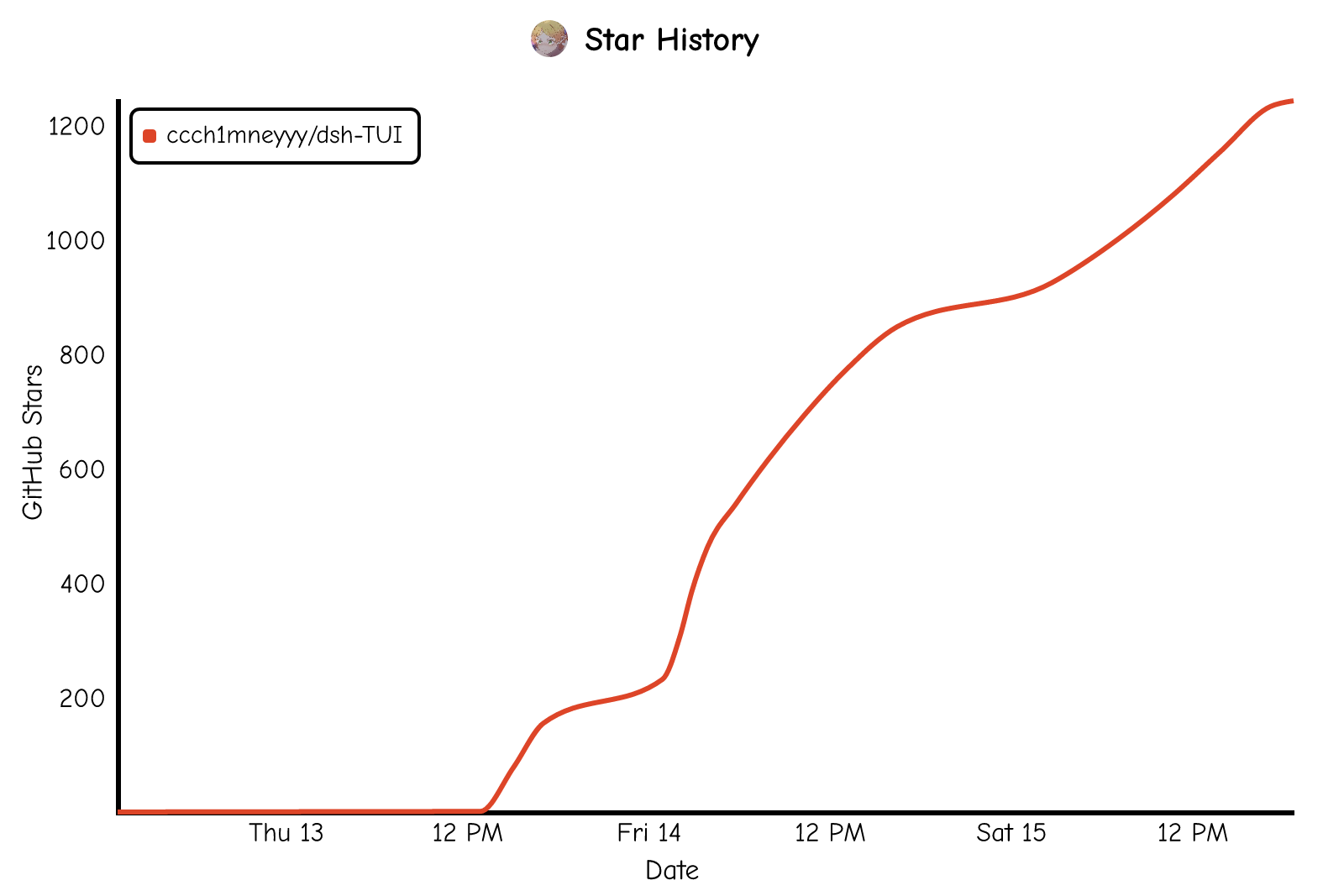
A beautiful, practical Claude Code-style TUI plugin with pixel whale top bar, flowing glow title, real-time status line, streaming thought expansion, time rewind, context progress bar and TPS gauge — zero core changes.
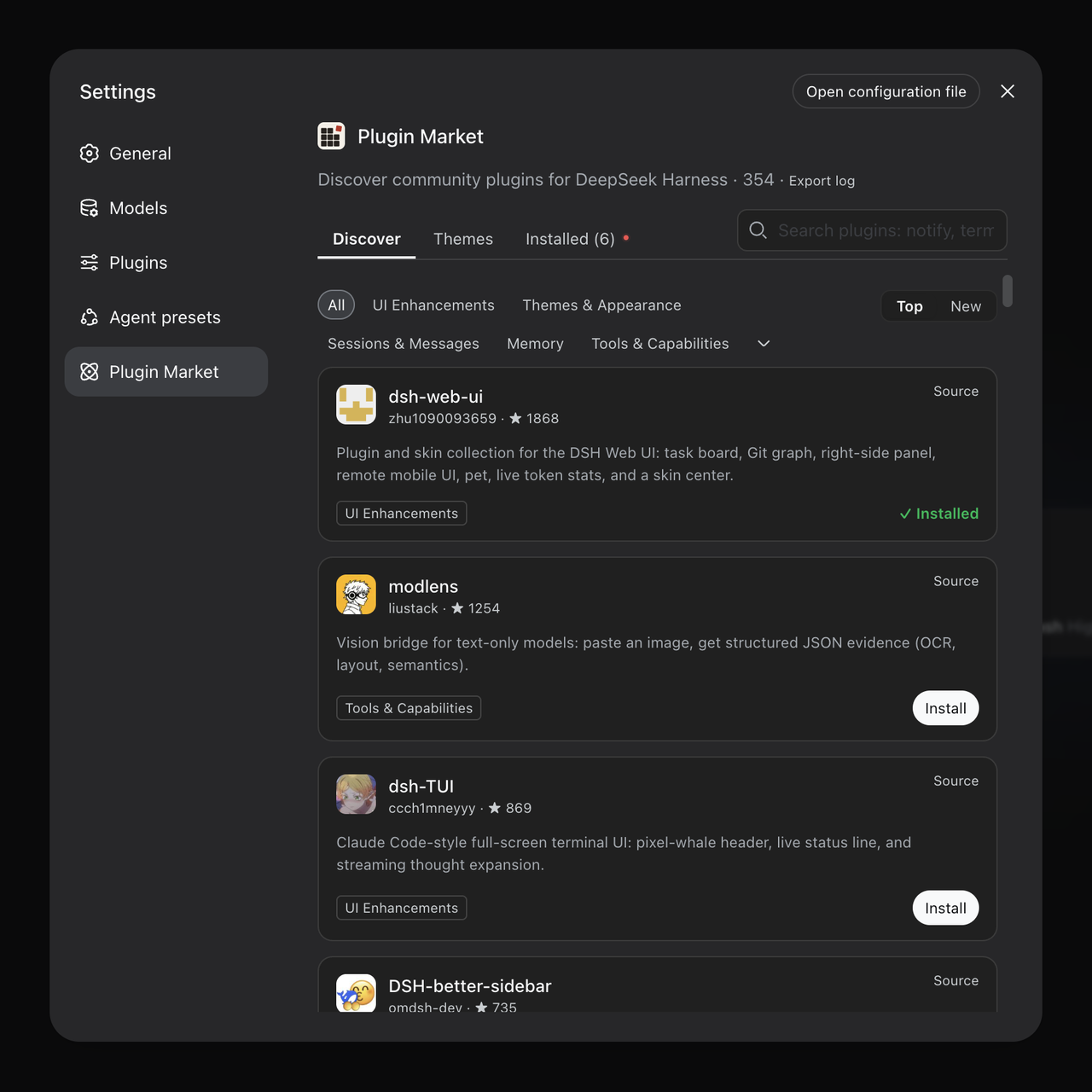
The plugin market for DeepSeek Harness: browse/search/one-click install community plugins and themes, with updates, backup/restore, hot disable, diagnostics, and AI fix.

A persistent whale widget on the DSH web UI that shows DeepSeek balance, today's usage, and per-turn cost, with drag-and-snap and sound effects.