dsh-spec-forge
Run the following command in DeepSeek Harness:
dsh plugin install winston-hoo/dsh-spec-forge
Paste the following prompt into your AI chat to install this plugin:
Run dsh plugin install winston-hoo/dsh-spec-forge in your terminal to install; the source is available at https://github.com/winston-hoo/dsh-spec-forge .
About this plugin
The most frustrating part of a coding conversation is rarely the code itself. It is the repeated inefficiency: starting work before the requirement is clear, re-explaining project no-go zones every new session, describing the same pagination-interface pattern as if it were the first time. dsh-spec-forge was built for exactly that: before you start, it sharpens a vague requirement into a concrete one; after you finish, it stores the experience; and the next time a similar task shows up, it brings the right template back automatically.
The core is a five-tool closed loop. spec_recall builds a weighted keyword fingerprint (path, tech term, identifier, Chinese 2-gram scored at different weights) and matches it against a plaintext template library, injecting the best one or two templates plus project no-go rules into context. spec_triage grades the task as L1 atomic (emit an execution checklist, ask nothing), L2 module change (at most 3 questions, each with an inferred default), or L3 architecture refactor (full Grill-me). spec_distill turns the clarified requirement into a single implementation prompt. spec_retro captures the session lessons into a Markdown template, idempotent by name and overwriting rather than piling up. spec_library lets you browse the full library, hit stats, and expired-template report on demand. Everything is stored as zero-dependency plaintext Markdown under ~/.dsh/spec-forge, readable, editable, Git-friendly, and not a black box. Project-level do-not-touch rules accumulate in a per-repo profile.md and are auto-injected into every future matching task, so you never have to repeat them.
It fits developers working daily in DeepSeek Harness who repeatedly handle CRUD, field add/remove, pagination, and similar patterns, and who want their project conventions to persist across sessions. It does not make network calls, execute shell commands, or read credentials; the source is public and fully auditable before installation.
Use Cases
- Handling the same CRUD patterns repeatedly and wanting the model to recall stored experience automatically
- Maintaining project no-go rules that must not be re-stated in every new session
- Facing vague requirements where you want graded, limited questions instead of a five-question barrage
Best For
- Engineers doing daily front-end and back-end development with DeepSeek Harness
- Teams repeatedly handling similar tasks (field CRUD, pagination) who want experience to persist across sessions
- Developers who prefer auditable plaintext Markdown templates over opaque black-box systems
Related Plugins
A service-oriented sidebar framework for DSH, offering a full workbench with file explorer, embedded browser, real terminal, Git panel, and extensible plugin services.
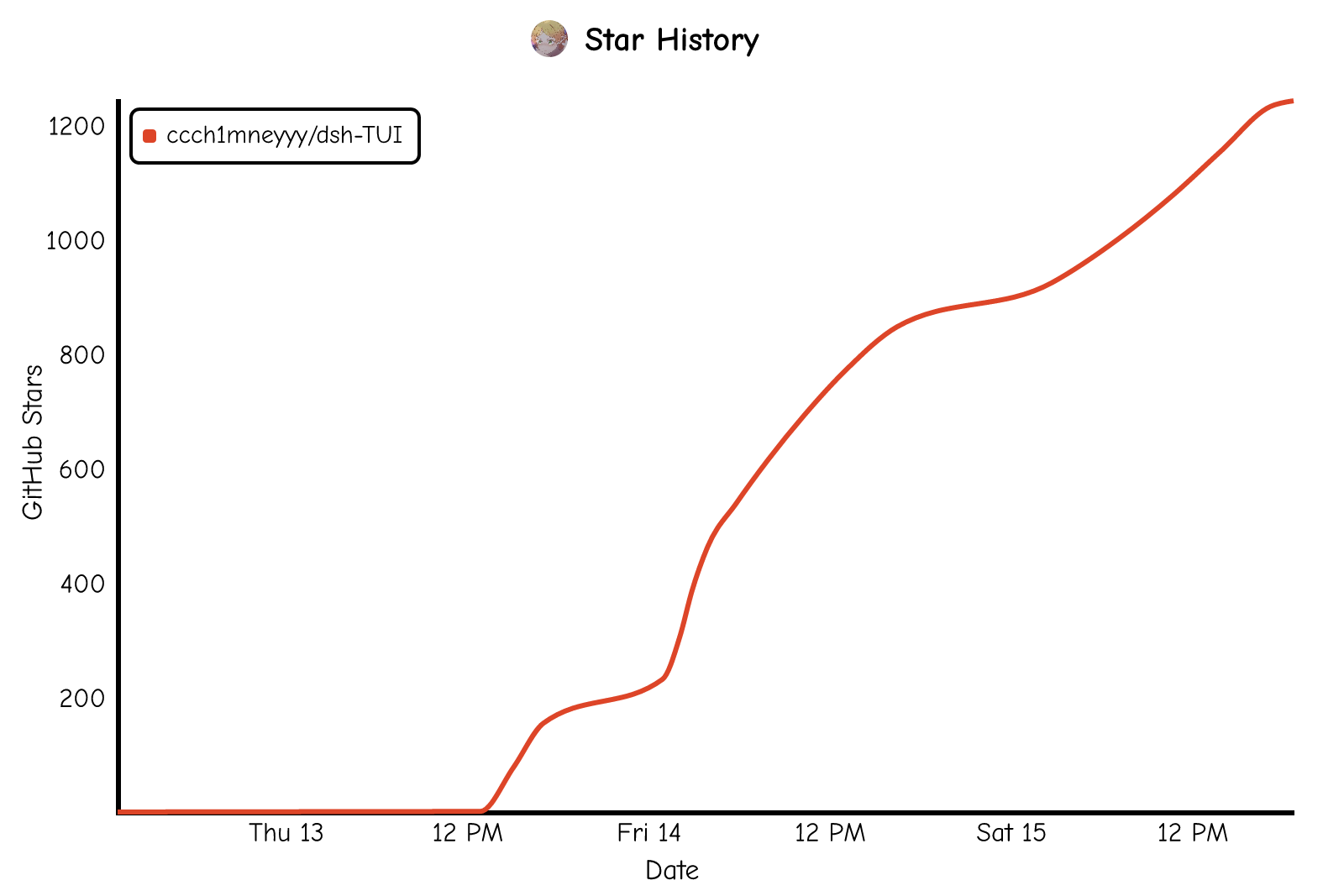
A beautiful, practical Claude Code-style TUI plugin with pixel whale top bar, flowing glow title, real-time status line, streaming thought expansion, time rewind, context progress bar and TPS gauge — zero core changes.
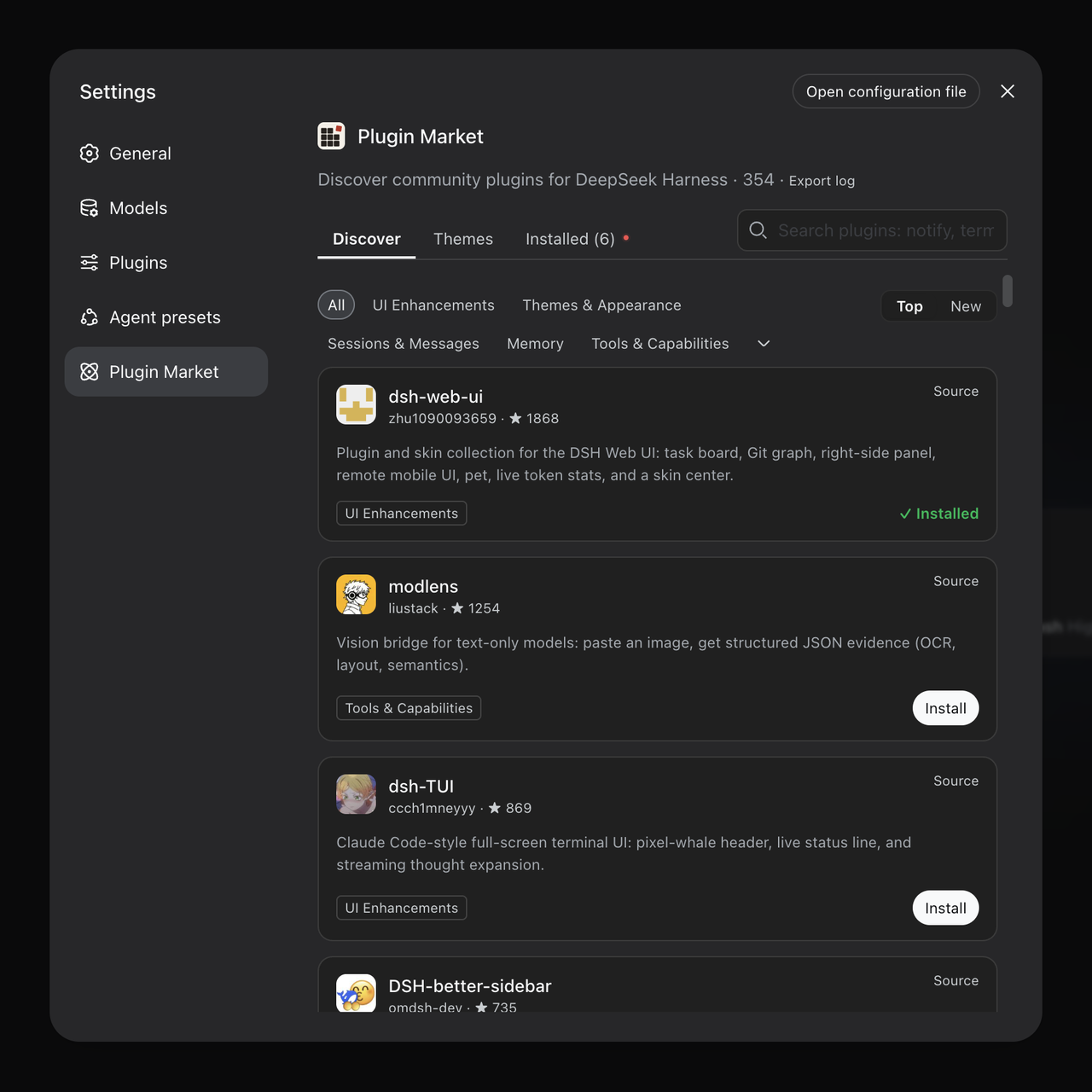
The plugin market for DeepSeek Harness: browse/search/one-click install community plugins and themes, with updates, backup/restore, hot disable, diagnostics, and AI fix.

A persistent whale widget on the DSH web UI that shows DeepSeek balance, today's usage, and per-turn cost, with drag-and-snap and sound effects.