sci-fork
Run the following command in DeepSeek Harness:
dsh plugin install zhang-bin-98/sci-fork
Paste the following prompt into your AI chat to install this plugin:
Run dsh plugin install zhang-bin-98/sci-fork in your terminal to install the SciFork plugin from GitHub (https://github.com/zhang-bin-98/sci-fork), then restart DSH and launch it from your research project directory to get started.
About this plugin
In biomedical research, questions, hypotheses, literature evidence, lab results, and findings tend to scatter across notes, PDFs, and chat threads, with no connected, inspectable view of how they relate. SciFork plugs into DeepSeek Harness as a local, Git-native research graph: your project is simply ordinary Markdown and JSON files in a local Git repository, the graph is a rebuildable view of those files rather than a separate database, and nothing is ever uploaded or cloud-synced.
Core capabilities include importing PubMed evidence by PMID or DOI, keeping untested hypotheses strictly separate from team results and human-reviewed findings, switching between a Main overview and a focused Evidence view for any entity, running a bounded one-step literature-driven expansion (capped at five low-confidence branches) via Research & Expand, and writing a local Git checkpoint after each successful change that touches only SciFork-managed files.
It is built for individual researchers or small teams doing literature-driven biomedical inquiry or hypothesis-driven research within DSH, especially those who need structured, traceable progress tracking while keeping all data on-device and free of external databases or cloud dependencies.
Screenshots
Use Cases
- Tracing the evidence chain and hypothesis validation around an open biomedical question in DSH
- Importing PubMed literature by PMID or DOI and linking assertions to a specific research hypothesis
- Running one bounded, literature-grounded expansion from the current focus to generate new branch hypotheses
Best For
- Independent researchers conducting literature-driven biomedical inquiry within DSH
- Small research teams needing structured tracking of hypothesis-evidence-finding relationships
- Researchers who insist on fully local data storage and avoid cloud sync or external databases
Related Plugins
A service-oriented sidebar framework for DSH, offering a full workbench with file explorer, embedded browser, real terminal, Git panel, and extensible plugin services.
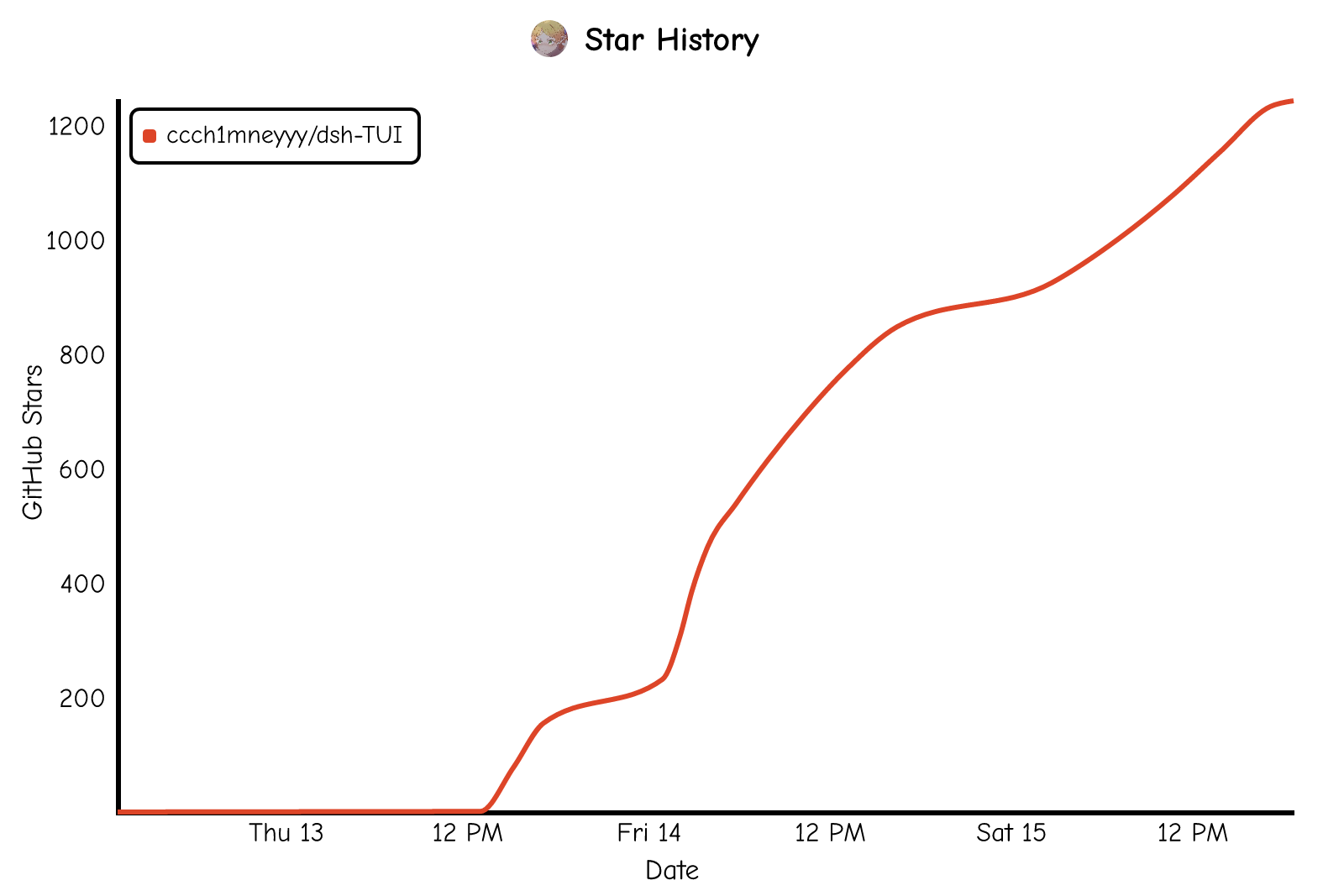
A beautiful, practical Claude Code-style TUI plugin with pixel whale top bar, flowing glow title, real-time status line, streaming thought expansion, time rewind, context progress bar and TPS gauge — zero core changes.
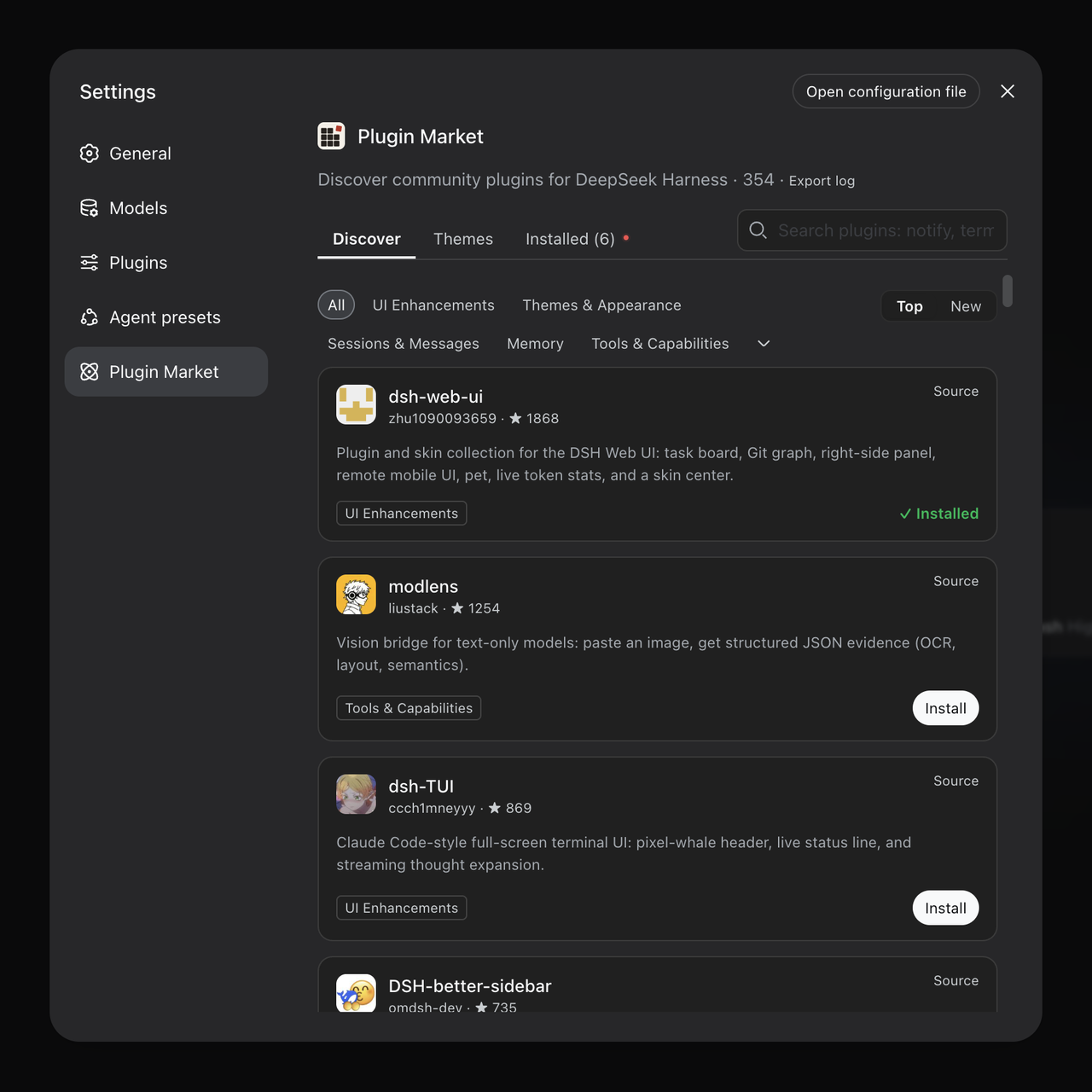
The plugin market for DeepSeek Harness: browse/search/one-click install community plugins and themes, with updates, backup/restore, hot disable, diagnostics, and AI fix.

A persistent whale widget on the DSH web UI that shows DeepSeek balance, today's usage, and per-turn cost, with drag-and-snap and sound effects.