dsh-plugin-repo
Run the following command in DeepSeek Harness:
dsh plugin install Z-6354/dsh-plugin-repo
Paste the following prompt into your AI chat to install this plugin:
Run dsh plugin install Z-6354/dsh-plugin-repo in the DeepSeek Harness terminal to install; the full source is available at https://github.com/Z-6354/dsh-plugin-repo
About this plugin
The third-party plugin ecosystem around DeepSeek Harness is growing, yet each device manages its .tgz bundles in isolation—versions drift and syncing between machines means manually copying files. dsh-plugin-repo gives every DSH device a self-hosted plugin repository served over local HTTP, covering listing, upload, download, and installation of third-party packages while keeping official @deepseek-ai packages strictly untouched and invisible.
The headline feature is cross-device sync: connect to another DSH instance, and a dual-pane UI highlights exact version differences between local and remote. Select only the packages that differ for a targeted pull or push; downgrades trigger an explicit warning, and sync history is persisted across restarts. Beyond file transfer, the plugin spans the full lifecycle—enabling or disabling a plugin in the web profile, installing directly from npm, reading peerDependencies for DSH version compatibility, and uninstalling a disabled plugin. Every operation is also available through a set of HTTP endpoints and Model tools for scriptable integration.
If you run more than one DeepSeek Harness device, rely on non-official Cordis plugins, and want a private, offline-friendly way to manage and synchronize those bundles without routing through a public registry, dsh-plugin-repo is the tool that gathers the .tgz files scattered across USB drives and chat threads into one organized repository.
Use Cases
- Pull or push unofficial .tgz plugin bundles between multiple DSH devices
- Manage the full package lifecycle: upload, download, install, enable, and uninstall
- Automate plugin repository operations via HTTP API or Model tools
Best For
- Developers running multiple DeepSeek Harness instances with third-party Cordis plugins
- Users who prefer private, offline plugin management without public registries
- Engineering teams that embed plugin lifecycle into automation scripts or CI pipelines
Related Plugins
A service-oriented sidebar framework for DSH, offering a full workbench with file explorer, embedded browser, real terminal, Git panel, and extensible plugin services.
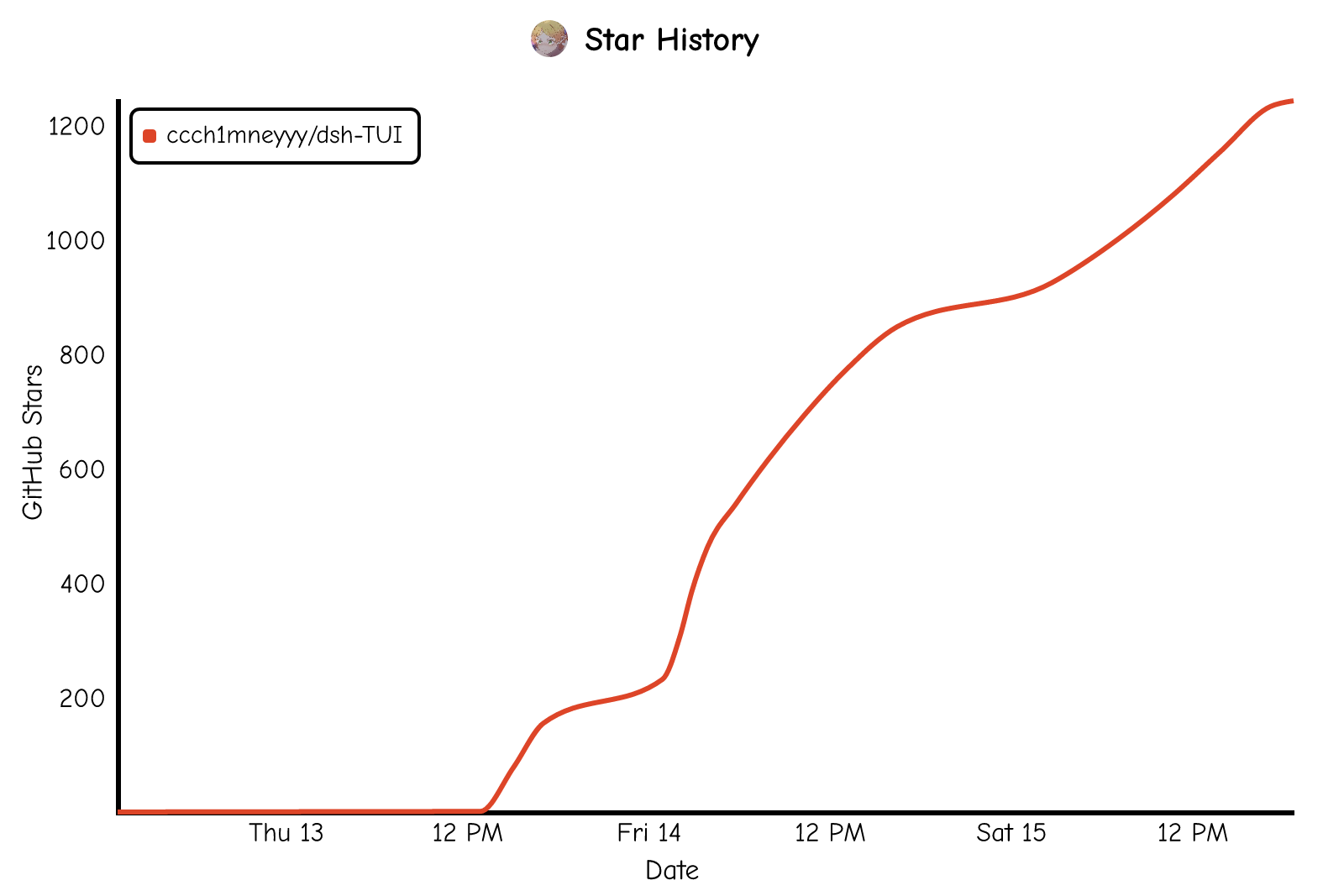
A beautiful, practical Claude Code-style TUI plugin with pixel whale top bar, flowing glow title, real-time status line, streaming thought expansion, time rewind, context progress bar and TPS gauge — zero core changes.
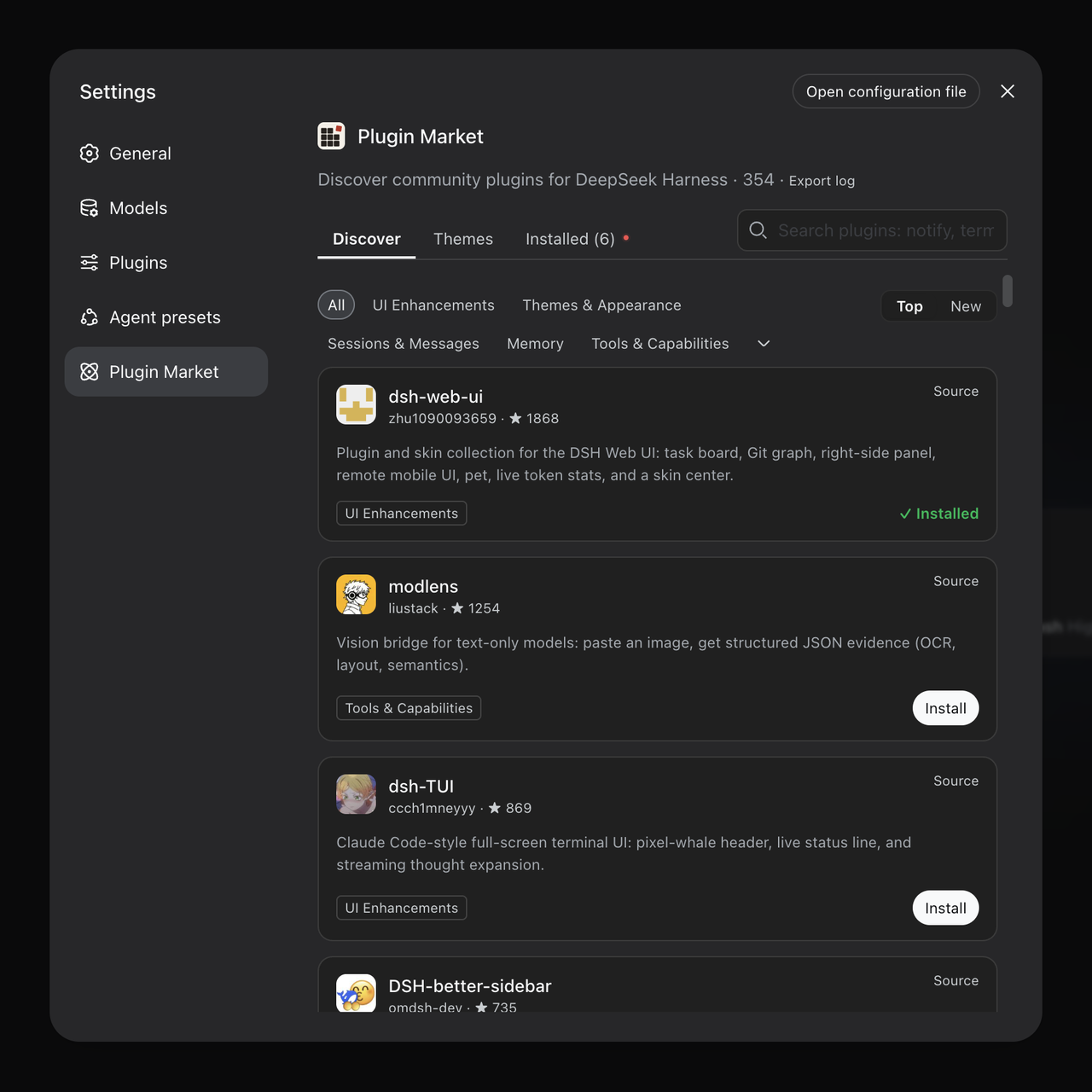
The plugin market for DeepSeek Harness: browse/search/one-click install community plugins and themes, with updates, backup/restore, hot disable, diagnostics, and AI fix.

A persistent whale widget on the DSH web UI that shows DeepSeek balance, today's usage, and per-turn cost, with drag-and-snap and sound effects.