dsh-router-codebuddy
Run the following command in DeepSeek Harness:
dsh plugin install CARVIN94/dsh-router-codebuddy
Paste the following prompt into your AI chat to install this plugin:
Run dsh plugin install CARVIN94/dsh-router-codebuddy in the DeepSeek Harness terminal to install this plugin; source code at https://github.com/CARVIN94/dsh-router-codebuddy
About this plugin
If you are already running dsh-router to manage multiple AI suppliers, Tencent CodeBuddy is often the hardest piece to wire up: its login uses OAuth polling instead of a standard redirect callback, tokens need a refresh header for renewal, the model list lives behind /v3/config and only materializes with an account credential, and the chat endpoint enforces SSE streaming. dsh-router-codebuddy is the supplier plugin that bridges all of those quirks – after installing and restarting dsh web, a CodeBuddy card appears under Suppliers in the panel, while account selection, cooldown, and fallback logic stay in the core AccountPool.
The plugin focuses on getting a single account talking to the upstream: it generates a login link you complete in the browser, polls for the token every 5 seconds (up to 5 minutes), and persists credentials automatically with no manual callback pasting. The model list is fetched live from upstream, so when new models such as GLM-5.3 or Kimi-K3 go live server-side, one click on Fetch Models refreshes the local list. Tokens are auto-refreshed within 24 hours of expiry via the X-Refresh-Token header, falling back to the old credential if the refresh call fails. Daily check-in grants 100 credits (1000 on the 7th consecutive day), and an already-checked-in upstream response is treated as idempotent success.
This plugin is aimed at users who already orchestrate multiple suppliers through the dsh-router panel and want CodeBuddy as just another card in the account pool. Multi-account round-robin or fallback, SSE-to-OpenAI conversion, credit persistence, and status display are all handled by the core – the plugin only adapts the protocol and reports semantic states. Install dsh-router core first, then add this plugin, restart, and you are ready.
Use Cases
- Add Tencent CodeBuddy accounts to a dsh-router supplier pool for unified panel control
- Auto-rotate, cool-down, and failover across multiple CodeBuddy accounts
- Pull the latest upstream model list from the panel and switch models via alias prefix on demand
Best For
- dsh-router users managing multiple AI suppliers from a single dashboard
- Developers holding several CodeBuddy accounts who need rotation, failover, and credit tracking
- Power users wanting to plug CodeBuddy into an OpenAI-compatible SSE gateway
Related Plugins
A service-oriented sidebar framework for DSH, offering a full workbench with file explorer, embedded browser, real terminal, Git panel, and extensible plugin services.
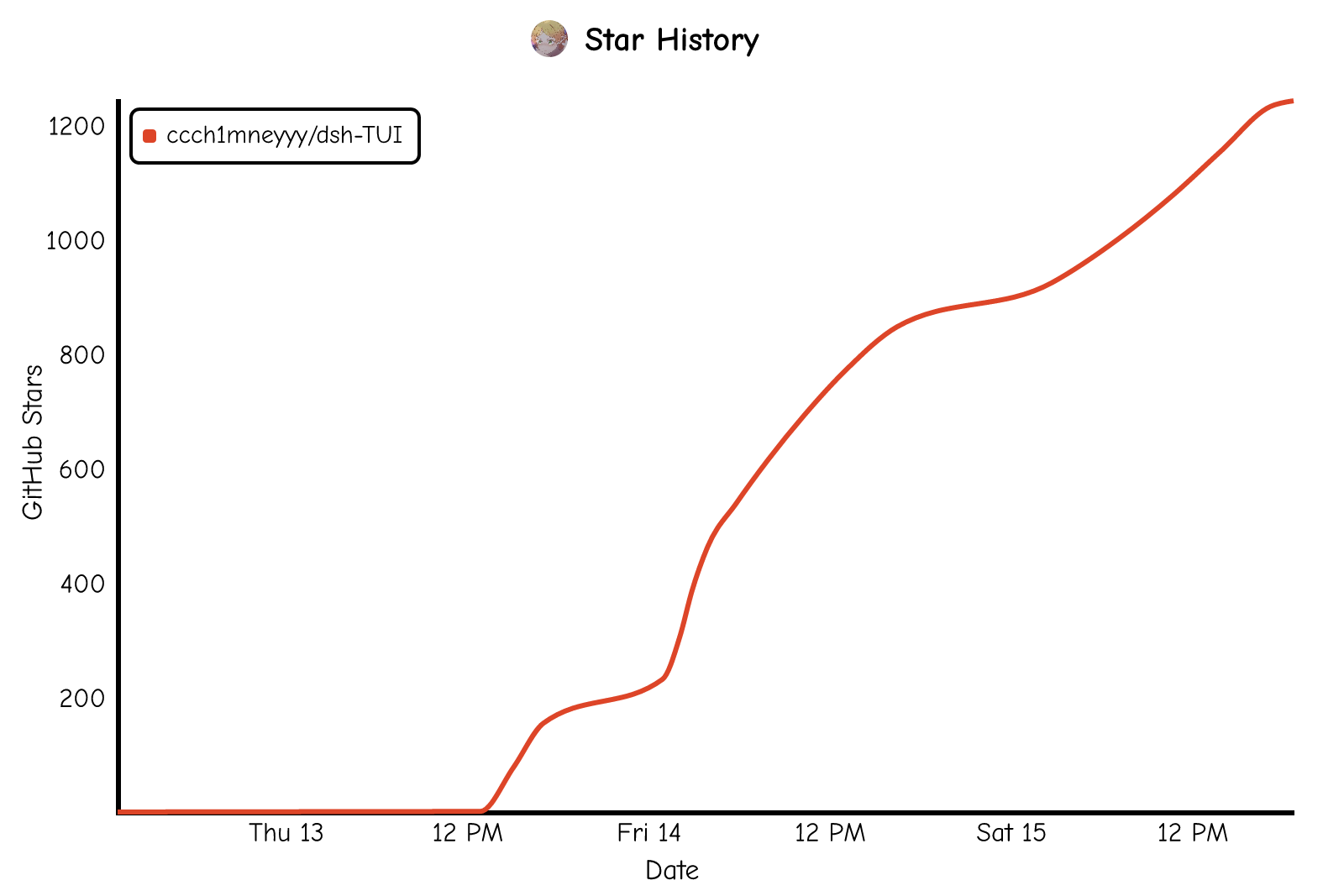
A beautiful, practical Claude Code-style TUI plugin with pixel whale top bar, flowing glow title, real-time status line, streaming thought expansion, time rewind, context progress bar and TPS gauge — zero core changes.
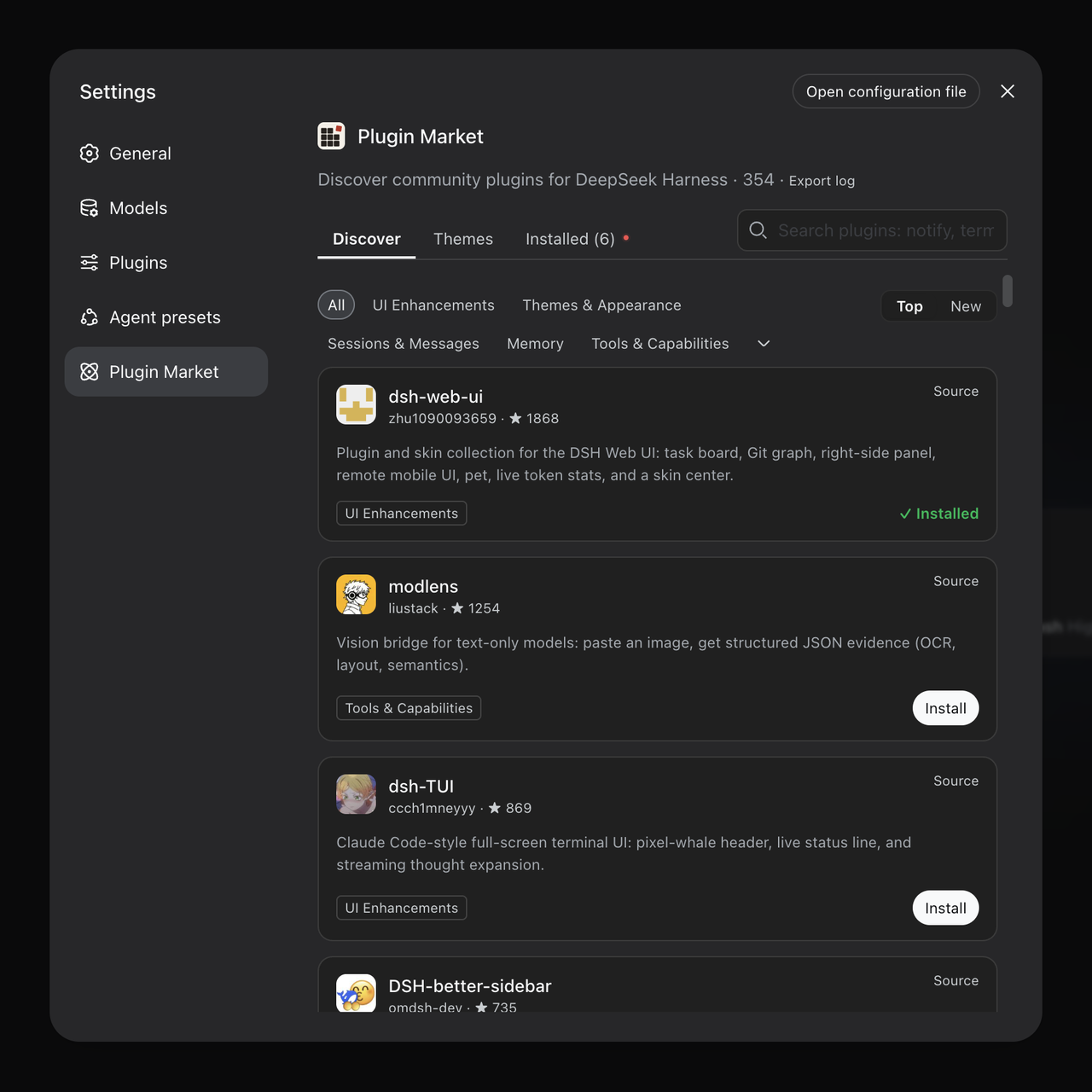
The plugin market for DeepSeek Harness: browse/search/one-click install community plugins and themes, with updates, backup/restore, hot disable, diagnostics, and AI fix.
A persistent whale widget on the DSH web UI that shows DeepSeek balance, today's usage, and per-turn cost, with drag-and-snap and sound effects.