dsh-liketavern
Run the following command in DeepSeek Harness:
dsh plugin install Amakurai/dsh-liketavern
Paste the following prompt into your AI chat to install this plugin:
Run dsh plugin install Amakurai/dsh-liketavern in your terminal to add the plugin to the current web profile; source is at https://github.com/Amakurai/dsh-liketavern .
About this plugin
dsh web was built around agent orchestration, so adding a SillyTavern-style role-play front-end usually meant standing up a separate client and losing access to native dsh session forks, the system-prompt waterfall, and scheduled plans. dsh-liketavern mounts the entire Tavern experience onto the host native slots, reusing the same UI primitives and design tokens, so role-play feels like a built-in conversation mode rather than an add-on.
Core features include character-card import and export (V1/V2/V3, PNG-embedded or JSON), a three-tier world book with a mutable state layer, BM25 long-term memory the model can actively read and write (with async compression when over capacity), and floor-level transactions where memory and state writes go through a WAL so that rolling back, regenerating, or editing a turn is simply a prefix fork plus reverse WAL replay, with sibling navigation across branches on the same floor. You can also continue a reply, get an AI ghost-fill, and drive multi-step retrieval through seven model tools.
If you already run agent workflows in the dsh ecosystem and want a full role-play front-end without maintaining two runtimes or opening extra channels, this plugin gives you cards, presets, and memories all under $DSH_HOME, version-locked to the host via peerDependency.
Use Cases
- Bind a character card in dsh web and run multi-turn roleplay with world books and long-term memory.
- Roll back, regenerate, or edit any floor while navigating sibling branches without losing the original session.
- Import SillyTavern cards and presets to get the full Tavern experience without a separate front-end.
Best For
- Developers already running agent workflows in dsh who want to layer in role-play.
- Users working with SillyTavern cards and world books seeking a unified agent runtime.
- Project maintainers who prefer native UI consistency over maintaining two separate front-ends.
Related Plugins
A service-oriented sidebar framework for DSH, offering a full workbench with file explorer, embedded browser, real terminal, Git panel, and extensible plugin services.
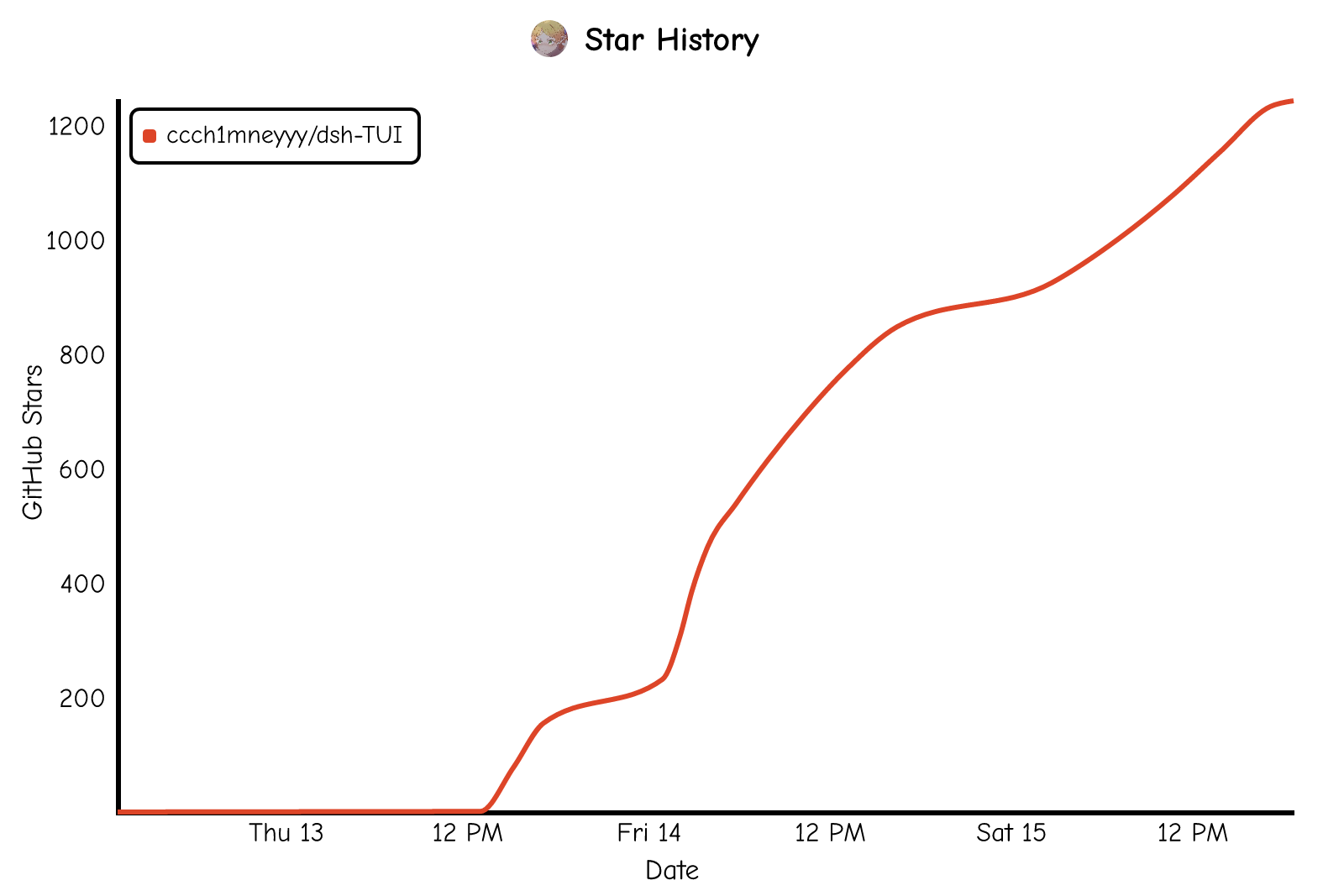
A beautiful, practical Claude Code-style TUI plugin with pixel whale top bar, flowing glow title, real-time status line, streaming thought expansion, time rewind, context progress bar and TPS gauge — zero core changes.
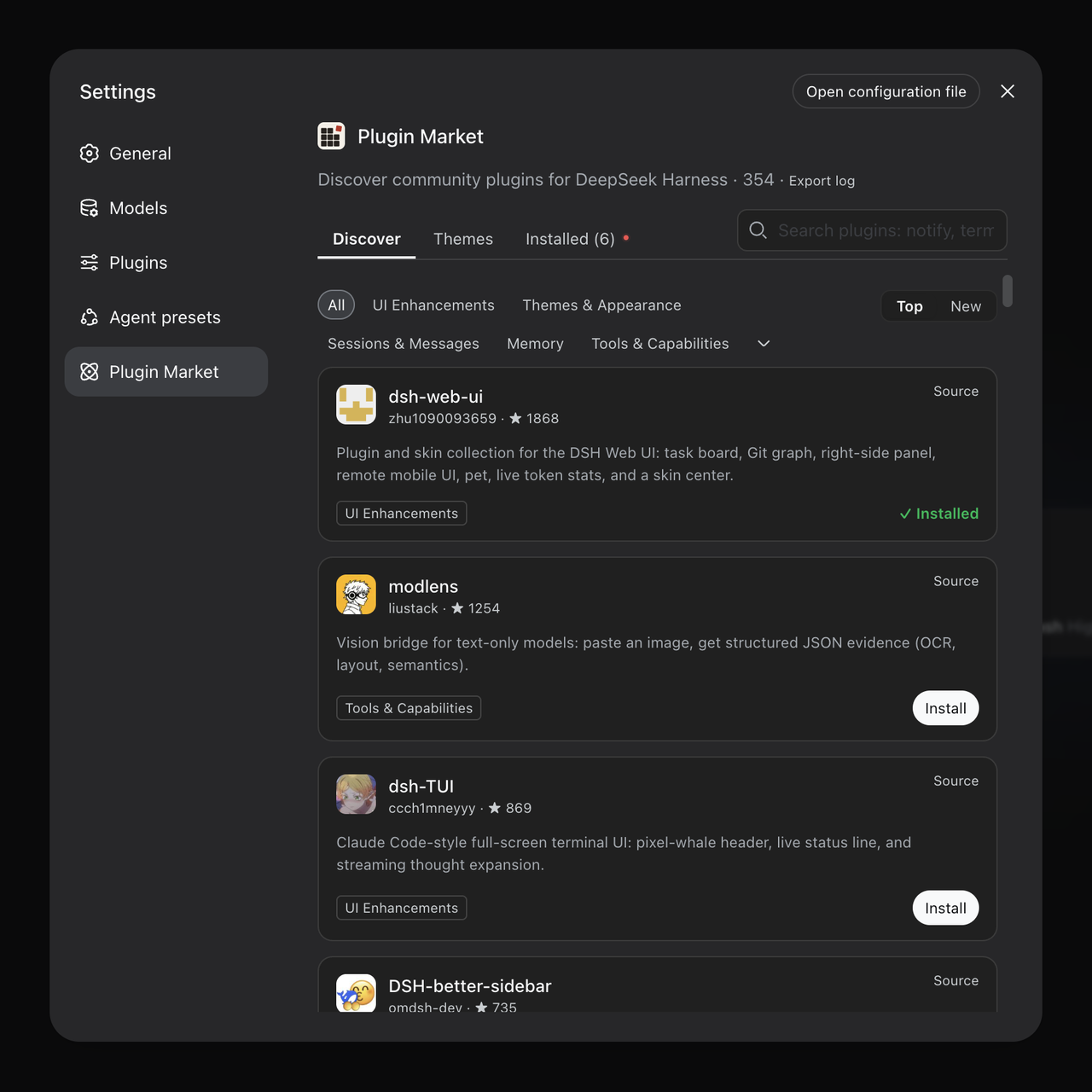
The plugin market for DeepSeek Harness: browse/search/one-click install community plugins and themes, with updates, backup/restore, hot disable, diagnostics, and AI fix.

A persistent whale widget on the DSH web UI that shows DeepSeek balance, today's usage, and per-turn cost, with drag-and-snap and sound effects.