dsh-desktop
Run the following command in DeepSeek Harness:
dsh plugin install Hyna-hla/dsh-desktop
Paste the following prompt into your AI chat to install this plugin:
Run dsh plugin install Hyna-hla/dsh-desktop in the DeepSeek Harness terminal to install this desktop control plugin; source: https://github.com/Hyna-hla/dsh-desktop
About this plugin
When an AI model can only read page content but cannot click the address bar, switch windows, or drag files, true desktop automation simply does not exist. dsh-desktop solves this by exposing the full desktop capabilities of the host operating system to the model, making the browser chrome, search bar, and any application interactable, and complementing browser extensions that only reach inside the page.
The core toolkit revolves around atomic primitives: a screenshot pipeline that invokes Windows OCR to return per-word bounding boxes so the model can target clicks precisely; left, right, and middle button single and double clicks; press-and-drag gestures; Unicode text input including CJK characters; and arbitrary key combinations such as ctrl+l, alt+tab, and f5. A typical open-url flow is: send ctrl+l to focus the address bar, type the URL, then press Enter. For unknown interfaces the model runs desktop_ocr first to locate coordinates, then clicks.
It suits two audiences: developers who want to grant an AI assistant full desktop control without assembling a heavyweight RPA stack, and automation scenarios that require cross-application operations like dragging files from the explorer into an editor or hopping between windows. The tools run in the host process outside the sandbox, so privileges are high; the model only invokes them when you explicitly issue an instruction.
Use Cases
- Automate cross-app workflows such as dragging files from the explorer into an editor
- Use key combos to focus the address bar and open a target URL
- Locate unknown UI elements via screenshot OCR before clicking
Best For
- Developers who want to grant AI assistants full desktop control
- Engineers needing cross-app automation without RPA tooling
- Individuals and teams building intelligent desktop assistants
Related Plugins
A service-oriented sidebar framework for DSH, offering a full workbench with file explorer, embedded browser, real terminal, Git panel, and extensible plugin services.
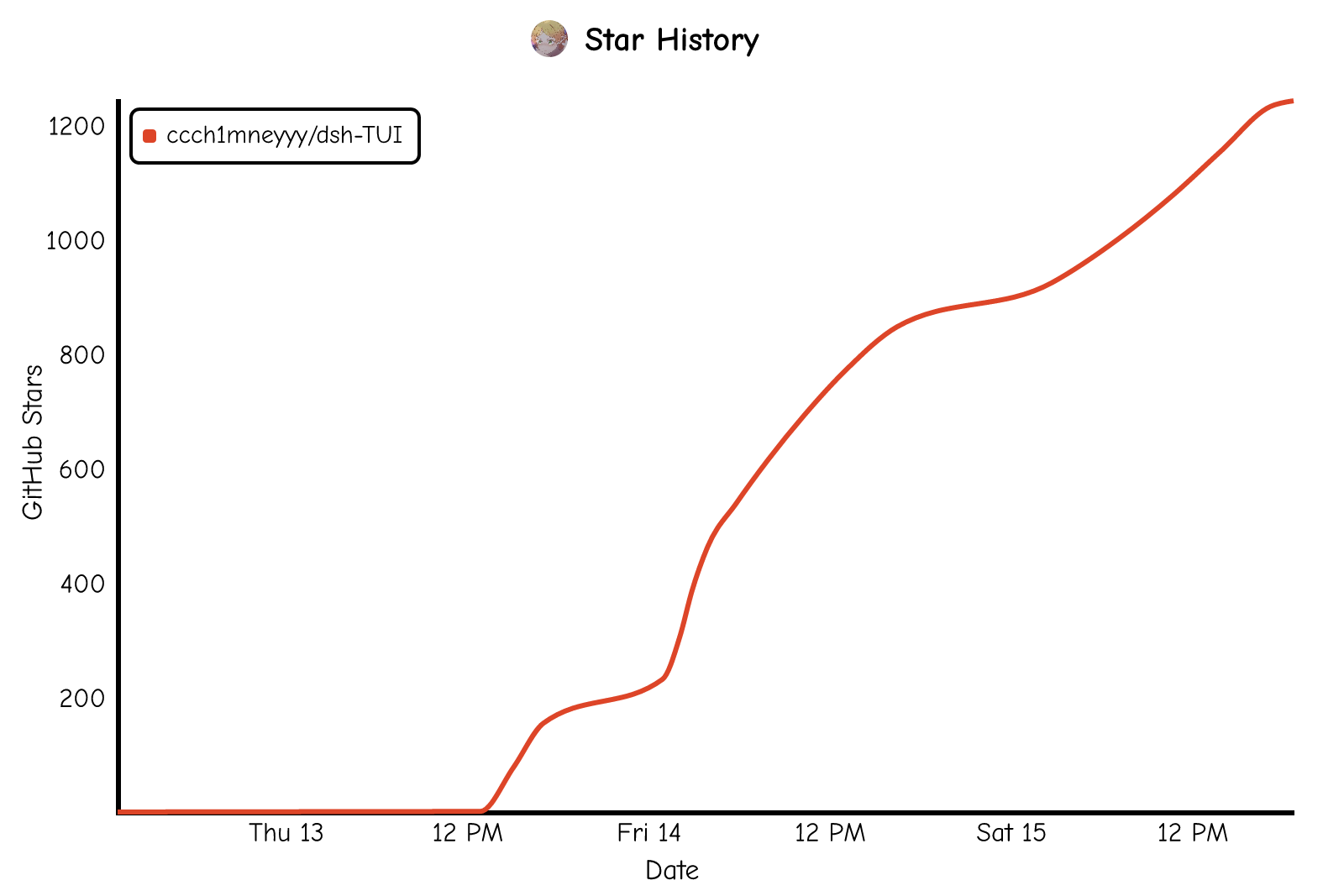
A beautiful, practical Claude Code-style TUI plugin with pixel whale top bar, flowing glow title, real-time status line, streaming thought expansion, time rewind, context progress bar and TPS gauge — zero core changes.
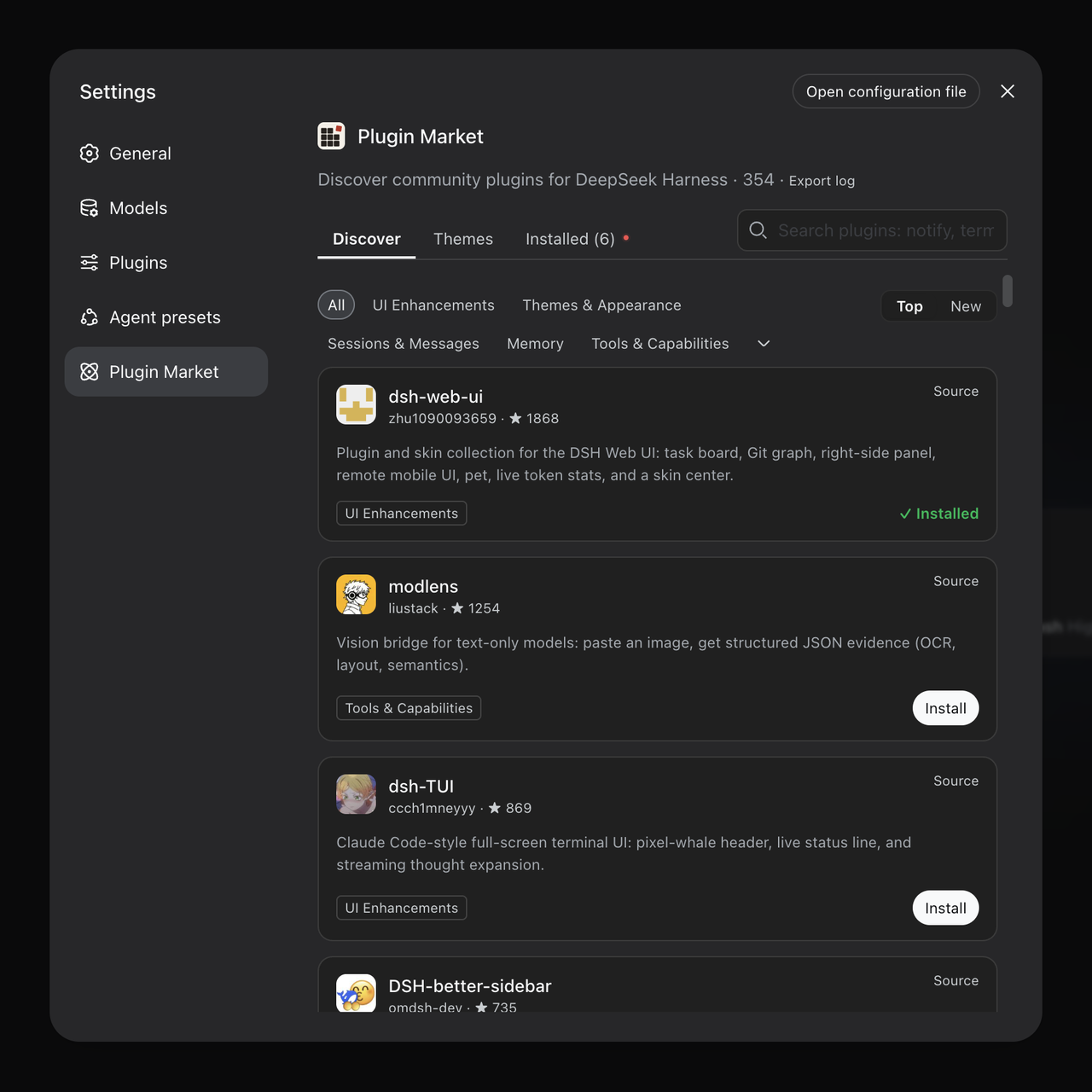
The plugin market for DeepSeek Harness: browse/search/one-click install community plugins and themes, with updates, backup/restore, hot disable, diagnostics, and AI fix.

A persistent whale widget on the DSH web UI that shows DeepSeek balance, today's usage, and per-turn cost, with drag-and-snap and sound effects.