dsh-plugin-toggle
Run the following command in DeepSeek Harness:
dsh plugin install huntersxy/dsh-plugin-toggle
Paste the following prompt into your AI chat to install this plugin:
Run dsh plugin install huntersxy/dsh-plugin-toggle in your terminal to install the plugin, then restart dsh web; source repository: https://github.com/huntersxy/dsh-plugin-toggle
About this plugin
In DeepSeek Harness Web, third-party plugins often lack a straightforward management surface once installed — either they keep running indefinitely, or you have to hand-edit patch files and restart the process. dsh-plugin-toggle adds a "Third-party Plugins" tab under the settings page, giving you a single, at-a-glance view of every non-official plugin.
The tab lists each third-party bundle and patch-inserted row per profile, complete with version, description, and current status. A single click on the toggle enables or disables a plugin: the switch rewrites cordis.patch.yml and DSH hot-reloads the change immediately, with no restart required. State persists across restarts. For plugins whose patches contain configuration or expression lines, a warning icon appears to remind you that a full disable may need a process restart.
This plugin is ideal for DeepSeek Harness users who juggle several third-party extensions and need to flip them on and off frequently. It does not change plugin logic itself — it simply provides a safe, persistent switch channel at the web-settings layer, saving you from hand-editing YAML and restarting over and over.
Use Cases
- Quickly enable or disable different third-party plugins as tasks change, without restarting the process.
- Temporarily disable a conflicting plugin while debugging configuration and see the effect immediately.
- Manage all non-official plugin states from a single settings tab instead of hand-editing YAML files.
Best For
- DeepSeek Harness users running multiple third-party extensions at the same time.
- Developers who prefer debugging and toggling plugin settings from the web interface.
- Users who want to minimize manual YAML editing and keep operations lightweight.
Related Plugins
A service-oriented sidebar framework for DSH, offering a full workbench with file explorer, embedded browser, real terminal, Git panel, and extensible plugin services.
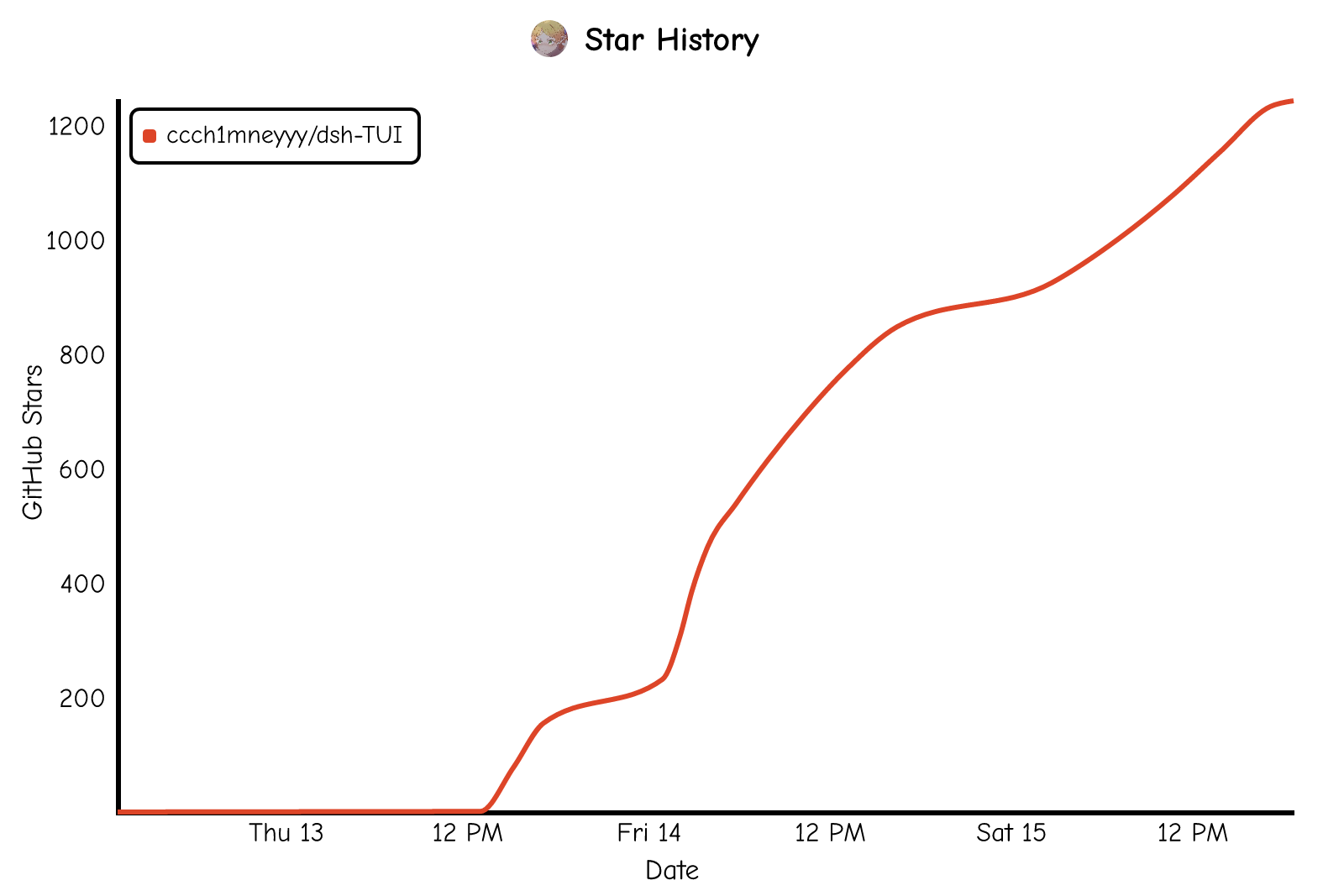
A beautiful, practical Claude Code-style TUI plugin with pixel whale top bar, flowing glow title, real-time status line, streaming thought expansion, time rewind, context progress bar and TPS gauge — zero core changes.
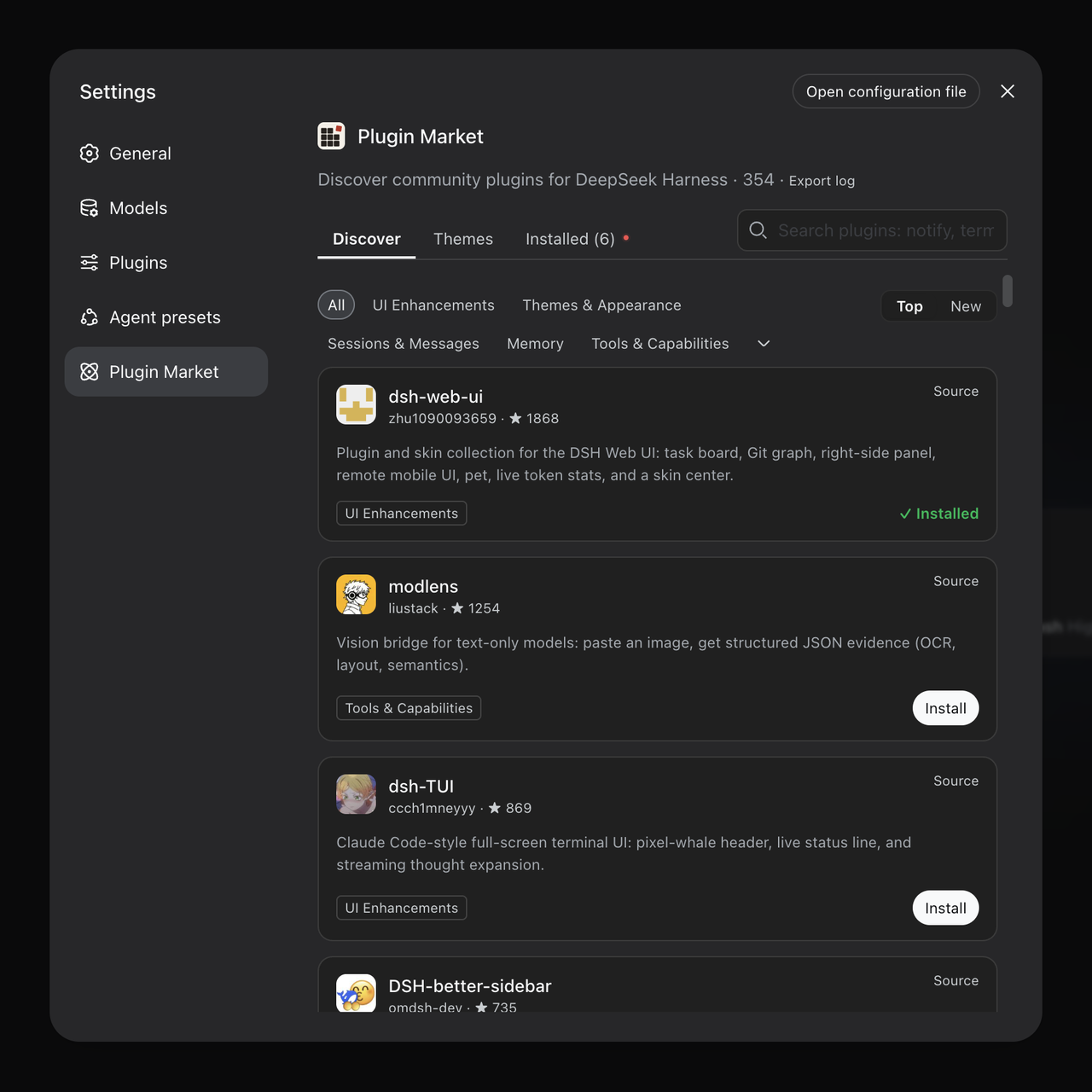
The plugin market for DeepSeek Harness: browse/search/one-click install community plugins and themes, with updates, backup/restore, hot disable, diagnostics, and AI fix.

A persistent whale widget on the DSH web UI that shows DeepSeek balance, today's usage, and per-turn cost, with drag-and-snap and sound effects.