dsh-plugin-tree
Run the following command in DeepSeek Harness:
dsh plugin install jackxiao-hub/dsh-plugin-tree
Paste the following prompt into your AI chat to install this plugin:
Run dsh plugin install jackxiao-hub/dsh-plugin-tree in DeepSeek Harness to install this plugin; the source code repository is at https://github.com/jackxiao-hub/dsh-plugin-tree
About this plugin
Once a DSH Web install accumulates dozens of plugins, the flat Settings → Plugins list becomes a guessing game: which package is a foundation library, which is a domain service, who depends on whom, and what cascades when something fails—all of that is buried in a one-dimensional table. dsh-plugin-tree restructures the entire plugin set into layers derived from the longest dependency chain (L0 foundation through L5 and beyond), each collapsible with a per-layer count, so the full stack topology is visible at a glance.
Beyond the tree, the plugin ships an interactive SVG dependency graph: hover any node to isolate its complete upstream and downstream chain (cycles auto-truncate), click to pin, blank-space to release; zoom, fullscreen lightbox, and drag-to-pan are all built in. Node borders encode status, fills encode provenance, and a legend sits in the corner. Three independent filter axes (status, vendor, install source) intersect with a free-text search to narrow the list quickly. Third-party plugins can be toggled on or off directly from their detail card—changes apply live and persist across restarts. An update check surfaces an inline Update button for any npm package with a newer version. Duplicate module names are keyed by unique entry id, so every Loader row shows its own state independently.
If your DSH Web profile regularly runs ten or more plugins mixing official and third-party packages across several install sources, dsh-plugin-tree turns a cluttered inventory into a layered, interactive topology map—saving the repeated log-digging needed to untangle dependency conflicts.
Use Cases
- Map out layered dependency structure as the plugin count grows
- Trace upstream and downstream chains, mount failures, and cycles on the interactive graph
- Toggle third-party plugins on or off from the detail card and check for updates in one place
Best For
- Developers maintaining 10+ plugins in DSH Web
- Teams mixing official and third-party plugins across install sources
- Ops staff who need quick diagnosis of dependency conflicts and mount failures
Related Plugins
A service-oriented sidebar framework for DSH, offering a full workbench with file explorer, embedded browser, real terminal, Git panel, and extensible plugin services.
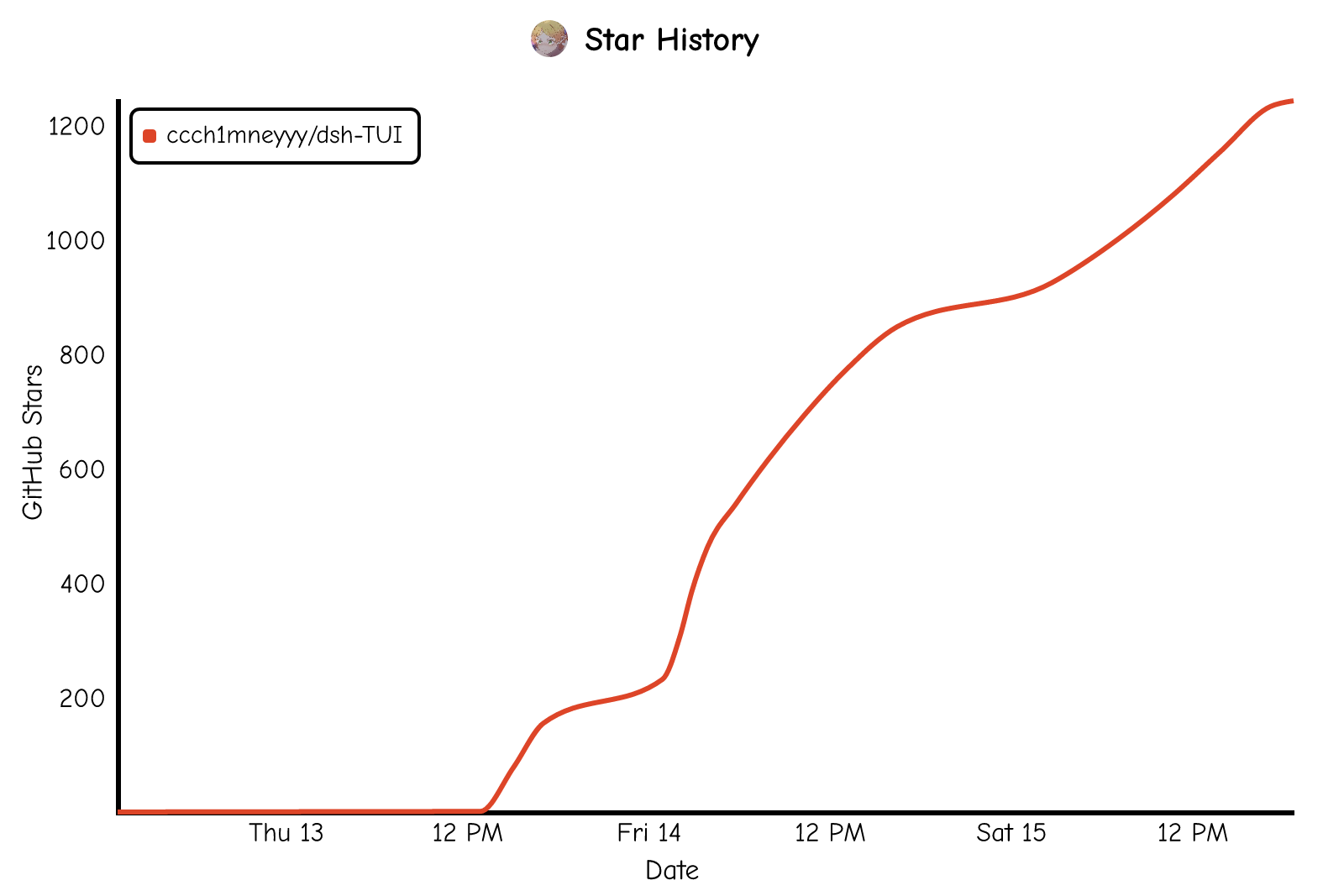
A beautiful, practical Claude Code-style TUI plugin with pixel whale top bar, flowing glow title, real-time status line, streaming thought expansion, time rewind, context progress bar and TPS gauge — zero core changes.
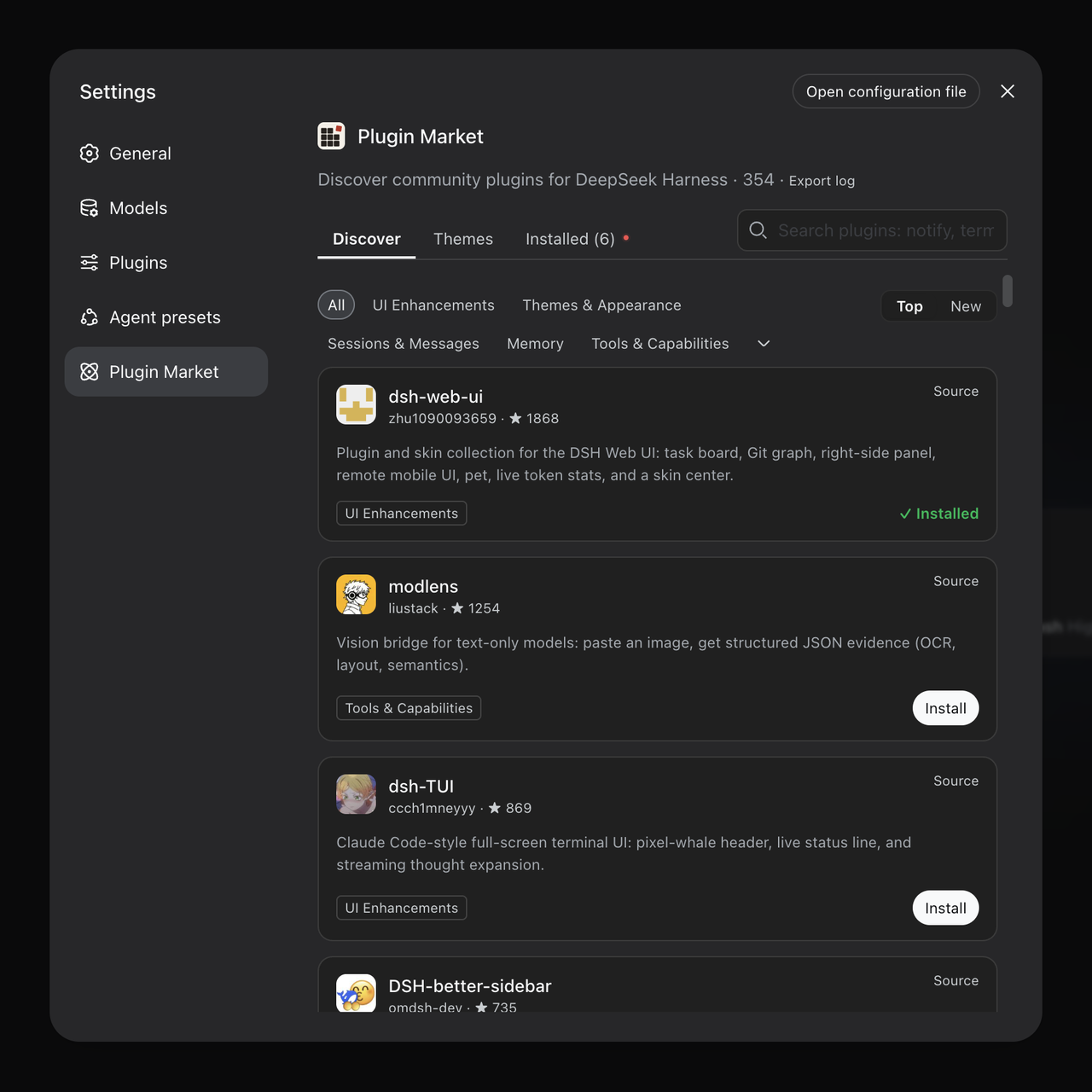
The plugin market for DeepSeek Harness: browse/search/one-click install community plugins and themes, with updates, backup/restore, hot disable, diagnostics, and AI fix.

A persistent whale widget on the DSH web UI that shows DeepSeek balance, today's usage, and per-turn cost, with drag-and-snap and sound effects.