omdsh-editor
Run the following command in DeepSeek Harness:
dsh plugin install omdsh-plugins/omdsh-editor
Paste the following prompt into your AI chat to install this plugin:
In DeepSeek Harness, go to Settings → Plugins → Plugin hub and click Install on the omdsh-editor card, or run dsh plugin install omdsh-plugins/omdsh-editor to install from the repository at https://github.com/omdsh-plugins/omdsh-editor.
About this plugin
When you are coding with AI, the most frequent action is rarely typing the next prompt. It is switching to your editor to check what the file actually looks like now. The Harness session view shows the conversation and nothing else; the project directory sits quietly on whichever machine runs the runtime, and opening it means remembering a path and launching an application by hand, an interruption that breaks flow every time.
omdsh-editor adds a single split control to the right side of the session header, collapsing that round-trip into one keypress. The left half is a verb: it launches the editor you used last time with no decision to make. The right half expands into a menu listing the editors, file managers, and terminals actually installed on this host, each row rendered with the product icon read from the locally installed copy rather than a bundled placeholder. Detection is a stat per candidate path with no subprocess involved, so the full sweep takes a few milliseconds; the result is cached for fifteen seconds, which means an editor installed mid-session appears without a restart. The launched child process is detached into its own process group with file descriptors closed, so quitting Harness or a desktop-shell memory-policy restart will not take down the window you are editing in. The editor always opens on the machine running the runtime, and if that machine has nothing installed the menu states which platform it looked on rather than failing silently.
Built for developers who work inside Harness daily and constantly switch between the LLM conversation and a local editor. Works in both dsh web terminal mode and the packaged desktop shell, on macOS, Linux, and Windows. The plugin registers no settings namespace, asks for no form, and writes no extra configuration. Remove it and the session header is exactly as it shipped.
Use Cases
- Jump between the LLM conversation and a local editor with one press to verify code changes
- Open the project directory on the runtime machine when using dsh over a network
- Switch between VS Code, Cursor, Zed, terminals and other tools without manual launching
Best For
- Developers who code daily inside DeepSeek Harness
- Anyone who switches frequently between LLM conversations and a local IDE or terminal
- Developers working in dsh web terminal mode or the packaged desktop shell
Related Plugins
A service-oriented sidebar framework for DSH, offering a full workbench with file explorer, embedded browser, real terminal, Git panel, and extensible plugin services.
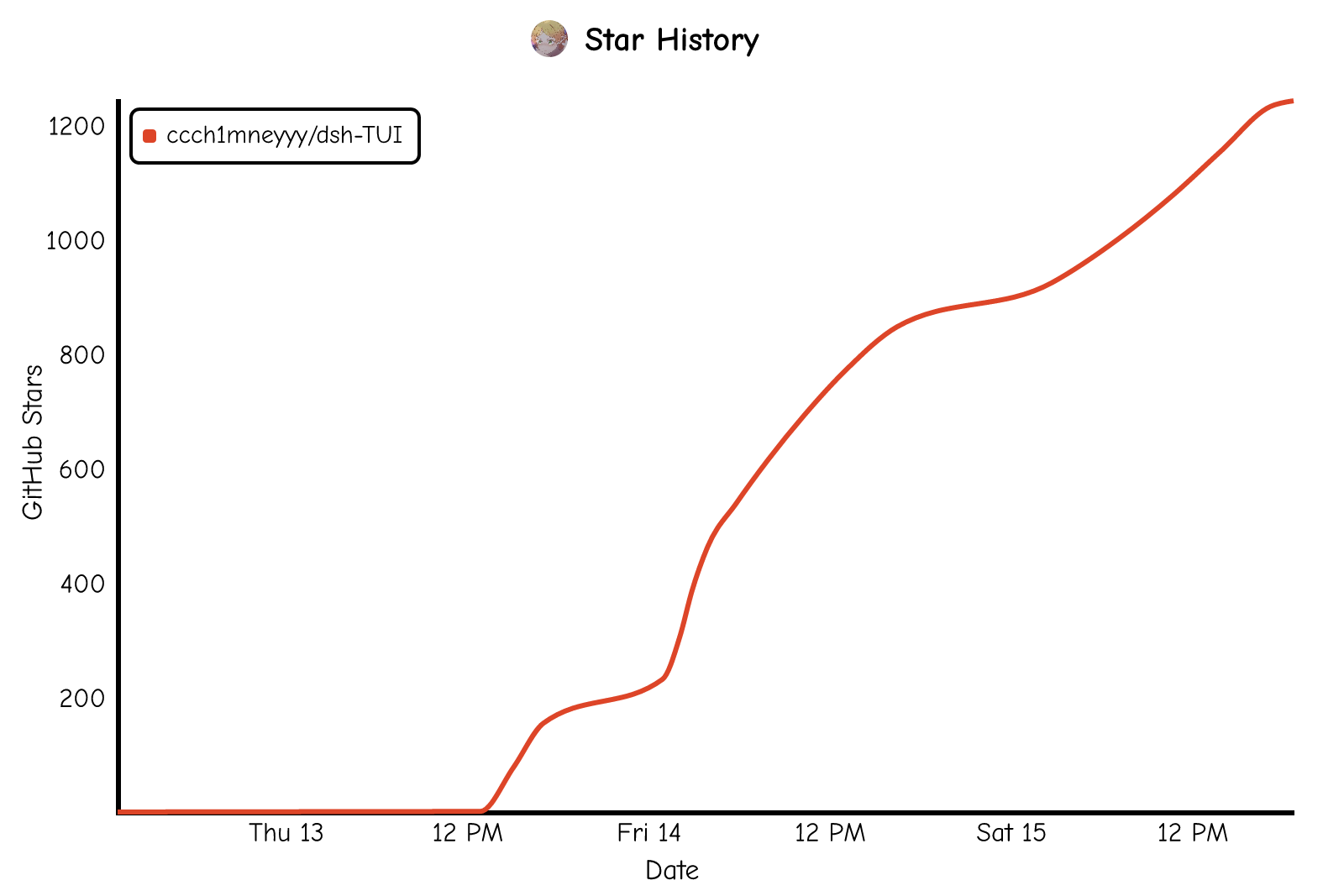
A beautiful, practical Claude Code-style TUI plugin with pixel whale top bar, flowing glow title, real-time status line, streaming thought expansion, time rewind, context progress bar and TPS gauge — zero core changes.
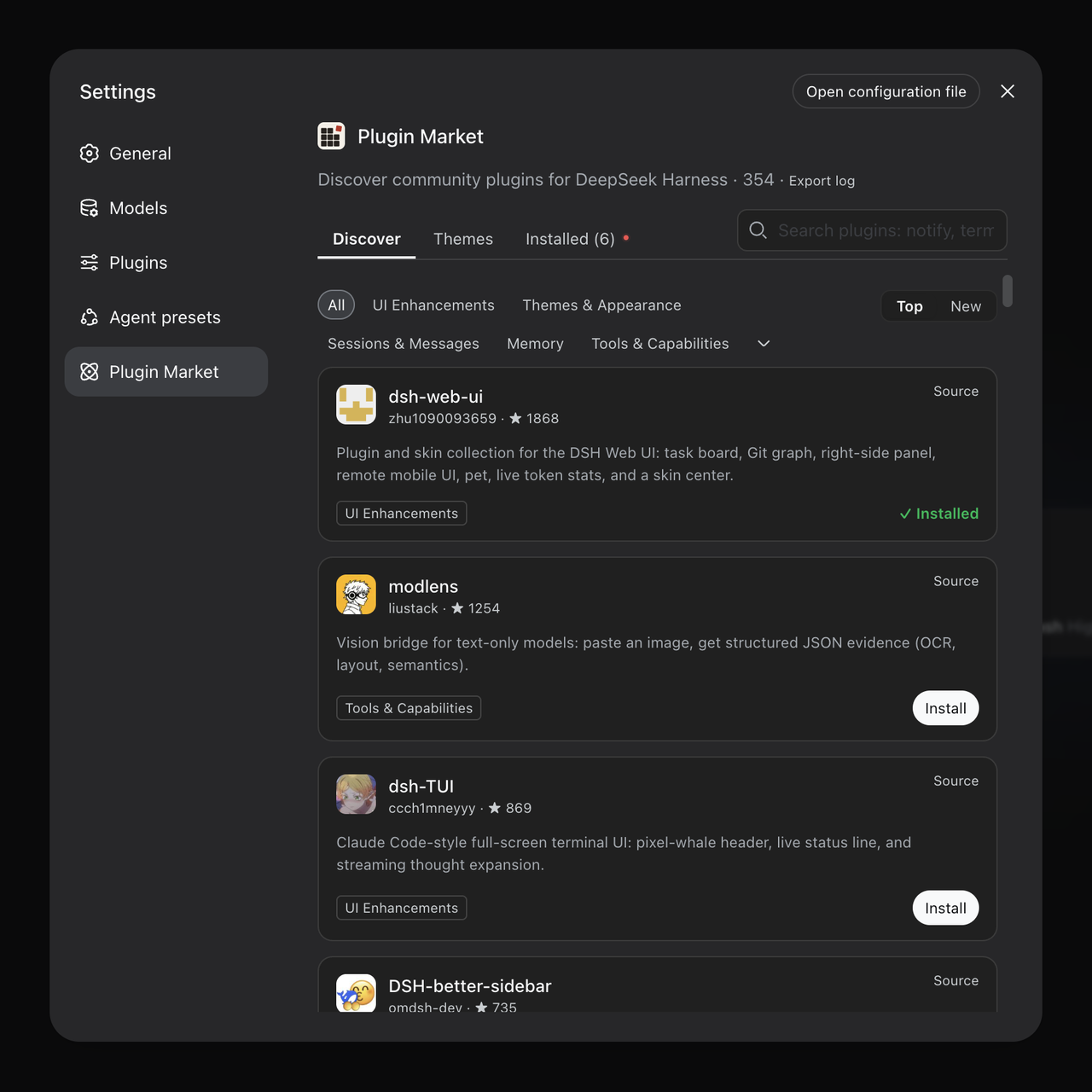
The plugin market for DeepSeek Harness: browse/search/one-click install community plugins and themes, with updates, backup/restore, hot disable, diagnostics, and AI fix.

A persistent whale widget on the DSH web UI that shows DeepSeek balance, today's usage, and per-turn cost, with drag-and-snap and sound effects.