mcp-deliverable
Run the following command in DeepSeek Harness:
dsh plugin install zhuyan1085/mcp-deliverable
Paste the following prompt into your AI chat to install this plugin:
Run dsh plugin install zhuyan1085/mcp-deliverable in the DeepSeek Harness terminal (source: https://github.com/zhuyan1085/mcp-deliverable), then restart the corresponding profile to activate the plugin.
About this plugin
Managing MCP servers in DeepSeek Harness used to mean repeatedly editing the cordis.patch.yml file under your profile: tweaking a stdio working directory or swapping a Streamable HTTP request header all required hand-typed YAML followed by a restart, with no easy way to verify that the Loader actually registered the tools you expected. mcp-deliverable moves that entire workflow into Web Settings → Plugins, turning configuration into a form-filling experience.
The plugin operates in three layers. The Host Remote handles reading, atomic writes, and deletion of the current profile's MCP configuration while displaying live Loader and tool-registration status. The Web settings page covers both stdio and Streamable HTTP servers, letting you visually edit parameters, environment variables, working directories, request headers, call timeouts, failure strategies, and reconnect policies. Invalid configurations and dynamic !!js expressions remain visible and removable on the page, yet the raw expressions are never shipped to the browser. The Bundle ships self-contained Typert descriptors and a browser product, built by the prepare script at install time with no need for a sibling Harness checkout. On the security side, literal env and header values are read and written by the trusted Host settings client, while secrets should stay in environment-backed !!js expressions so credentials never leak into the browser or a plain-text config file.
This plugin is ideal for users running multiple MCP tools in DeepSeek Harness who want to stop hand-editing YAML. Whether you are wiring up one or two stdio servers for local experiments or maintaining several Streamable HTTP remote services with fine-grained timeout and reconnect control, it makes the configuration step more intuitive and far less error-prone.
Use Cases
- Manage multiple stdio and Streamable HTTP MCP servers from a single Web settings page without hand-editing YAML
- Tune timeouts, reconnect policies, env vars, and headers, then confirm Loader registration status instantly
- Inspect and remove invalid configurations or dynamic expressions on the page while keeping raw expressions away from the browser
Best For
- Developers running multiple MCP tools in DeepSeek Harness who want to stop hand-editing YAML
- Engineering teams that need fine-grained control over Streamable HTTP remote server timeouts and reconnect behavior
- Harness users who prefer a visual configuration UI and care about credential isolation between browser and host
Related Plugins
A service-oriented sidebar framework for DSH, offering a full workbench with file explorer, embedded browser, real terminal, Git panel, and extensible plugin services.
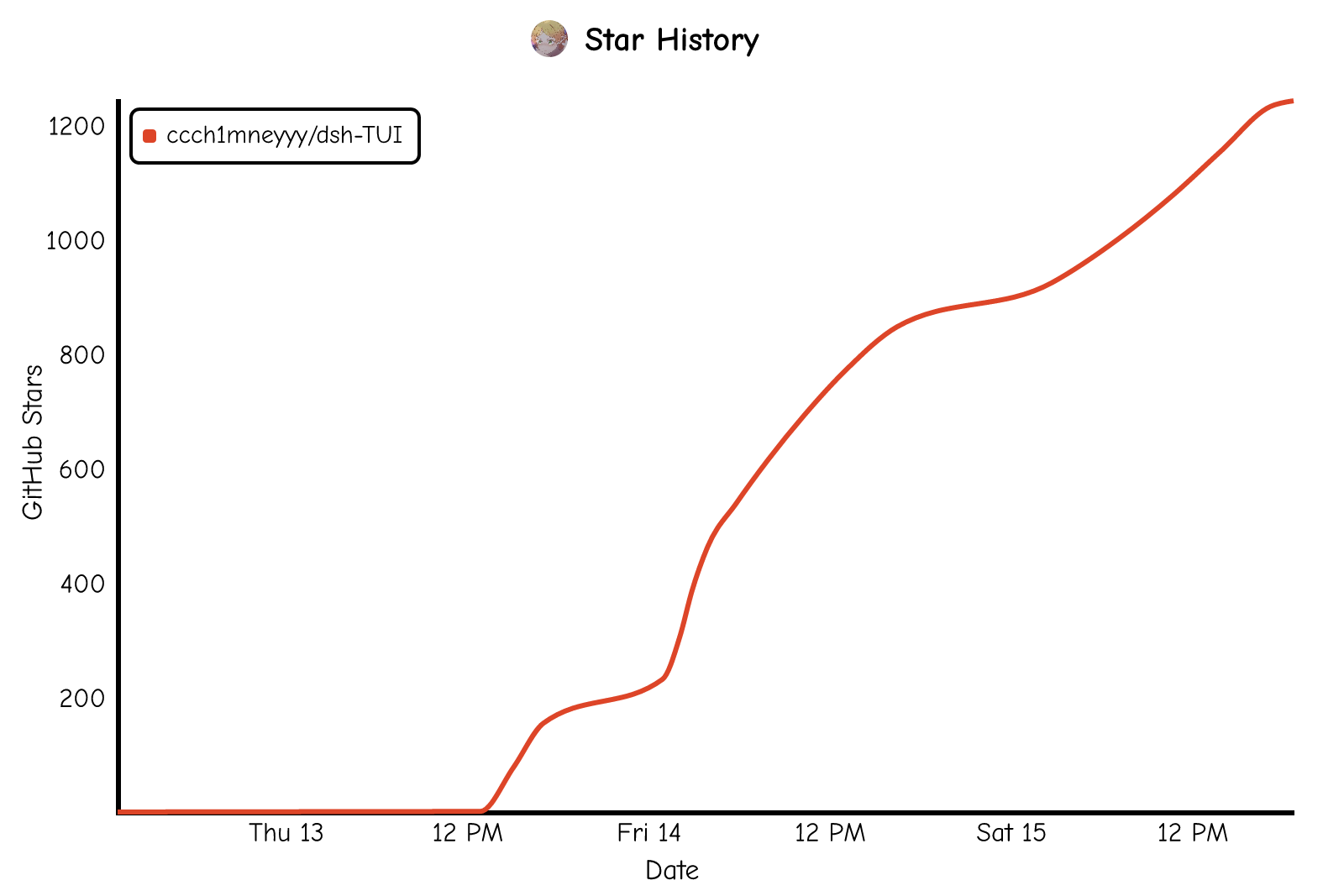
A beautiful, practical Claude Code-style TUI plugin with pixel whale top bar, flowing glow title, real-time status line, streaming thought expansion, time rewind, context progress bar and TPS gauge — zero core changes.
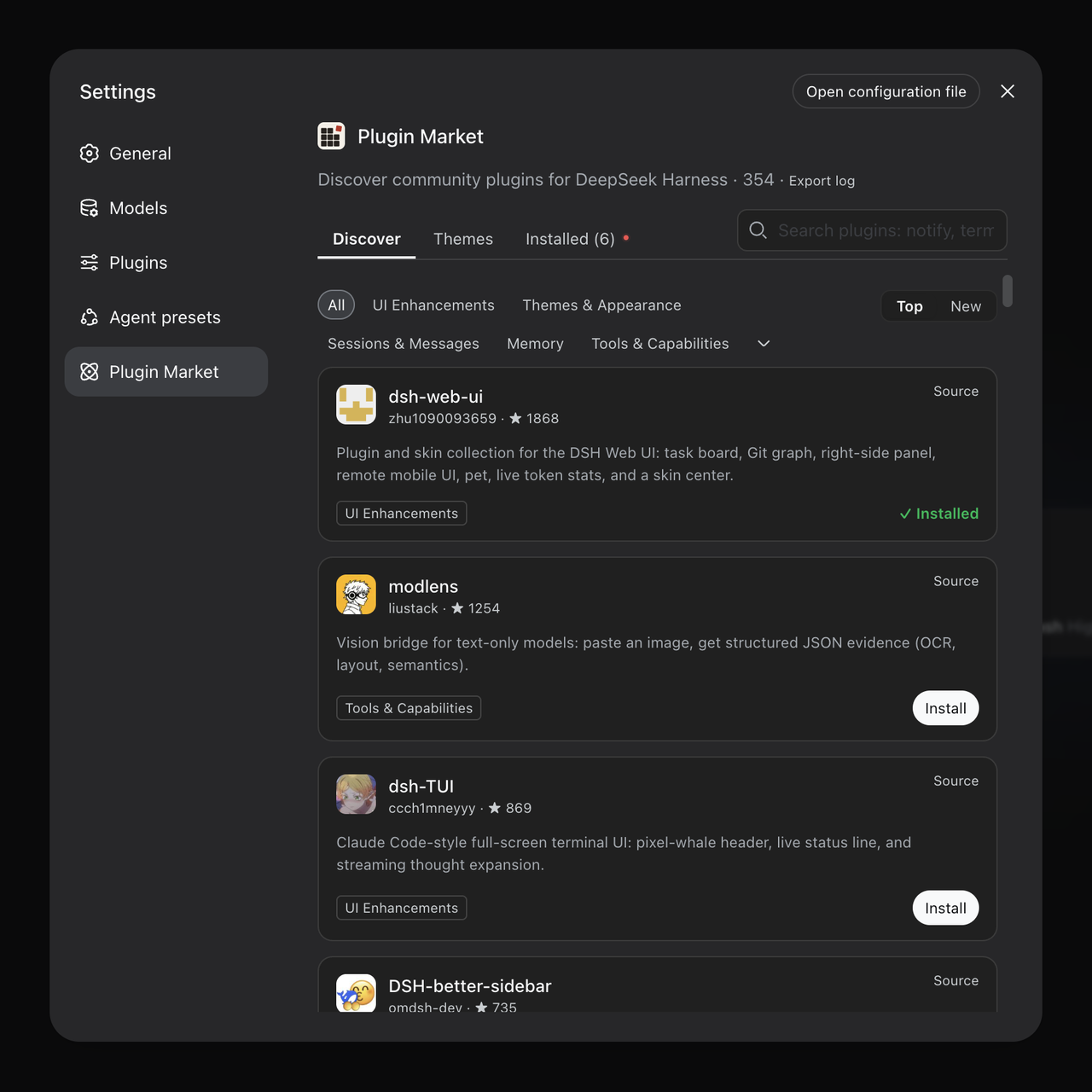
The plugin market for DeepSeek Harness: browse/search/one-click install community plugins and themes, with updates, backup/restore, hot disable, diagnostics, and AI fix.

A persistent whale widget on the DSH web UI that shows DeepSeek balance, today's usage, and per-turn cost, with drag-and-snap and sound effects.