dsh-opencode-usage
Run the following command in DeepSeek Harness:
dsh plugin install zzh799/dsh-opencode-usage
Paste the following prompt into your AI chat to install this plugin:
Install the plugin in DeepSeek Harness by running the install command; the source is hosted at https://github.com/zzh799/dsh-opencode-usage , and after installation a concentric-ring usage button appears in the composer toolbar.
About this plugin
Checking your OpenCode Zen balance or Go usage window mid-flow can break your focus. dsh-opencode-usage pulls that information directly into the DSH composer toolbar: a single concentric-ring button at a glance reveals your rolling 5-hour, weekly, and monthly consumption, and a click opens a detail panel with manual refresh.
Configuration is handled in a built-in panel editor where cookie tail values are always shown masked and the full token never leaves the host. Paste a raw auth token, a complete header, or anything in between and the plugin normalises it automatically, saving you the hassle of hand-parsing fields. A server-side cache (default 5 minutes) plus a 60-second failure cooldown keeps the poller from hammering opencode.ai, and an optional peak-clock readout is available.
Security details are taken seriously: cookies are never written to logs, and the config file is written with chmod 600. A successful config edit invalidates the cache immediately so the next poll picks up fresh values.
If you run OpenCode Zen or Go alongside DSH and do not want to break pace just to glance at your remaining quota, this plugin fills exactly that gap.
Use Cases
- Check OpenCode Zen or Go balance and 5h / weekly / monthly usage windows without leaving the editor
- Refresh quota, tweak cookie or peak-clock settings without switching tabs
- See multi-window consumption at a glance via concentric-ring rings to decide when to pause or switch models
Best For
- Independent developers who rely heavily on OpenCode Zen or Go day-to-day
- Engineers who treat DSH as their primary workbench and want quota handling in-toolbar
- Small teams that track API spend and quota and need real-time visibility at a glance
Related Plugins
A service-oriented sidebar framework for DSH, offering a full workbench with file explorer, embedded browser, real terminal, Git panel, and extensible plugin services.
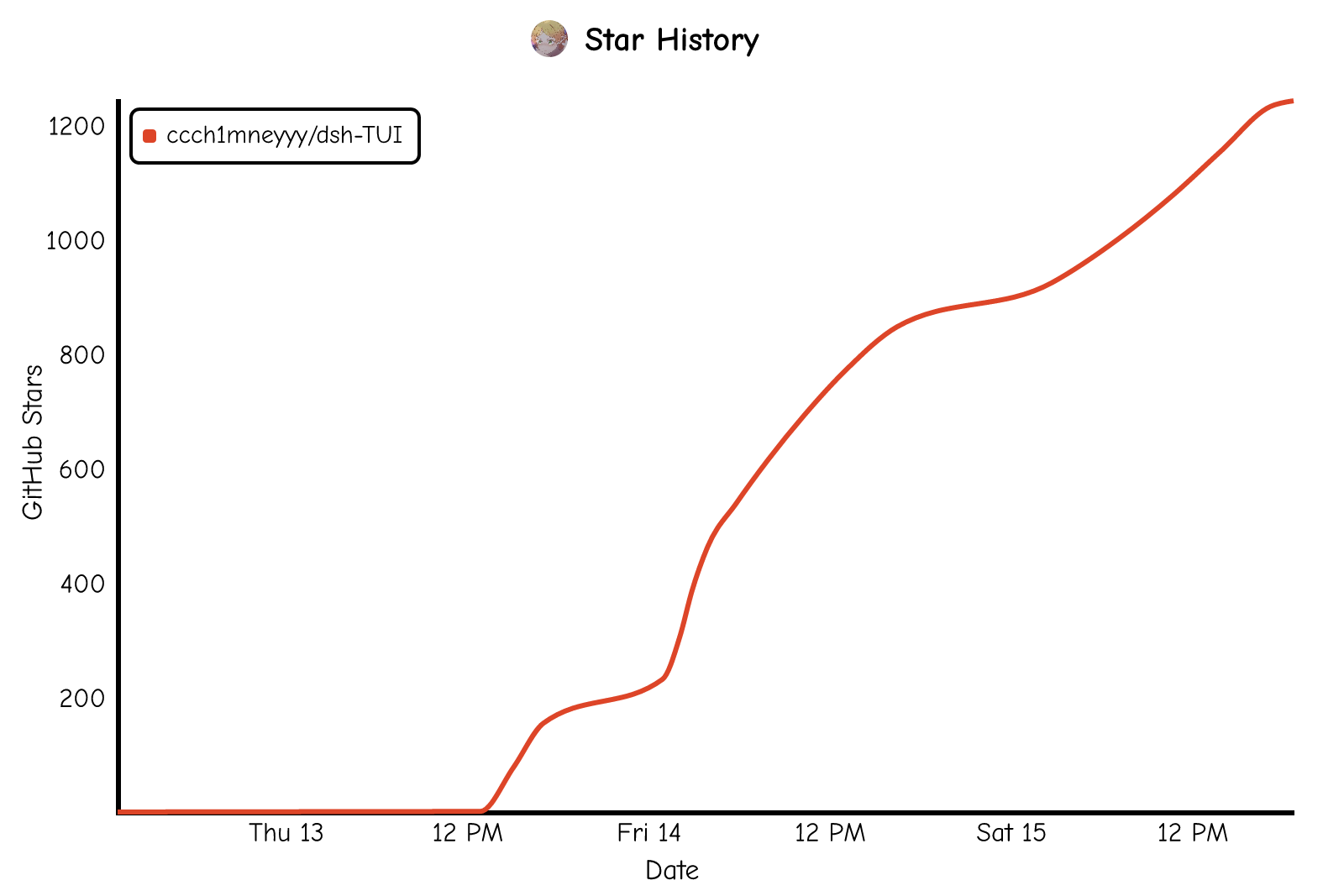
A beautiful, practical Claude Code-style TUI plugin with pixel whale top bar, flowing glow title, real-time status line, streaming thought expansion, time rewind, context progress bar and TPS gauge — zero core changes.
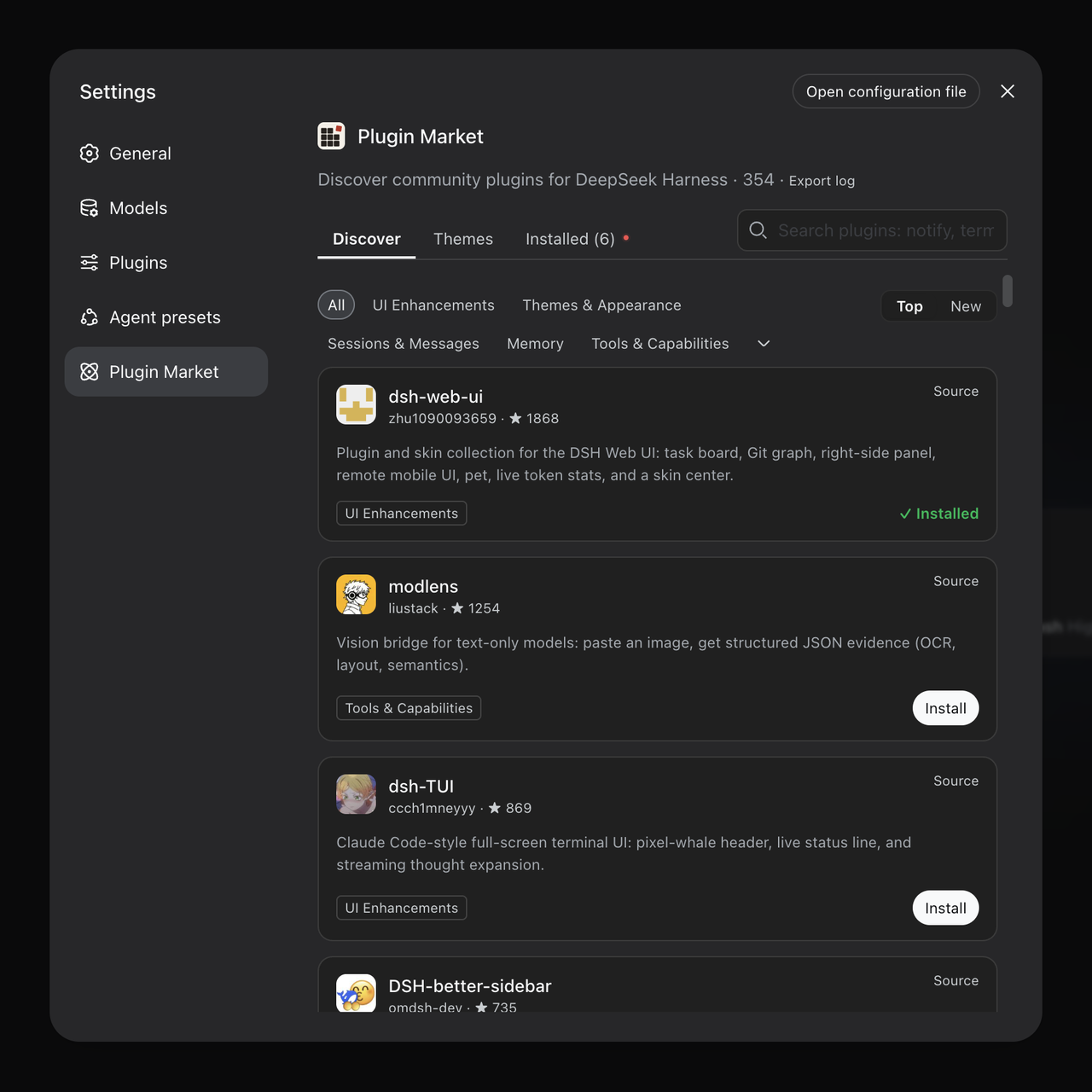
The plugin market for DeepSeek Harness: browse/search/one-click install community plugins and themes, with updates, backup/restore, hot disable, diagnostics, and AI fix.

A persistent whale widget on the DSH web UI that shows DeepSeek balance, today's usage, and per-turn cost, with drag-and-snap and sound effects.