dsh-skill-cockpit
Run the following command in DeepSeek Harness:
dsh plugin install Itailang2333/dsh-skill-cockpit
Paste the following prompt into your AI chat to install this plugin:
Run dsh plugin install Itailang2333/dsh-skill-cockpit in the DeepSeek Harness terminal; the source lives at https://github.com/Itailang2333/dsh-skill-cockpit — after install, restart DSH, hard-refresh the browser (Ctrl+Shift+R), then open Settings to find the Skill Cockpit panel.
About this plugin
Skills keep piling up: English names blur together, you cannot tell which ones never fire, and new ideas may overlap with what you already have. dsh-skill-cockpit adds a unified cockpit panel inside DSH Web Settings where you can view, annotate, enable, disable, delete, and import skills on a single page.
Key capabilities include a three-zone view (system, project, pool); a one-line Chinese note per skill that joins search results; host-side usage tracking that records invocation count and last-used time so zombie skills surface at a glance; and a test-fire bench that scores a free-form sentence locally and returns the top-five candidates with matched tokens, letting you check trigger-word overlaps before authoring a new skill.
Best for DSH users who have accumulated multiple Agent Skills and want to reduce management overhead with a fully local, zero-dependency, zero-network setup. All data lives in local JSON files and the plugin coexists cleanly with other skill managers.
Use Cases
- Browse all installed skills in one settings panel and add a one-line Chinese note for easier recall
- Spot zombie skills that have never fired by reviewing per-skill invocation counts
- Run a local test-fire check before authoring a new skill to detect trigger-word overlaps with existing ones
Best For
- DSH users who have accumulated multiple Agent Skills and want a single dashboard to manage them
- Developers who prefer a fully local, zero-network, zero-dependency toolchain
- Chinese-speaking developers who rely on short local notes to keep track of what each skill does
Related Plugins
A service-oriented sidebar framework for DSH, offering a full workbench with file explorer, embedded browser, real terminal, Git panel, and extensible plugin services.
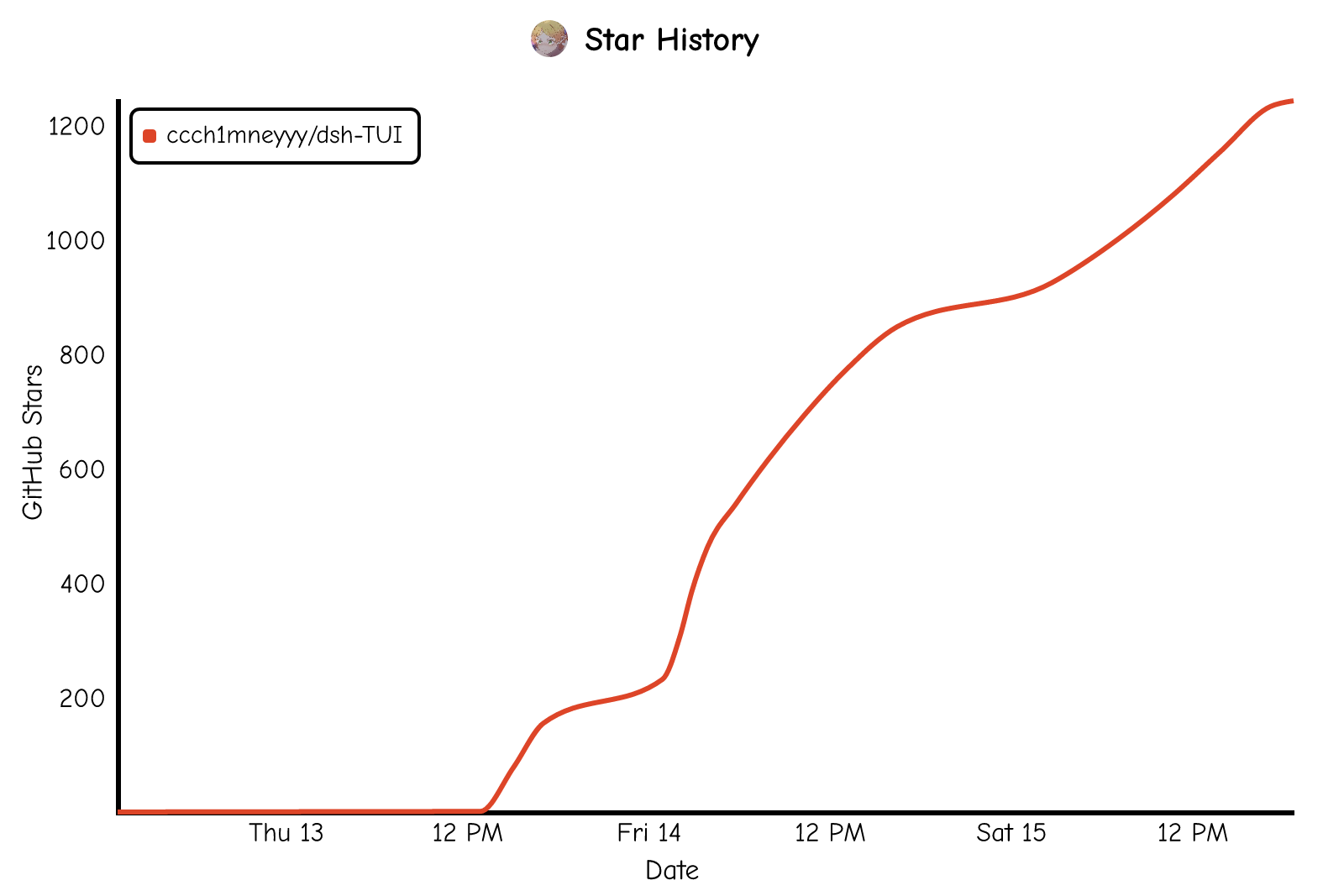
A beautiful, practical Claude Code-style TUI plugin with pixel whale top bar, flowing glow title, real-time status line, streaming thought expansion, time rewind, context progress bar and TPS gauge — zero core changes.
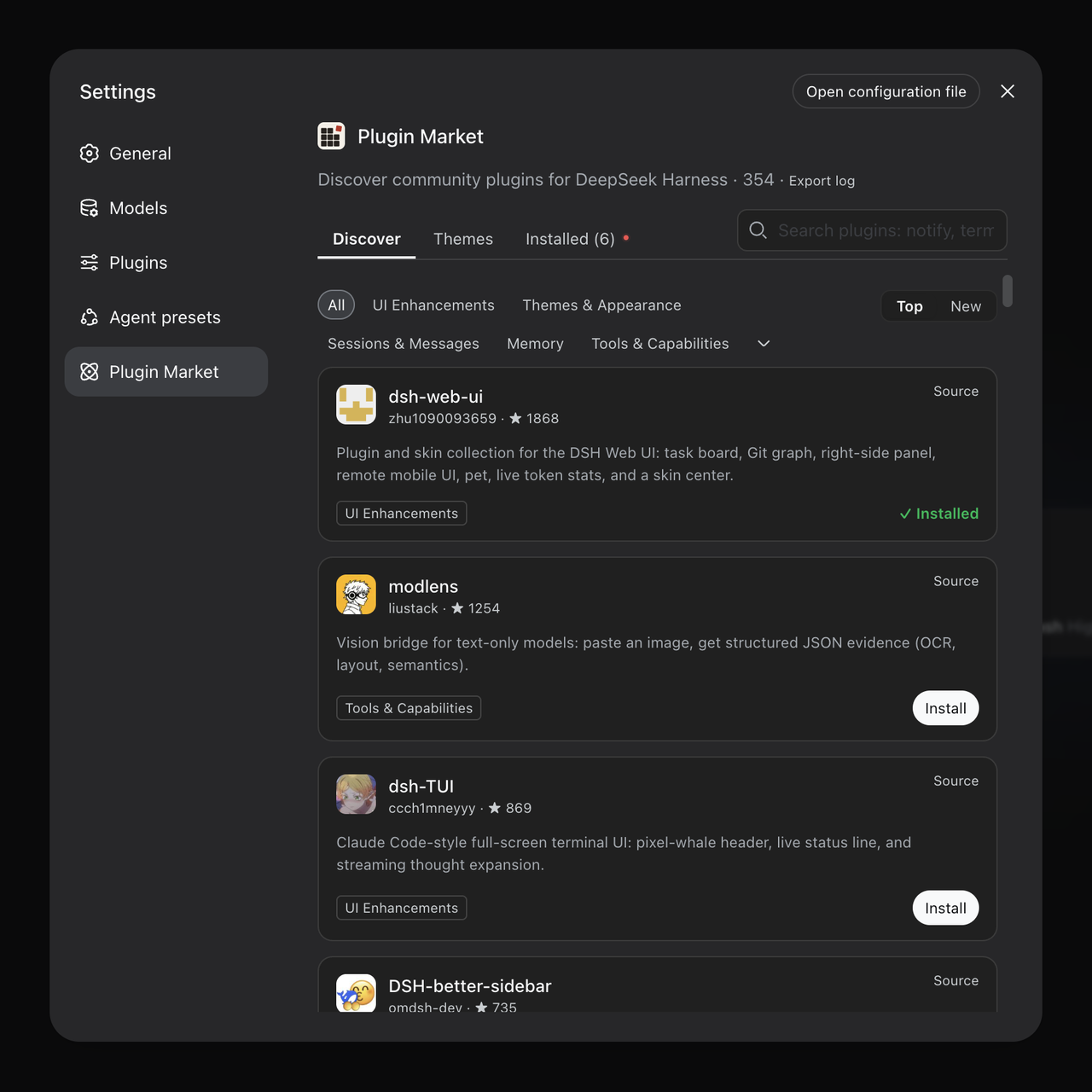
The plugin market for DeepSeek Harness: browse/search/one-click install community plugins and themes, with updates, backup/restore, hot disable, diagnostics, and AI fix.

A persistent whale widget on the DSH web UI that shows DeepSeek balance, today's usage, and per-turn cost, with drag-and-snap and sound effects.