dsh-plugin-manager
Run the following command in DeepSeek Harness:
dsh plugin install chuyue-yue/dsh-plugin-manager
Paste the following prompt into your AI chat to install this plugin:
Install this plugin in DeepSeek Harness by running `dsh plugin install chuyue-yue/dsh-plugin-manager` (source: https://github.com/chuyue-yue/dsh-plugin-manager).
About this plugin
Managing DSH plugins used to mean opening a terminal, typing commands, or digging through config files to add and remove entries by hand. dsh-plugin-manager moves that workflow into the browser: an Install Plugins tab appears under Settings, where you type a package name or a full command and hit a single button to install or uninstall, with live execution output and a result status displayed right on the page—no more switching to a CLI.
On the host side the plugin registers proxy routes that handle command parsing, package-name safety validation, and timeout protection. On the client side it injects an input box, action buttons, and an execution output panel into the existing Plugins settings group. A footer at the bottom shows the current Node version, target profile, and DSH_HOME path for quick environment checks. The plugin itself introduces no extra dependencies; it is, in essence, a lightweight visual wrapper around the dsh plugin command.
If you find yourself adding or removing DSH plugins frequently and would rather not keep bouncing between a terminal and yaml files, this plugin eliminates that back-and-forth and offers developers a simple, visual, one-click plugin management experience.
Use Cases
- Type a package name in the settings page and install a new plugin with one click
- Uninstall an unwanted plugin from the UI without opening a terminal
- Check Node version, target profile, and DSH_HOME path to triage environment issues
Best For
- Developers who add or remove DSH plugins frequently
- Users who want to cut back-and-forth between terminal and config files
- Ops engineers who need a clear at-a-glance view of the plugin environment
Related Plugins
A service-oriented sidebar framework for DSH, offering a full workbench with file explorer, embedded browser, real terminal, Git panel, and extensible plugin services.
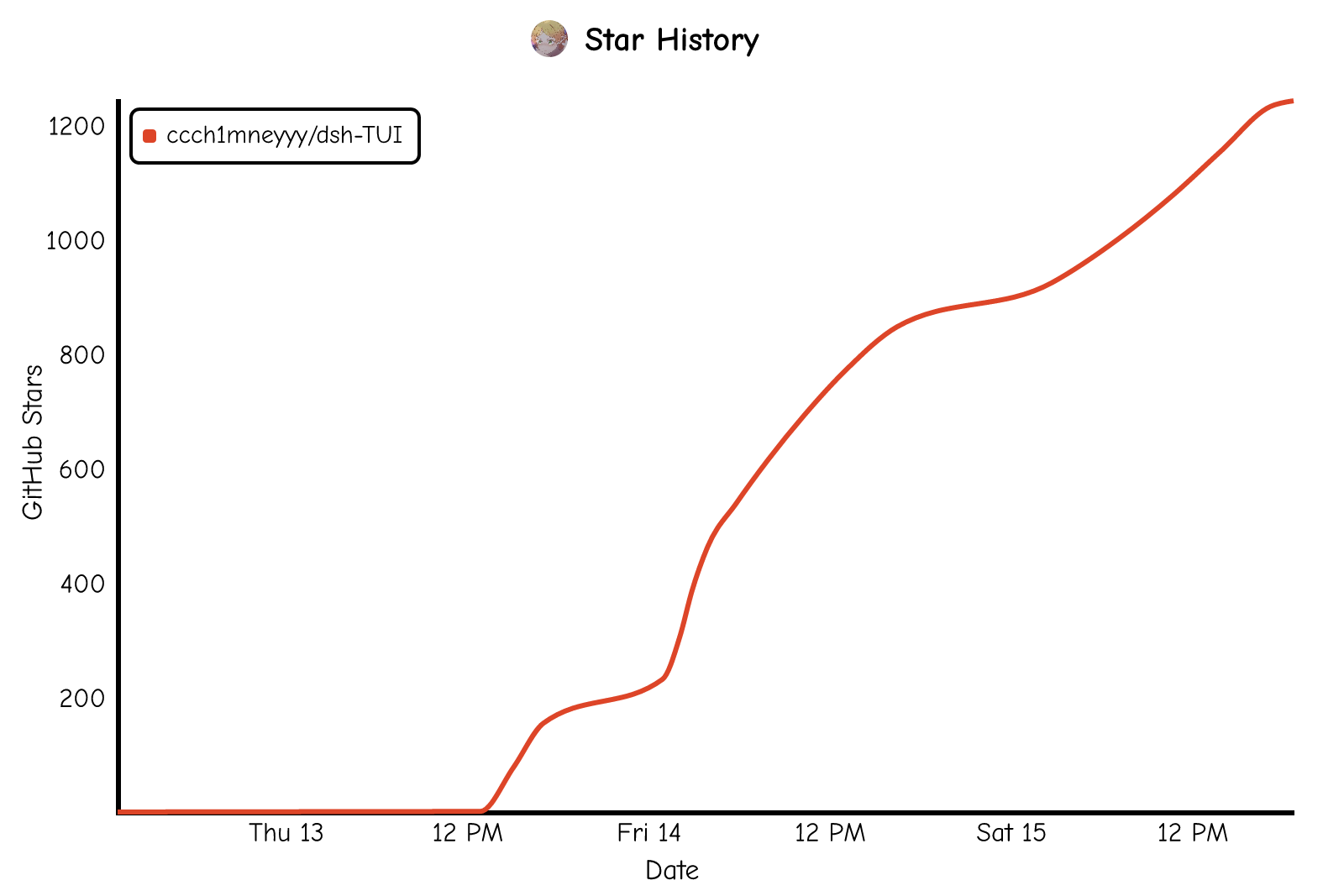
A beautiful, practical Claude Code-style TUI plugin with pixel whale top bar, flowing glow title, real-time status line, streaming thought expansion, time rewind, context progress bar and TPS gauge — zero core changes.
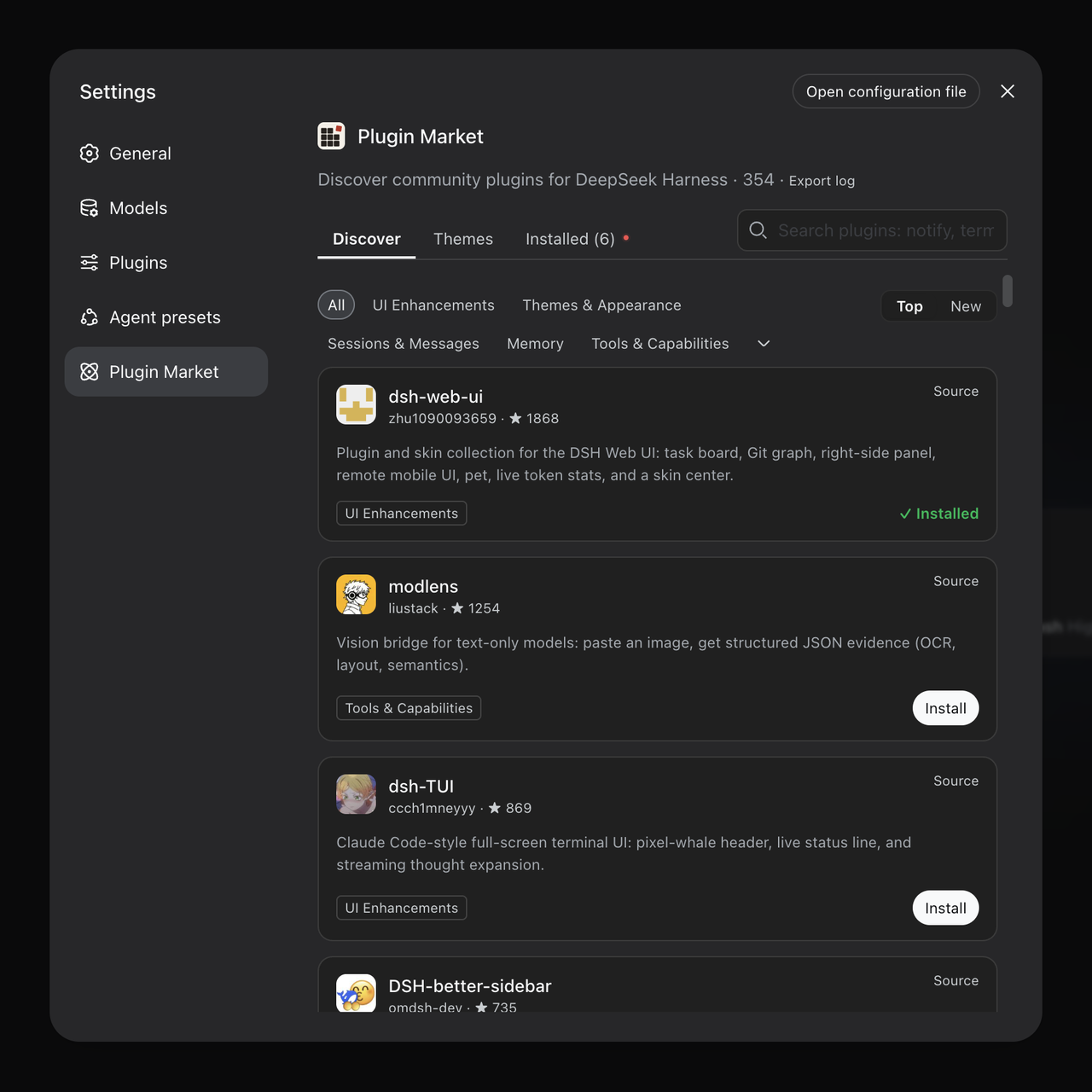
The plugin market for DeepSeek Harness: browse/search/one-click install community plugins and themes, with updates, backup/restore, hot disable, diagnostics, and AI fix.

A persistent whale widget on the DSH web UI that shows DeepSeek balance, today's usage, and per-turn cost, with drag-and-snap and sound effects.