dsh-config-form
Run the following command in DeepSeek Harness:
dsh plugin install begonia599/dsh-config-form
Paste the following prompt into your AI chat to install this plugin:
Run dsh plugin install begonia599/dsh-config-form in the DeepSeek Harness terminal to install this plugin; the source repository is available at https://github.com/begonia599/dsh-config-form.
About this plugin
In the DSH plugin ecosystem, every plugin that exposes user settings tends to hand-roll the same four artifacts: a React form, an HTTP route with a hand-written security check, a storage decision (localStorage, a file, a sidecar service), and separate credential handling for secrets. A survey of twelve installed third-party plugins confirmed the pattern and explained why an auto-discovery design would have found almost nothing to render—the bottleneck was never the wire protocol, but the absence of a shared layer that lets authors declare fields instead of implementing them.
dsh-config-form fills that gap. It is a router and a renderer, not a framework: an adopting plugin calls declare with its field groups, types, and defaults, and the plugin handles rendering a single settings tab under Settings → Plugins, revision-fenced path-op writes (never a whole-section replace), compiling secret fields out of the schema and routing them to the credentials layer, and a shared endpoint guarded by loopback peer, loopback Host header, and same-origin provenance checks. Storage remains the author’s choice—pass a custom store to keep your existing approach, or omit it and let the settings seam hold values with layered resolution and external-edit reload.
It is intended for DSH plugin authors who need to expose a handful of configuration options without building a React form, a security-checked route, and credential plumbing from scratch. One declaration yields a settings experience consistent with the host, while ownership, id collisions, and unload cleanup stay within the declaring plugin’s fiber lifecycle.
Use Cases
- Expose user-configurable settings for a DSH plugin without hand-writing a React form and HTTP route
- Route sensitive fields like API keys out of the settings document into the credentials layer
- Unify multiple plugins settings into a single page instead of scattered independent UIs
Best For
- DSH plugin authors who need to expose configurable options to end users
- Plugin developers who want to skip re-implementing form rendering, admission checks, and credential handling
- Architects who value automatic cleanup on plugin unload and re-declaration after hot reload
Related Plugins
A service-oriented sidebar framework for DSH, offering a full workbench with file explorer, embedded browser, real terminal, Git panel, and extensible plugin services.
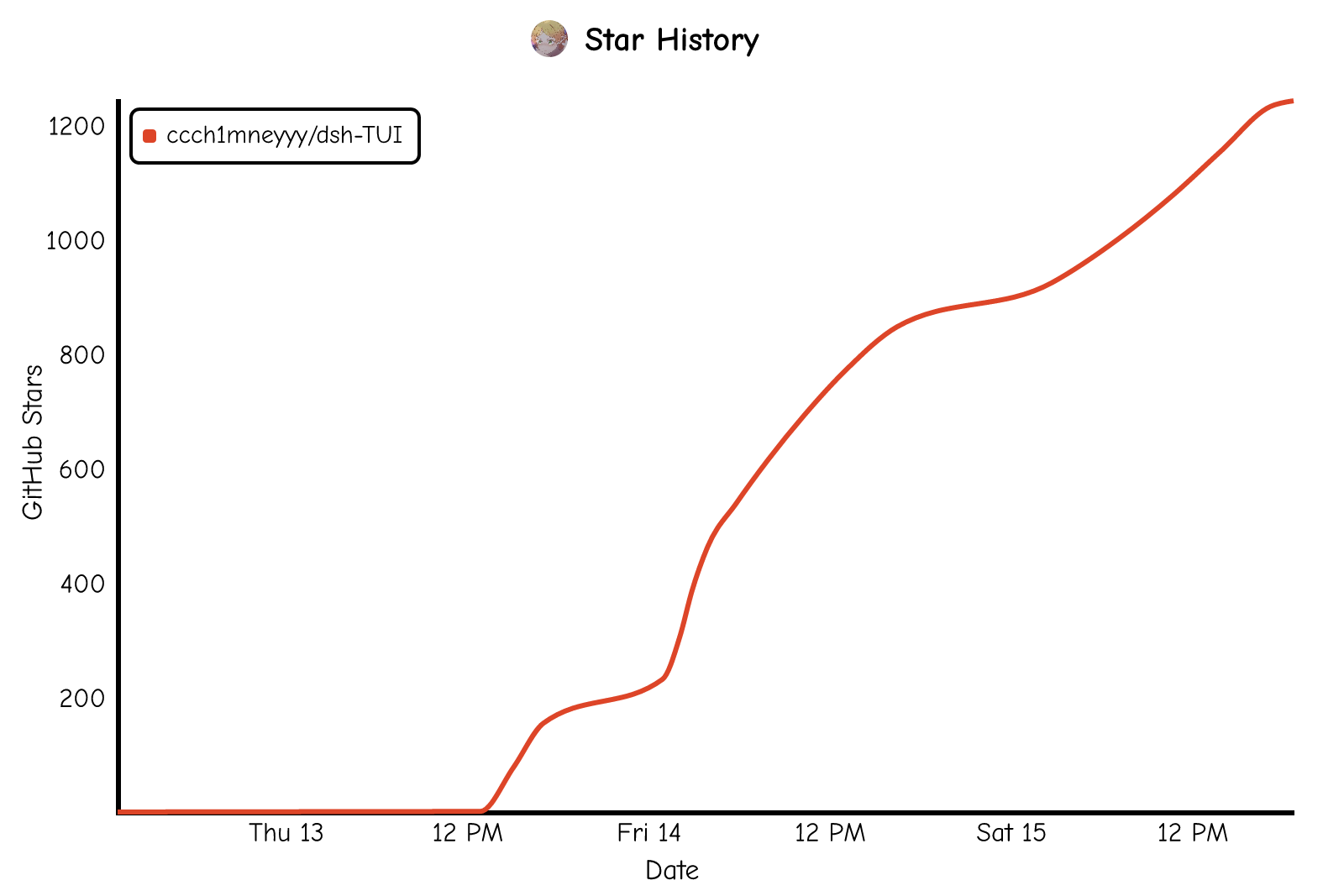
A beautiful, practical Claude Code-style TUI plugin with pixel whale top bar, flowing glow title, real-time status line, streaming thought expansion, time rewind, context progress bar and TPS gauge — zero core changes.
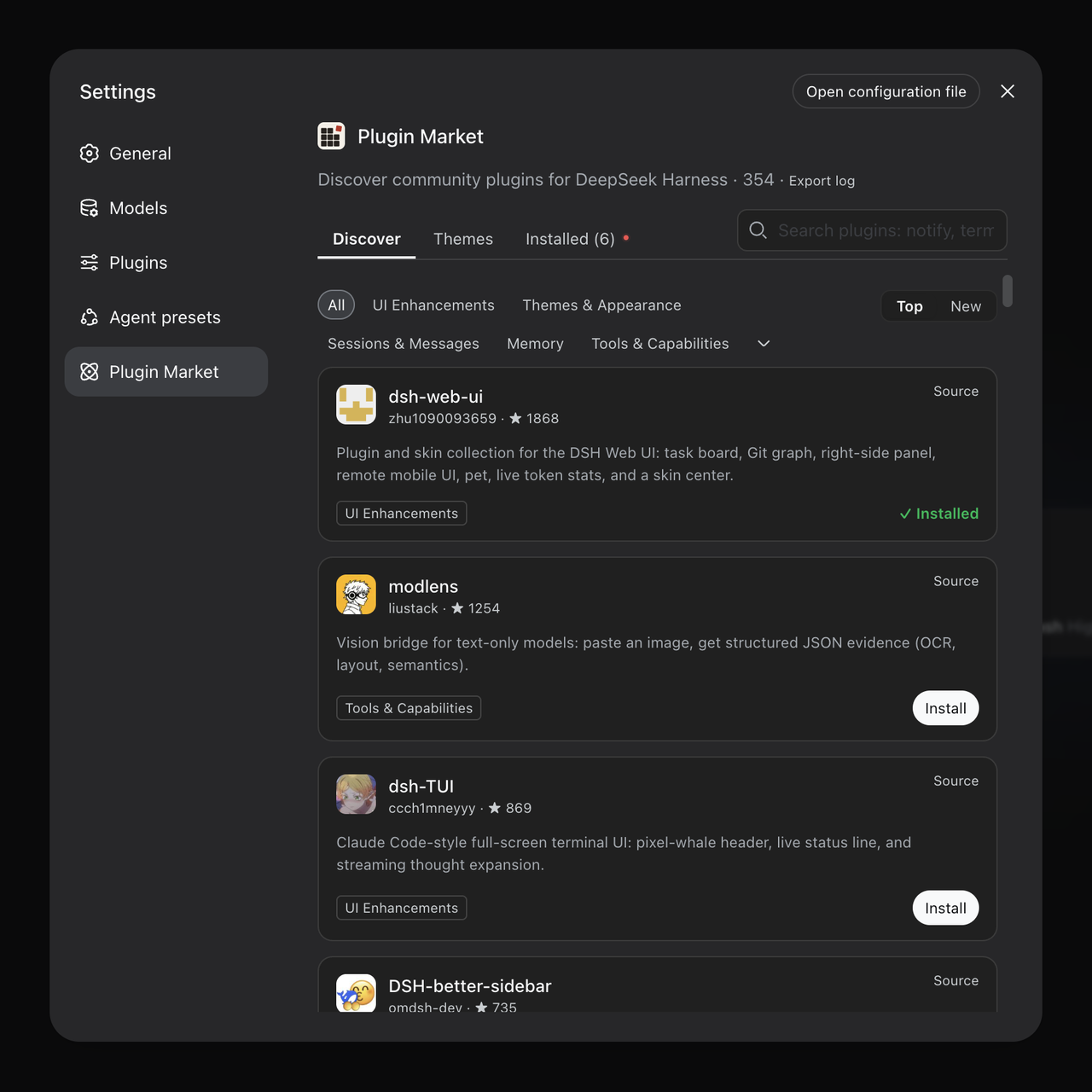
The plugin market for DeepSeek Harness: browse/search/one-click install community plugins and themes, with updates, backup/restore, hot disable, diagnostics, and AI fix.

A persistent whale widget on the DSH web UI that shows DeepSeek balance, today's usage, and per-turn cost, with drag-and-snap and sound effects.