dsh-plugin-ssh
Run the following command in DeepSeek Harness:
dsh plugin install ArcherLyu/dsh-plugin-ssh
Paste the following prompt into your AI chat to install this plugin:
Install by running dsh plugin install ArcherLyu/dsh-plugin-ssh in DeepSeek Harness; the plugin source is at https://github.com/ArcherLyu/dsh-plugin-ssh
About this plugin
When DeepSeek Harness runs on a remote box, you are usually stuck between two unappealing choices: expose the web port to the internet (against dsh security design) or duplicate the entire stack locally. dsh-plugin-ssh offers a third path. The local machine does exactly one job — open an SSH tunnel and view the remote GUI in a browser tab. All agents, tool calls, sessions, and workspace operations stay on the remote, with essentially zero local overhead.
The plugin ships two entry points: a standalone dsh-ssh CLI with the full subcommand set (add, list, connect, setup, start, stop, logs, and more), and an SSH Remotes panel built into the dsh web Settings page. The setup command checks the remote Node version, installs dsh if needed, creates the workspace directory, and launches dsh web under nohup bound strictly to 127.0.0.1. The connect command picks a free local port, spawns a detached ssh -L tunnel, polls the remote boot marker, and then points your browser at the local loopback address. Every API call in the page transparently lands on the remote harness — tools, sessions, and jobs all execute on the remote side.
This is built for developers who deploy Harness on cloud servers, dev boxes, or cluster nodes and want to pick up a remote workspace from a browser tab on any laptop without opening a single public port. Tunnels use BatchMode key-based auth, the remote process only ever listens on its own loopback interface, and the security model stays clean and predictable.
Use Cases
- Run Harness on a cloud server and manage remote agents and sessions from a local browser tab
- Deploy Harness on cluster or dev-machine nodes and operate remotely without exposing public ports
- Switch between multiple remote workspaces quickly without rebuilding the local stack
Best For
- Developers deploying Harness on remote servers or cloud instances
- Users who prefer SSH-secured access and avoid opening public ports
- Engineers who want to pick up a remote workspace from any browser, anywhere
Related Plugins
A service-oriented sidebar framework for DSH, offering a full workbench with file explorer, embedded browser, real terminal, Git panel, and extensible plugin services.
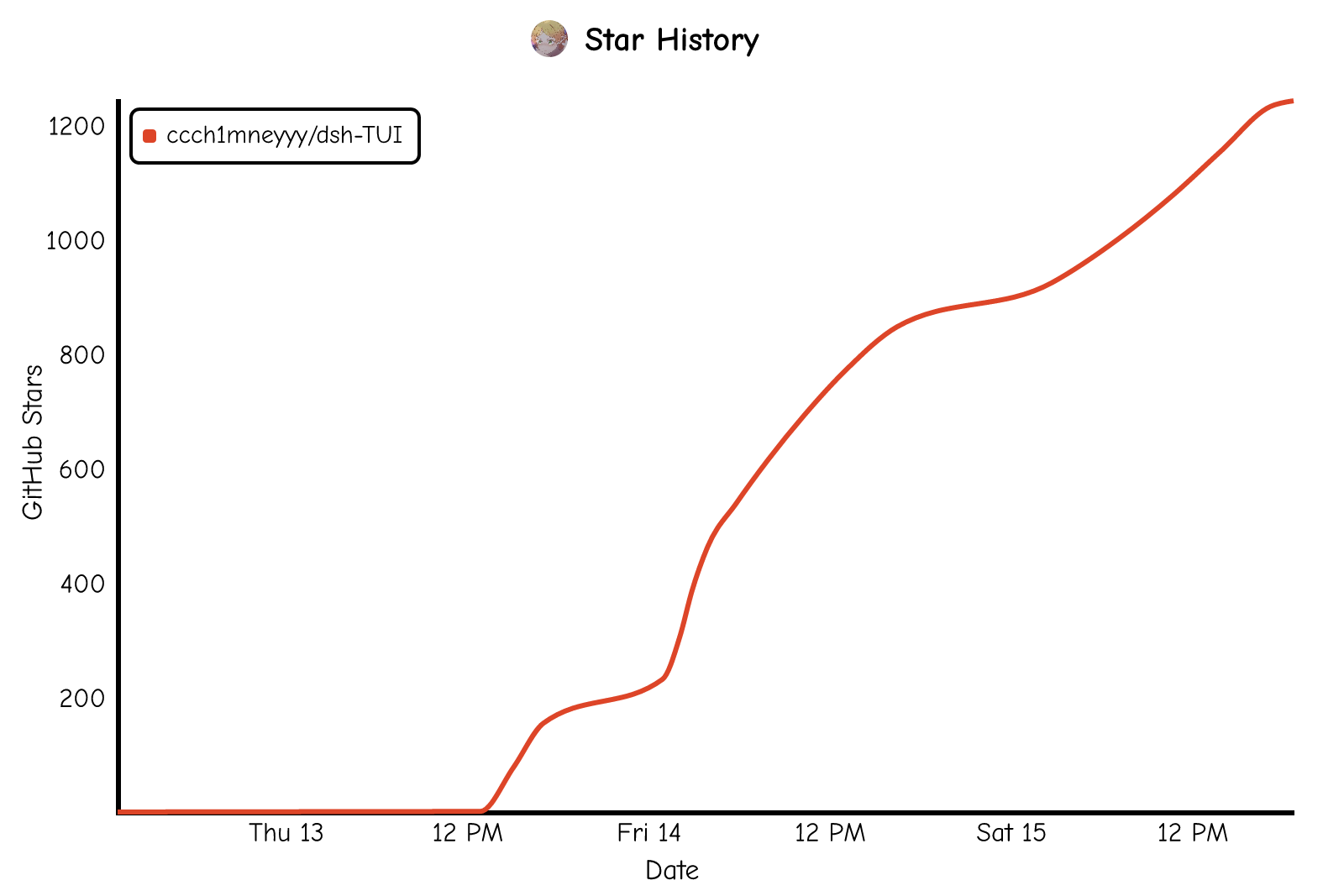
A beautiful, practical Claude Code-style TUI plugin with pixel whale top bar, flowing glow title, real-time status line, streaming thought expansion, time rewind, context progress bar and TPS gauge — zero core changes.
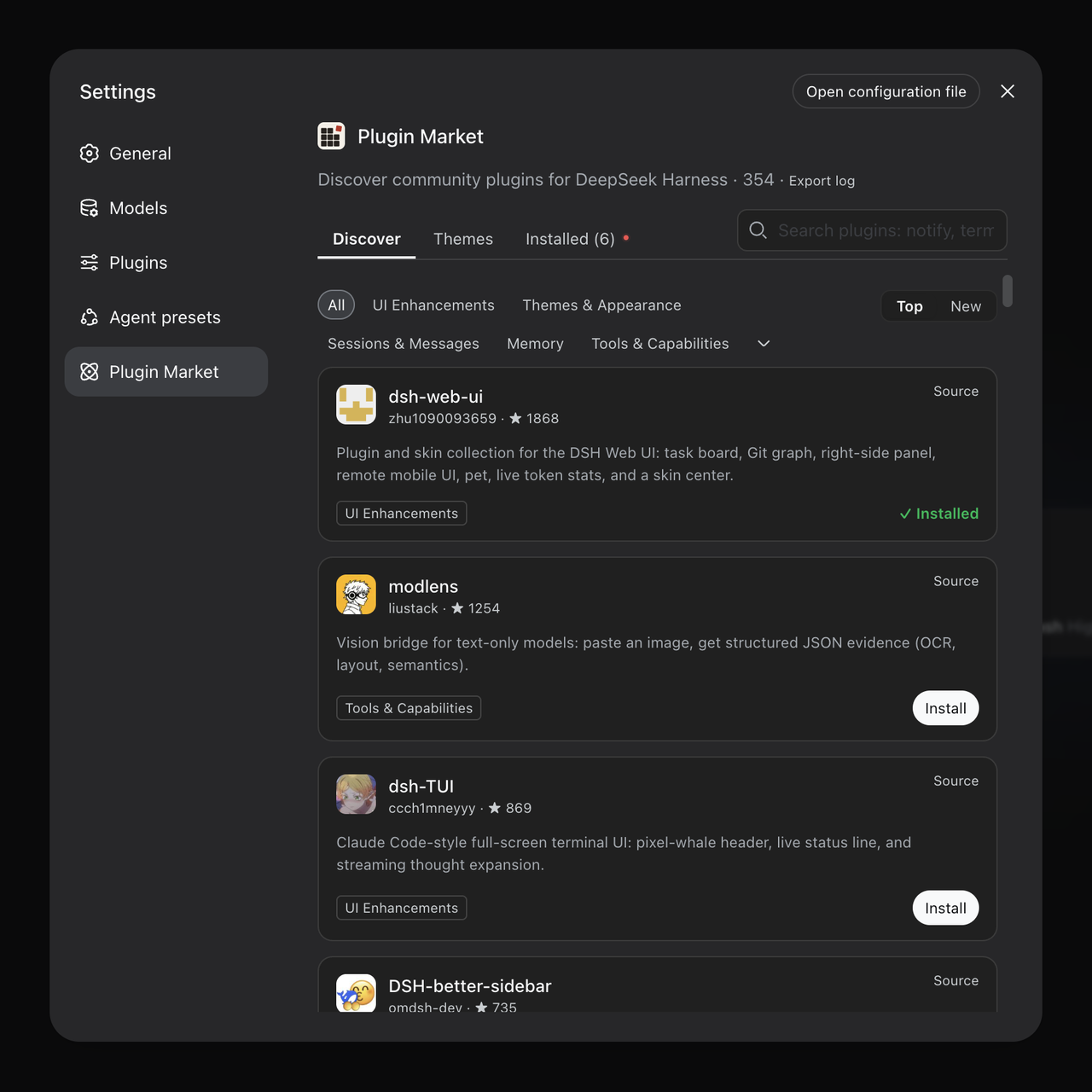
The plugin market for DeepSeek Harness: browse/search/one-click install community plugins and themes, with updates, backup/restore, hot disable, diagnostics, and AI fix.

A persistent whale widget on the DSH web UI that shows DeepSeek balance, today's usage, and per-turn cost, with drag-and-snap and sound effects.