dsh-plugin-desktop
Run the following command in DeepSeek Harness:
dsh plugin install Quan-Robin/dsh-plugin-desktop
Paste the following prompt into your AI chat to install this plugin:
Run dsh plugin install Quan-Robin/dsh-plugin-desktop in the DeepSeek Harness terminal to install this official companion plugin; the source is hosted at https://github.com/Quan-Robin/dsh-plugin-desktop .
About this plugin
The DSH-desktop-for-Linux desktop shell has traditionally relied on fragile workarounds—sniffing webRequest POST bodies, decompressing zstd session files—to read the current session and estimate usage. dsh-plugin-desktop, the official companion plugin, runs inside the dsh service process and exposes those internal states through stable HTTP endpoints, letting the desktop shell drop those hacks entirely.
The plugin also injects two in-page enhancements into the Web UI: a full context menu covering sessions, workspaces, content editing, links, and the input box, plus a Pin Session feature that lets you right-click any session and lock it into a dedicated pinned section in the sidebar. All event semantics are aligned exactly with dsh event streams, so the numbers the desktop shell sees always match the source.
Conscious of keeping the plugin dependency-free, it installs by simply copying a directory with no network access or build tooling required. Its host-facing interaction is confined to three adapter functions that try multiple shapes and degrade gracefully, a practical response to the dsh plugin API remaining undocumented. It is well suited for anyone running DSH-desktop-for-Linux who wants more reliable session-state reads and a richer desktop interaction layer.
Use Cases
- The desktop shell needs a reliable way to read the current session ID and turn state without sniffing network requests
- Perform quick right-click operations on sessions, workspaces, or content within the Web UI, such as copying links or editing text
- Pin frequently used sessions into a dedicated sidebar section to reduce switching overhead
Best For
- DSH-desktop-for-Linux users who want a more stable session-state read path without fragile workarounds
- Desktop-shell developers who need to inject custom interactions such as pinning or menu extensions into the dsh Web UI
- Local work environments that prefer zero-dependency, offline plugin deployment without network access
Related Plugins
A service-oriented sidebar framework for DSH, offering a full workbench with file explorer, embedded browser, real terminal, Git panel, and extensible plugin services.
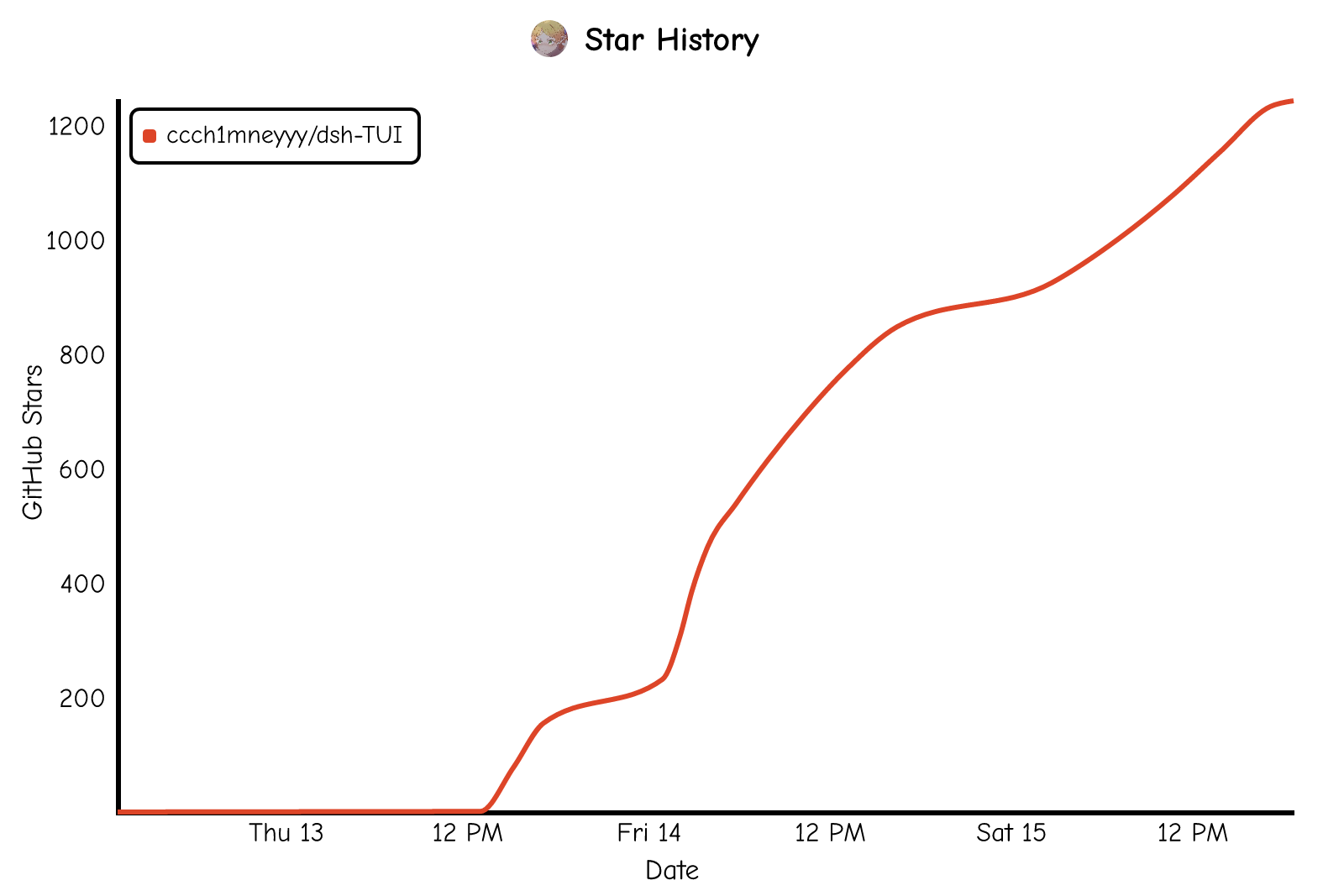
A beautiful, practical Claude Code-style TUI plugin with pixel whale top bar, flowing glow title, real-time status line, streaming thought expansion, time rewind, context progress bar and TPS gauge — zero core changes.
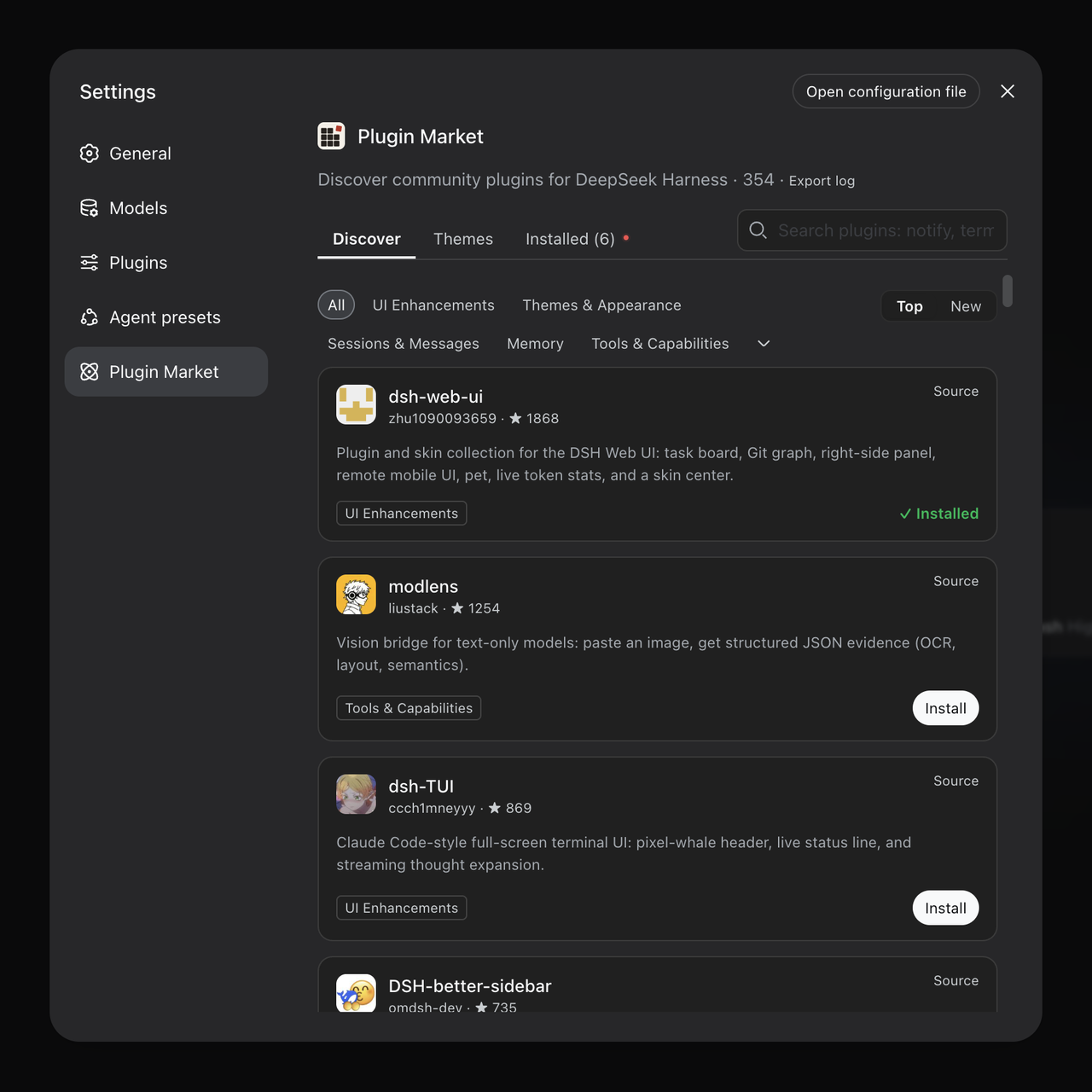
The plugin market for DeepSeek Harness: browse/search/one-click install community plugins and themes, with updates, backup/restore, hot disable, diagnostics, and AI fix.

A persistent whale widget on the DSH web UI that shows DeepSeek balance, today's usage, and per-turn cost, with drag-and-snap and sound effects.