dsh-llm-retry-settings
Run the following command in DeepSeek Harness:
dsh plugin install Yiklek/dsh-llm-retry-settings
Paste the following prompt into your AI chat to install this plugin:
Run dsh plugin install Yiklek/dsh-llm-retry-settings in the DeepSeek Harness terminal; the source code is hosted at https://github.com/Yiklek/dsh-llm-retry-settings , and once installed you can manage per-provider retry and timeout policies from the settings page.
About this plugin
Tweaking a specific LLM provider's retry mode, max retries, or timeout values in DSH used to mean digging into per-provider YAML namespaces and double-checking syntax by hand. dsh-llm-retry-settings moves that work into a clean settings page: retry policy (normal or always mode, maxRetries) alongside timeoutMs, websocketConnectTimeoutMs, and streamIdleTimeoutMs, all grouped by provider and editable in place.
Every save goes through the settings.mutate wire face, so the change is picked up by the very next model request without restarting the gateway or reloading your profile. Timeout fields are auto-discovered from each provider's settings schema when available, with a verified fallback map for the bundled providers such as llm-pi-ai and llm-deepseek, so new providers often light up automatically.
This plugin is a good fit for DSH users who run multiple LLM providers and want per-provider retry and timeout tuning without repeatedly hand-editing config files. It ships as a pure client-side bundle with an empty host half, hooks into your profile bundles on install, and requires no manual patch edits to cordis.patch.yml.
Use Cases
- Tune retry mode and max retries per LLM provider without touching raw YAML files.
- Adjust stream idle timeout values to improve stability of long-running generation requests.
- Switch between normal and always retry policies in the GUI; changes apply on the next model request.
Best For
- DSH users running multiple LLM providers who need per-provider retry and timeout tuning.
- Developers who prefer a visual settings page over hand-editing config files to reduce errors.
- DSH users focused on gateway retry and timeout behavior to keep generation requests stable.
Related Plugins
A service-oriented sidebar framework for DSH, offering a full workbench with file explorer, embedded browser, real terminal, Git panel, and extensible plugin services.
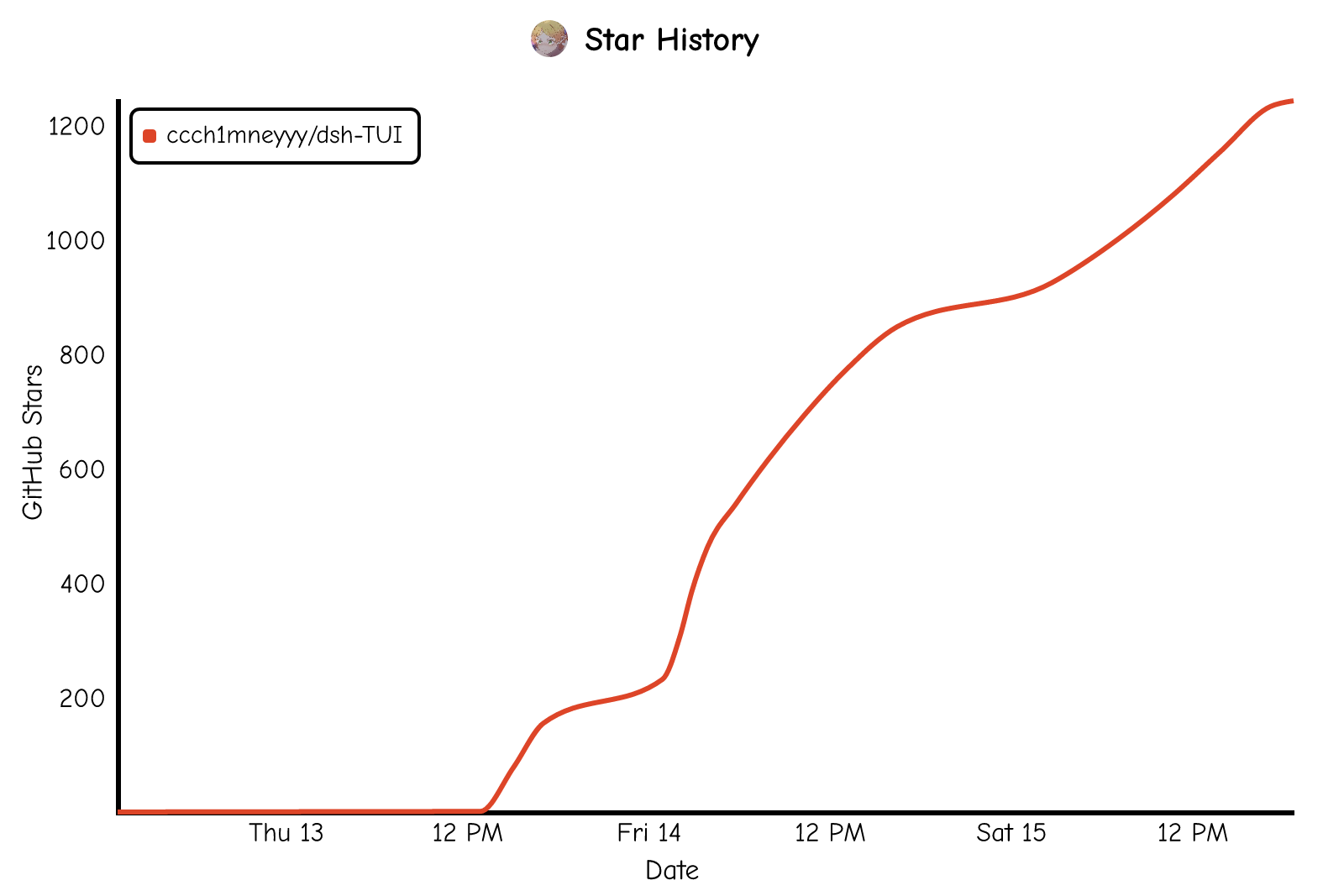
A beautiful, practical Claude Code-style TUI plugin with pixel whale top bar, flowing glow title, real-time status line, streaming thought expansion, time rewind, context progress bar and TPS gauge — zero core changes.
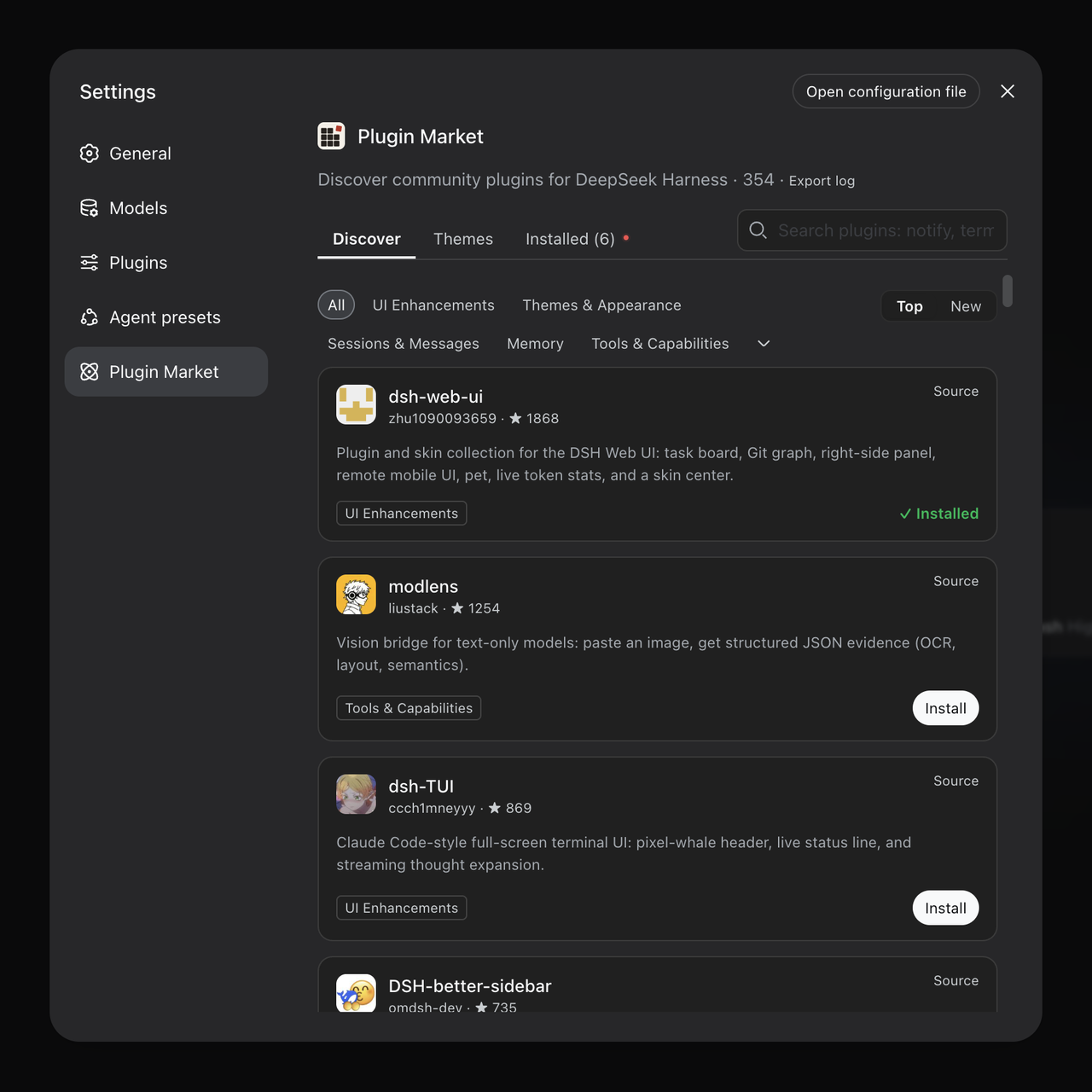
The plugin market for DeepSeek Harness: browse/search/one-click install community plugins and themes, with updates, backup/restore, hot disable, diagnostics, and AI fix.

A persistent whale widget on the DSH web UI that shows DeepSeek balance, today's usage, and per-turn cost, with drag-and-snap and sound effects.