dsh-rw
Run the following command in DeepSeek Harness:
dsh plugin install MDR-EX1000/dsh-rw
Paste the following prompt into your AI chat to install this plugin:
Run dsh plugin install MDR-EX1000/dsh-rw in your DeepSeek Harness terminal to install this plugin; the source repository is available at https://github.com/MDR-EX1000/dsh-rw
About this plugin
Working with a remote host from your agent used to mean either syncing a mirror back and forth or stitching together one-off SSH calls for every command. dsh-rw takes a different route: pick an SSH host and a remote directory, and that directory becomes a native DeepSeek Harness workspace. The agent reads, edits, builds, and tests directly on the remote filesystem. No mirror, no sync loop, no drift — the remote is the single source of truth.
The best part is that there is nothing new to learn. With shim mode on by default, the agent's existing read, write, edit, glob, grep, and bash tools are intercepted on the tool pipeline and transparently translated to remote execution. You never have to teach it an rw_ prefix. Ask it to run the test suite or fix a bug and it behaves as if the project were sitting on a local disk. When you do want explicit control, the rw_ tool set is still available for file operations and workspace management.
Safety is non-negotiable here. Every file path is confined to the chosen workspace root — symlink escapes, absolute paths outside the root, and directory traversal are all rejected with structured error codes. SSH host keys are verified against known_hosts by default, and a changed key aborts the connection rather than being silently accepted. The connection pool runs keepalives and bounded channel-open timeouts, so a silently dead TCP connection triggers a transparent one-time redial instead of hanging the agent. Credentials live in a 0600 local file and never leak into tool output or API responses.
If your project lives on a remote dev box, a container cluster, or a server behind a jump box, and you want your DeepSeek Harness agent to read code, make edits, run builds, and execute tests in that environment without the back-and-forth of copying files locally, dsh-rw is built for exactly that. Trust the host, point at the directory, and let the agent do its work where the code actually runs.
Use Cases
- Your project lives on a remote dev box or cloud VM and you want the agent to read, edit, build, and test in place.
- Your team develops inside container clusters or shared servers and wants the AI assistant to work there without copying the repo.
- Replace the repeated scp-and-sync workflow, making the remote directory the single source of truth and eliminating mirror drift.
Best For
- Engineers who develop on remote infrastructure and rely on the DeepSeek Harness agent for coding assistance.
- DevOps or SRE staff who maintain remote codebases with AI help and want to skip the local-mirror dance.
- Indie developers or small teams whose projects sit behind jump boxes and want the agent to connect and work directly.
Related Plugins
A service-oriented sidebar framework for DSH, offering a full workbench with file explorer, embedded browser, real terminal, Git panel, and extensible plugin services.
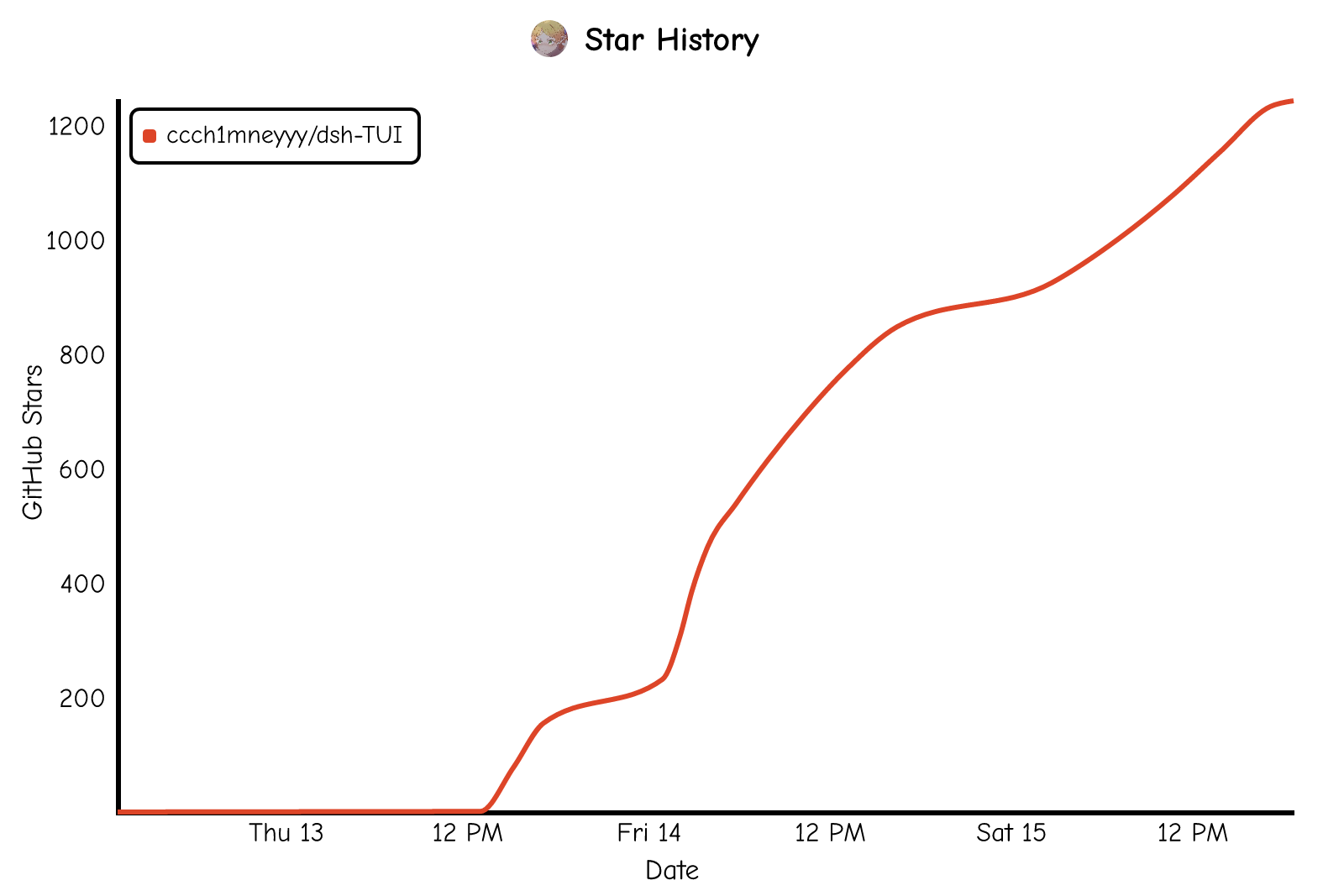
A beautiful, practical Claude Code-style TUI plugin with pixel whale top bar, flowing glow title, real-time status line, streaming thought expansion, time rewind, context progress bar and TPS gauge — zero core changes.
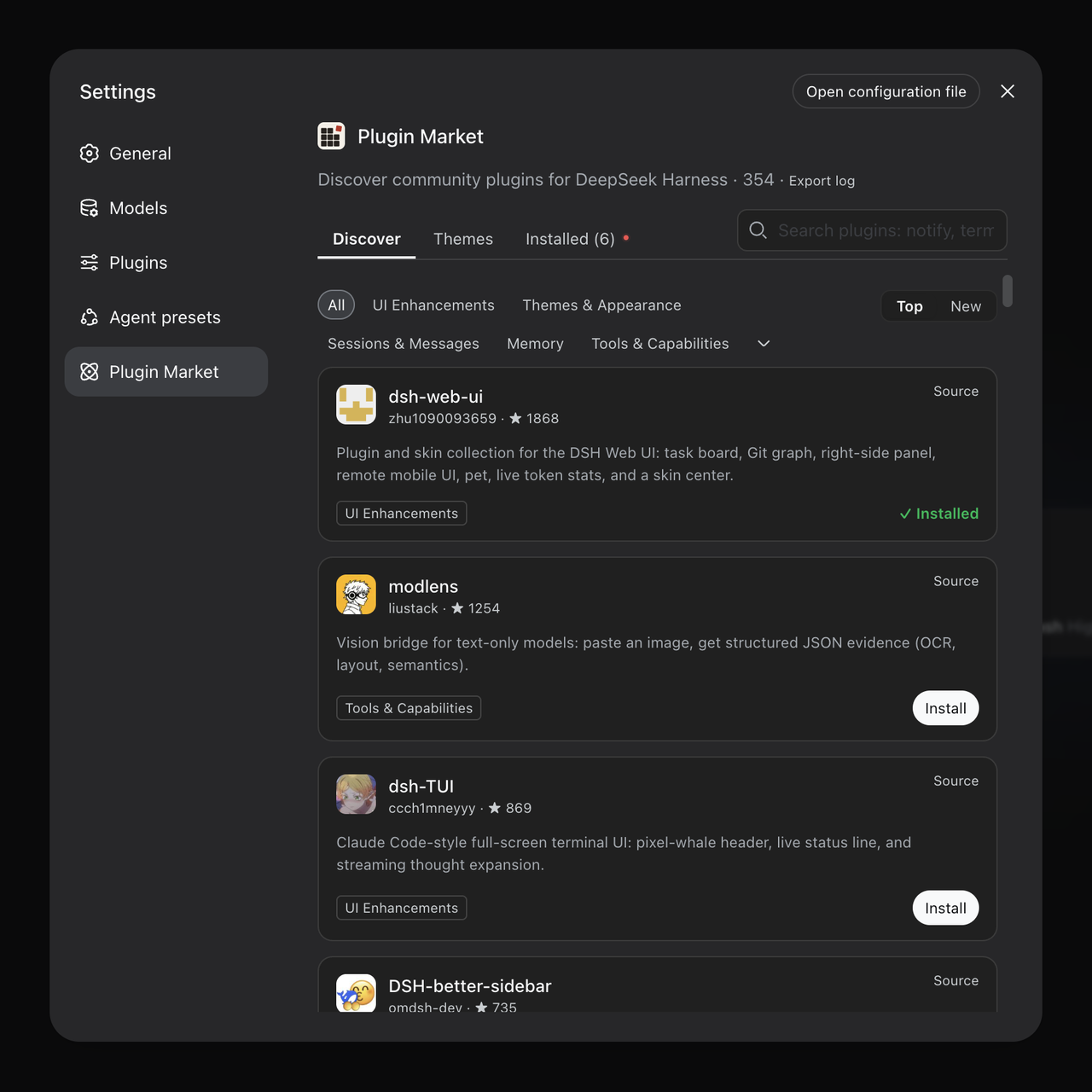
The plugin market for DeepSeek Harness: browse/search/one-click install community plugins and themes, with updates, backup/restore, hot disable, diagnostics, and AI fix.

A persistent whale widget on the DSH web UI that shows DeepSeek balance, today's usage, and per-turn cost, with drag-and-snap and sound effects.