dsh-obsidian
Run the following command in DeepSeek Harness:
dsh plugin install Harzva/dsh-obsidian
Paste the following prompt into your AI chat to install this plugin:
Run dsh plugin install Harzva/dsh-obsidian in your terminal to install; the full source is available at https://github.com/Harzva/dsh-obsidian
About this plugin
Obsidian's graph view is a joy to explore, yet it knows nothing about the repositories scattered across your machine. It only indexes Markdown notes and [[wiki links]] inside a vault, so turning a forest of codebases into a readable knowledge graph still means writing every note and edge by hand. dsh-obsidian removes that friction: open Settings, press Scan Projects, then Generate Knowledge Graph, and the plugin takes care of the rest. It auto-detects projects through manifests (package.json, Cargo.toml, go.mod, pyproject.toml, .git), extracts their dependencies, tech stack, root-directory areas, and keyword topics, and wires up every edge with fully deterministic rules. No hallucinated relationships, no black-box heuristics.
Once generated, the notes are plain .md files that Obsidian picks up the instant you open the vault. Hub pages under graph/, tech/, areas/, and topics/ naturally become cluster centroids in the graph view, while dependencies appear as connecting edges. A single index note ties the entire structure together. Writes go through the Obsidian Local REST API when the app is running, or simply fall back to the filesystem when it is idle. A dedicated state file tracks incremental changes so only plugin-managed files are ever rewritten or removed. A compact force-directed preview lives in the DSH settings tab for a quick dependency sanity check, and the entire pipeline runs offline. No data ever leaves your machine.
The ideal user is someone who already treats Obsidian as a second brain and keeps several local codebases in active rotation. dsh-obsidian bridges the gap between repository metadata and a living, link-rich knowledge graph, all within the DSH Web profile and without a single outbound network call.
Use Cases
- Automatically transcribe dependencies and tech stacks of local codebases into Obsidian wiki notes and render them in the graph view
- Scan and generate the entire knowledge graph in two clicks inside the DSH settings tab without hand-editing Markdown
- Write vault notes via filesystem fallback while Obsidian is closed, keeping the whole pipeline offline
Best For
- Developers who treat Obsidian as a second brain and want code context folded into a living graph
- Engineers juggling several local repositories (npm, Cargo, Go, Python) at the same time
- Privacy-conscious users who insist on a fully offline toolchain with zero data leaving the machine
Related Plugins
A service-oriented sidebar framework for DSH, offering a full workbench with file explorer, embedded browser, real terminal, Git panel, and extensible plugin services.
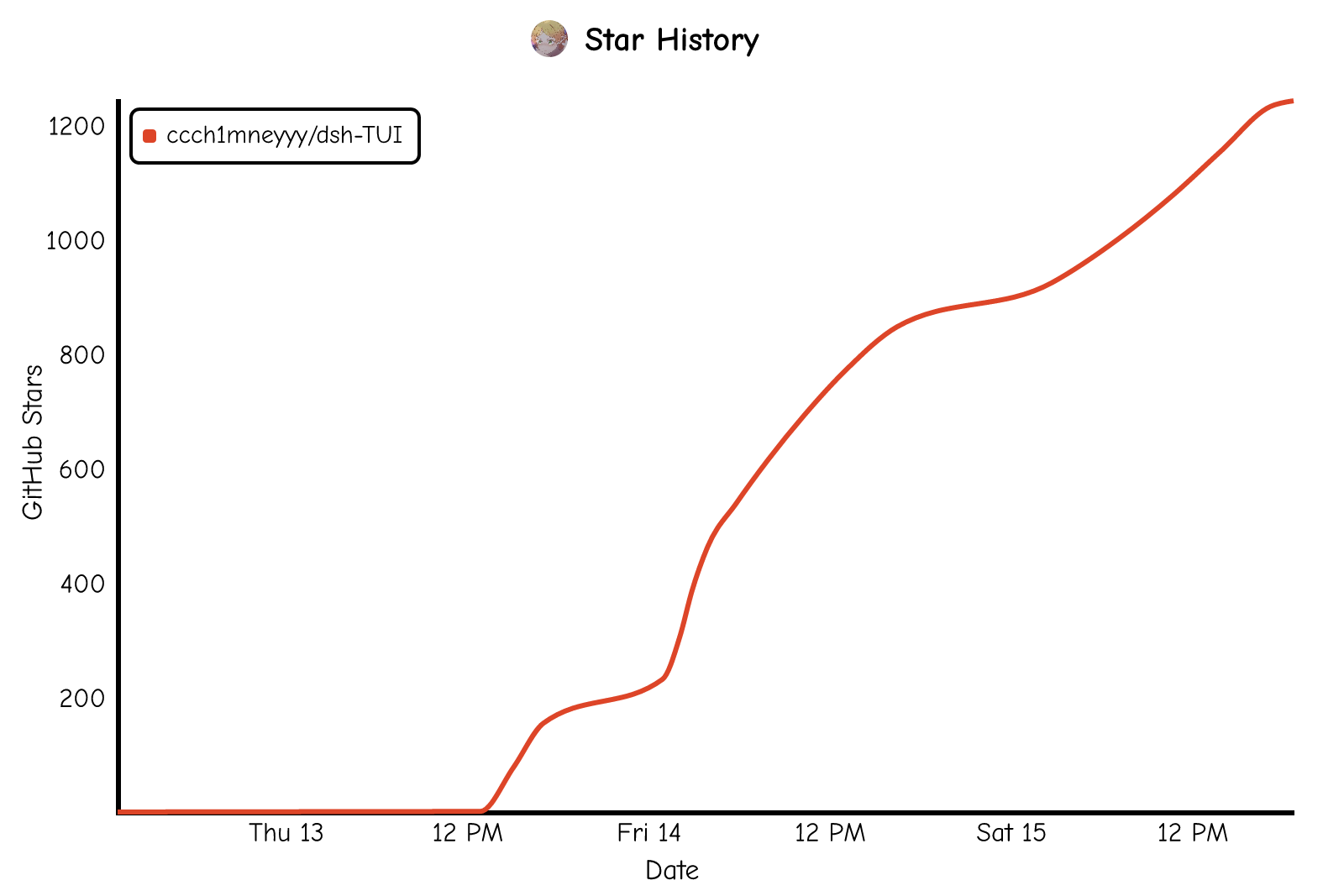
A beautiful, practical Claude Code-style TUI plugin with pixel whale top bar, flowing glow title, real-time status line, streaming thought expansion, time rewind, context progress bar and TPS gauge — zero core changes.
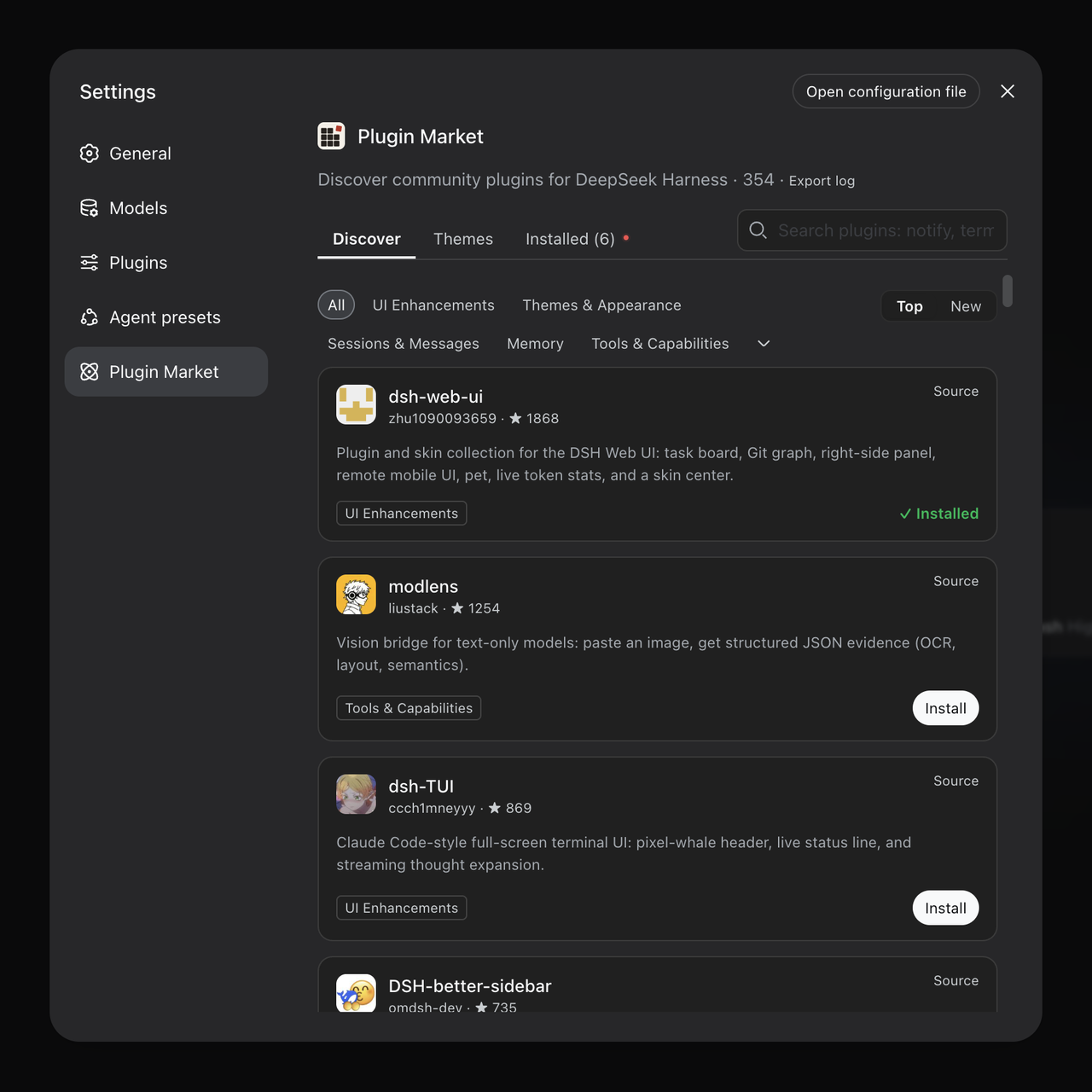
The plugin market for DeepSeek Harness: browse/search/one-click install community plugins and themes, with updates, backup/restore, hot disable, diagnostics, and AI fix.

A persistent whale widget on the DSH web UI that shows DeepSeek balance, today's usage, and per-turn cost, with drag-and-snap and sound effects.