dsh-self-updater
Run the following command in DeepSeek Harness:
dsh plugin install jijiz1/dsh-self-updater
Paste the following prompt into your AI chat to install this plugin:
Run dsh plugin install jijiz1/dsh-self-updater to install; source code is available at https://github.com/jijiz1/dsh-self-updater
About this plugin
Upgrading DeepSeek Harness Web used to mean manually running npm, cross-checking versions, and restarting the process by hand — one slip could disturb the sessions, configs, and custom profiles stored under $DSH_HOME, and you are left staring at a terminal log wondering if anything went wrong. dsh-self-updater folds that entire flow into a small version pill in the top-right corner of the DSH Web page: tap it to compare the installed version against the registry latest tag, and with one confirmation it pulls the exact package, validates via SemVer, installs, and restarts, all while streaming trimmed npm logs and blocking concurrent update attempts.
Safety constraints are baked in: the target package is hardcoded to @deepseek-ai/dsh and the version must come from the npm latest dist-tag; after install it re-reads the on-disk manifest and refuses to restart if versions mismatch; the npm cache lives under $DSH_HOME/self-updater/npm-cache instead of the system path to avoid permission issues; a failed update stays on the current version with error logs visible in the panel. HTTP routes only accept loopback and same-origin browser requests, keeping the attack surface local.
Built for operators and power users who maintain a DSH Web workflow daily and want upgrades to be safe, low-friction, and mostly hands-off. After a single install and restart, the version pill appears and every future update is one click away.
Use Cases
- Routine maintenance of a DSH Web setup with quick check-and-upgrade
- Avoid losing sessions or configs during manual npm updates; prefer safe one-click upgrade
- Prevent concurrent update conflicts when sharing one machine with multiple users
Best For
- Operators who maintain DeepSeek Harness daily
- Users running DSH Web locally with accumulated sessions and configs
- Technical users who want to reduce upgrade risk and minimize manual steps
Related Plugins
A service-oriented sidebar framework for DSH, offering a full workbench with file explorer, embedded browser, real terminal, Git panel, and extensible plugin services.
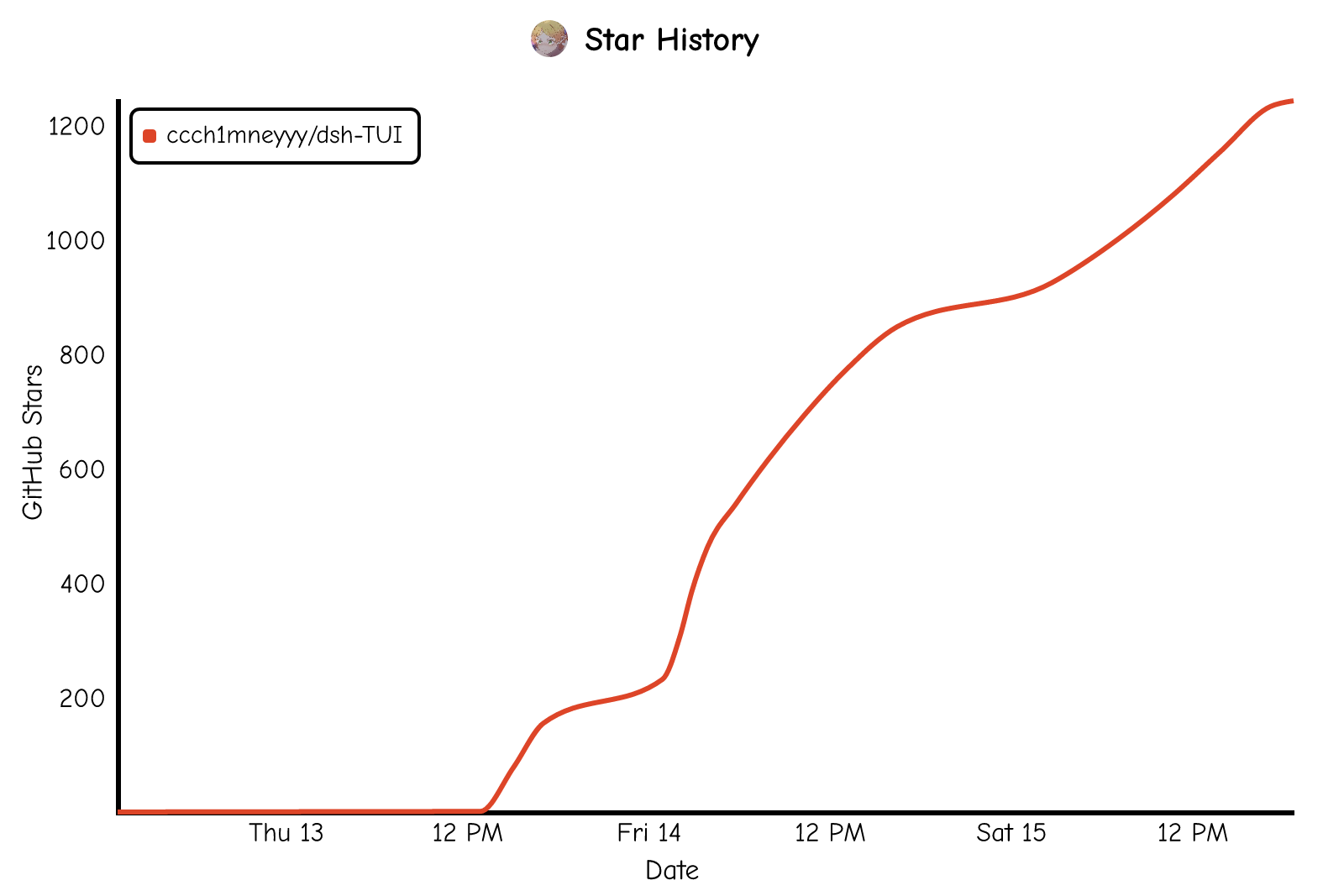
A beautiful, practical Claude Code-style TUI plugin with pixel whale top bar, flowing glow title, real-time status line, streaming thought expansion, time rewind, context progress bar and TPS gauge — zero core changes.
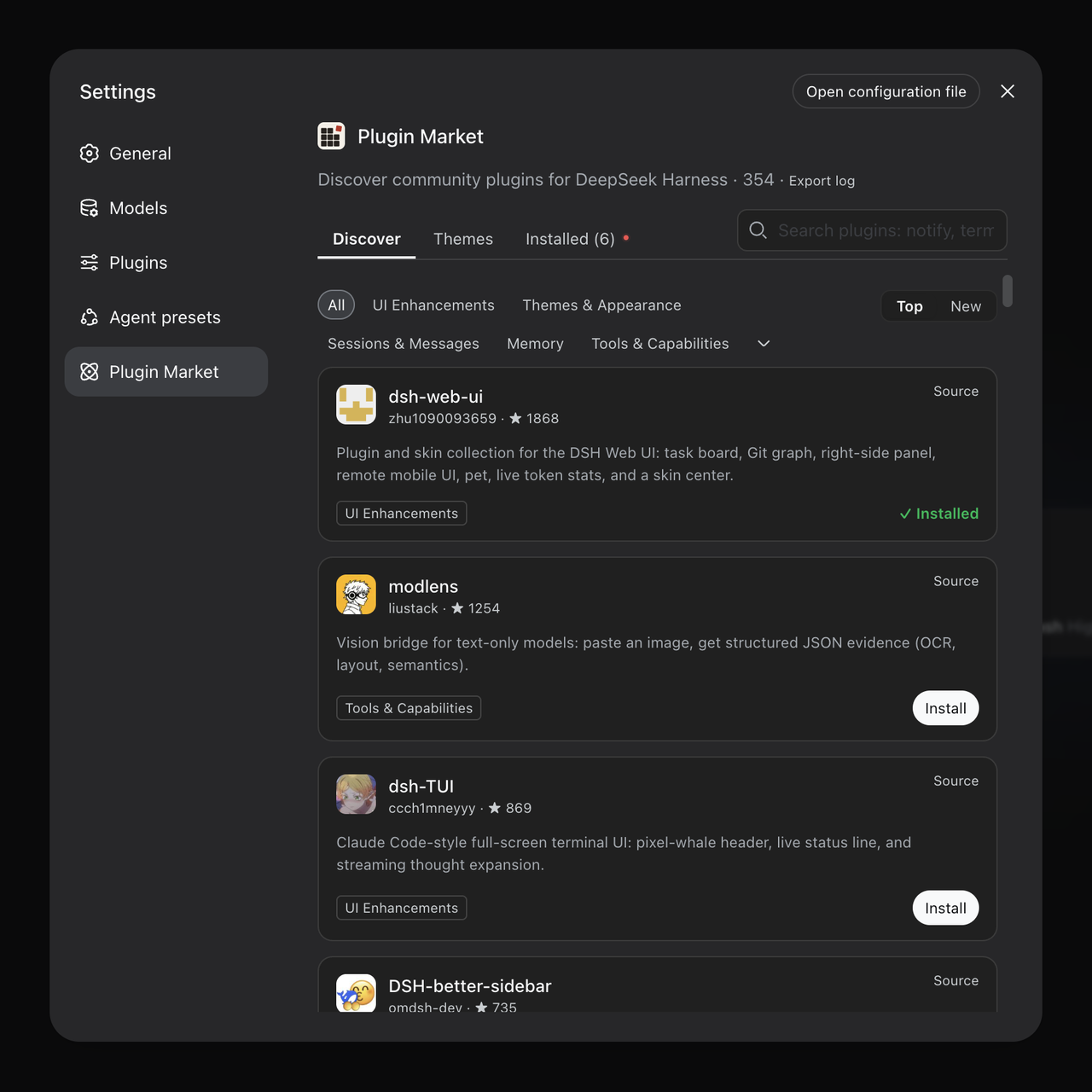
The plugin market for DeepSeek Harness: browse/search/one-click install community plugins and themes, with updates, backup/restore, hot disable, diagnostics, and AI fix.

A persistent whale widget on the DSH web UI that shows DeepSeek balance, today's usage, and per-turn cost, with drag-and-snap and sound effects.