dsh-fingerprint-show
Run the following command in DeepSeek Harness:
dsh plugin install Bortor/dsh-fingerprint-show
Paste the following prompt into your AI chat to install this plugin:
Running dsh plugin install Bortor/dsh-fingerprint-show in an environment with the dsh CLI and pnpm already installed will add the plugin; the source is available at https://github.com/Bortor/dsh-fingerprint-show and it becomes active after restarting dsh web.
About this plugin
When working with DeepSeek Harness, verifying which model deployment actually served a given reply is nearly impossible out of the box. The built-in DeepSeek adapter translates the provider SSE stream into the internal StreamChunk protocol and silently drops the system_fingerprint metadata along the way, so the llm/stream waterfall events carry no trace of it. After switching models or tweaking prompts, there is no built-in mechanism to confirm which backend version produced the output.
fingerprint-show plugs this gap at two complementary seams. On the host side, it wraps the global fetch call, tees every response matching chat/completions, extracts system_fingerprint from the SSE branch, and passes the original body straight through to the adapter. In parallel it listens to llm/stream waterfall events and correlates observations to in-flight calls using a closest-in-time, same-model-first heuristic. The end result is a full, untruncated fingerprint string rendered as plain text at the tail of each AI reply's metrics line, matching the native timing text pixel-for-pixel (14 px, tertiary grey, 10 px dot spacing) and fading in and out on hover with the same 80 ms transition as the framework.
Several design decisions stand out: the fingerprint is display-only with zero interaction and zero intrusion, never mutating session logs, never entering the model context, and never touching KV caches. After a mid-conversation model switch, each reply independently records the deployment that actually served it, producing a clear audit trail. Auxiliary calls (title generation, compaction) are tagged with a purpose marker and excluded from message annotation so they do not interfere.
This plugin suits teams doing A/B comparisons across DeepSeek endpoints, engineers debugging behavioral differences between deployment versions, and anyone who wants to answer "was this reply really from the production deploy I think it was?" without forking any framework code.
Use Cases
- Verifying which deployment version actually produced each reply after a model switch
- Tracing the source version of behavioral differences during A/B comparisons across DeepSeek endpoints
- Identifying the exact model deployment behind an anomalous reply during incident investigation
Best For
- Engineers comparing behavior across multiple DeepSeek endpoints
- Debuggers investigating model version differences
- Teams wanting a display-only enhancement without modifying framework internals
Related Plugins
A service-oriented sidebar framework for DSH, offering a full workbench with file explorer, embedded browser, real terminal, Git panel, and extensible plugin services.
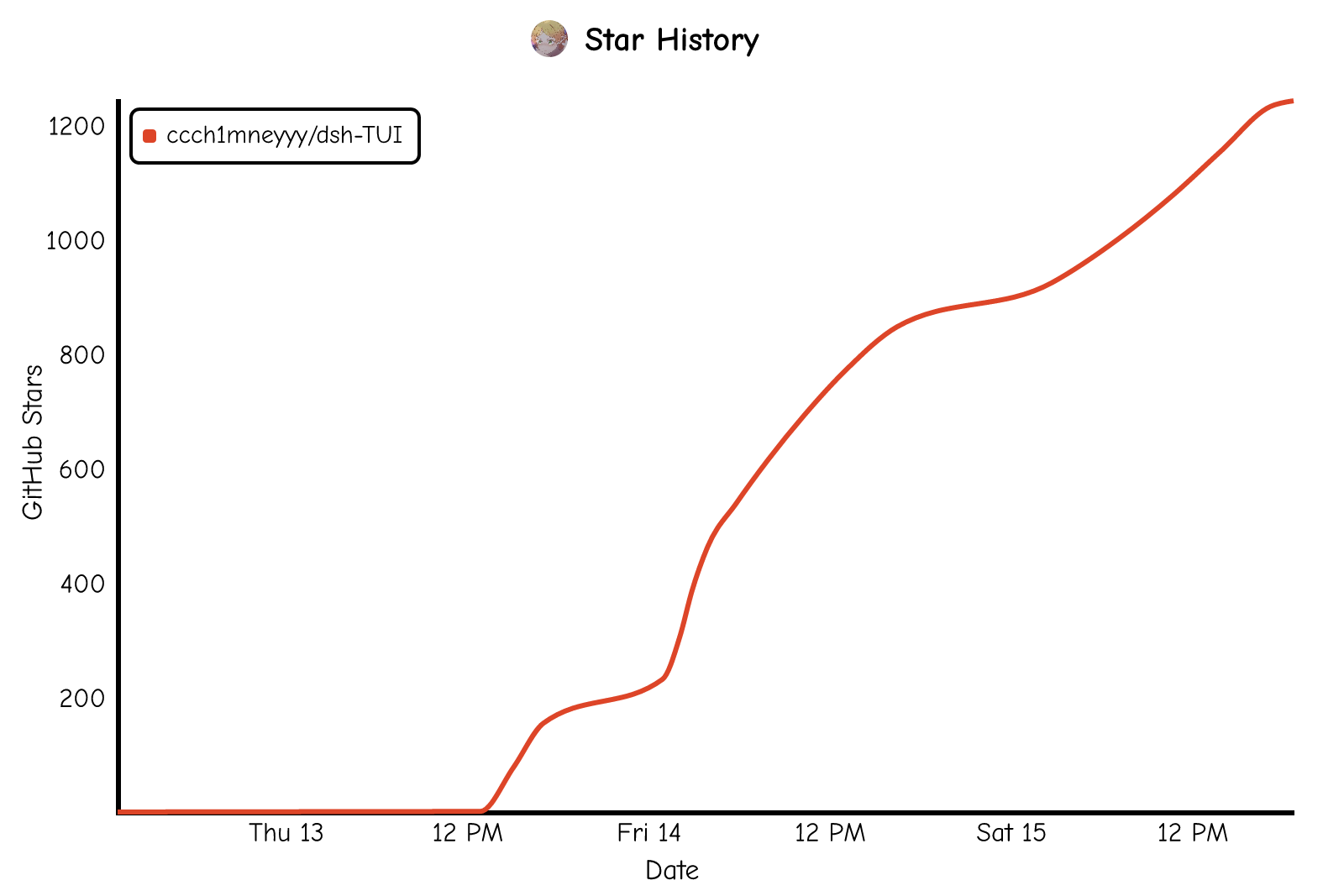
A beautiful, practical Claude Code-style TUI plugin with pixel whale top bar, flowing glow title, real-time status line, streaming thought expansion, time rewind, context progress bar and TPS gauge — zero core changes.
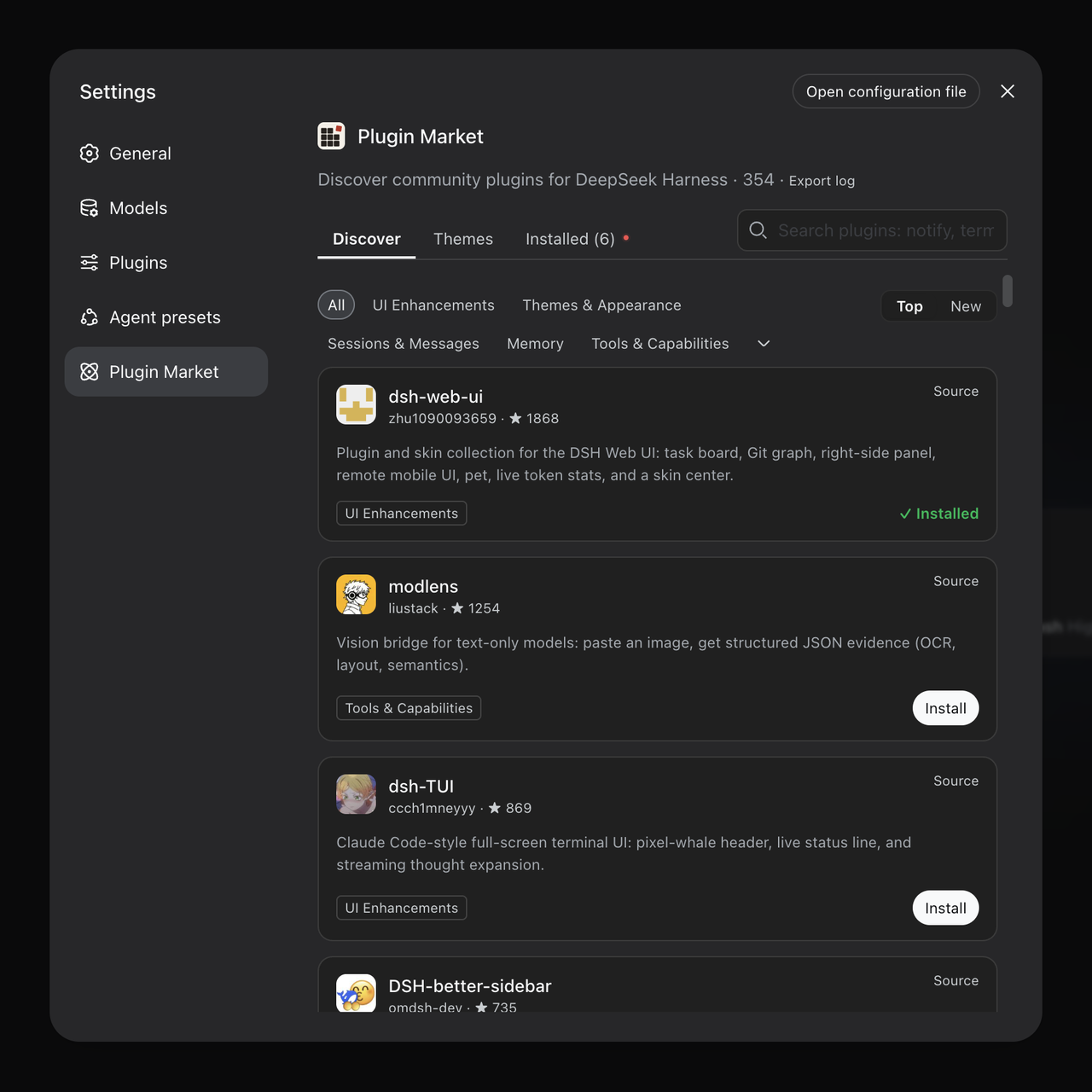
The plugin market for DeepSeek Harness: browse/search/one-click install community plugins and themes, with updates, backup/restore, hot disable, diagnostics, and AI fix.

A persistent whale widget on the DSH web UI that shows DeepSeek balance, today's usage, and per-turn cost, with drag-and-snap and sound effects.