dsh-telegram
Run the following command in DeepSeek Harness:
dsh plugin install sazzadurrahmaan/dsh-telegram
Paste the following prompt into your AI chat to install this plugin:
Run dsh plugin install sazzadurrahmaan/dsh-telegram in your terminal to install the plugin (source: https://github.com/sazzadurrahmaan/dsh-telegram), then set the Bot Token and allowed numeric user IDs via environment variables to complete setup.
About this plugin
You are running a DeepSeek Harness coding agent on a server and want to nudge it mid-commute without leaving an ssh session alive all night. dsh-telegram wires the Telegram Bot API into Harness Cordis plugin system using plain fetch and long polling — no webhook, no framework, no third-party bot library to audit. The entire wire client is one small file.
Security is the design, not a patch. An empty allowlist admits nobody; identity is verified by numeric Telegram user ID, never by username. Destructive tools such as bash, write, and edit stop at a pre-execute gate and surface Allow / Deny buttons directly in the chat. The callback token is a random UUID, and an unanswered prompt auto-denies after a configurable timeout. Each chat gets its own agent session with zero cross-user state, and everything is torn down the instant the plugin is unloaded.
It suits developers already on DeepSeek Harness who want to drive the agent outside the terminal and the browser — that quick follow-up to a build, a log paste, a one-line fix from a phone. It ships as a 0.1.x developer preview, so pin your Harness version, and keep the bot token in your environment variable rather than a committed config file.
Use Cases
- Chase a build result on your phone mid-commute without opening a shell
- Approve or deny destructive tool calls with Allow/Deny buttons right in chat
- Isolate each team member with a numeric-ID allowlist and a dedicated agent session
Best For
- Developers already running DeepSeek Harness on a server
- Users who want to nudge a coding agent from outside the terminal and browser
- Security-sensitive teams that value default-deny and approval-gated tool execution
Related Plugins
A service-oriented sidebar framework for DSH, offering a full workbench with file explorer, embedded browser, real terminal, Git panel, and extensible plugin services.
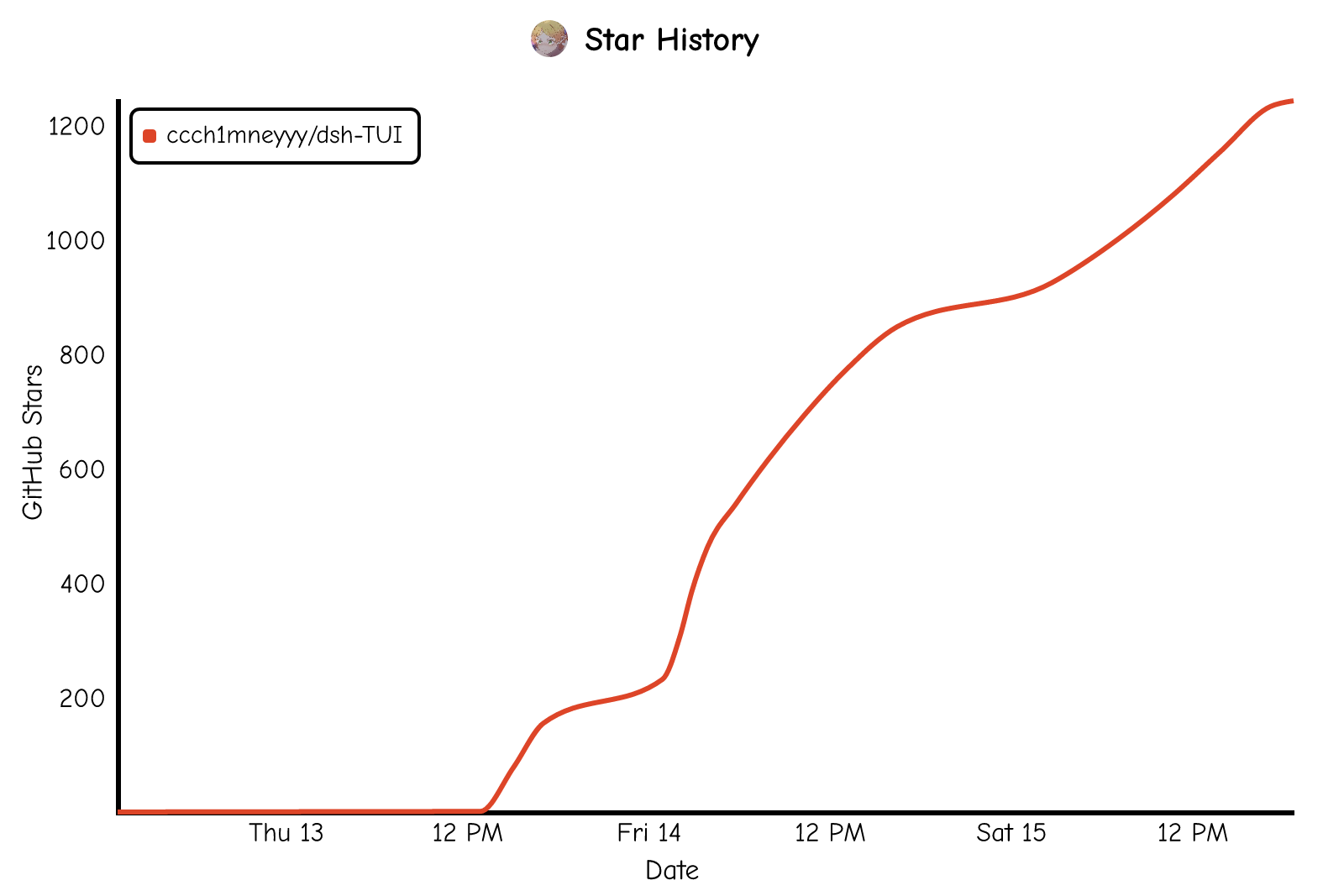
A beautiful, practical Claude Code-style TUI plugin with pixel whale top bar, flowing glow title, real-time status line, streaming thought expansion, time rewind, context progress bar and TPS gauge — zero core changes.
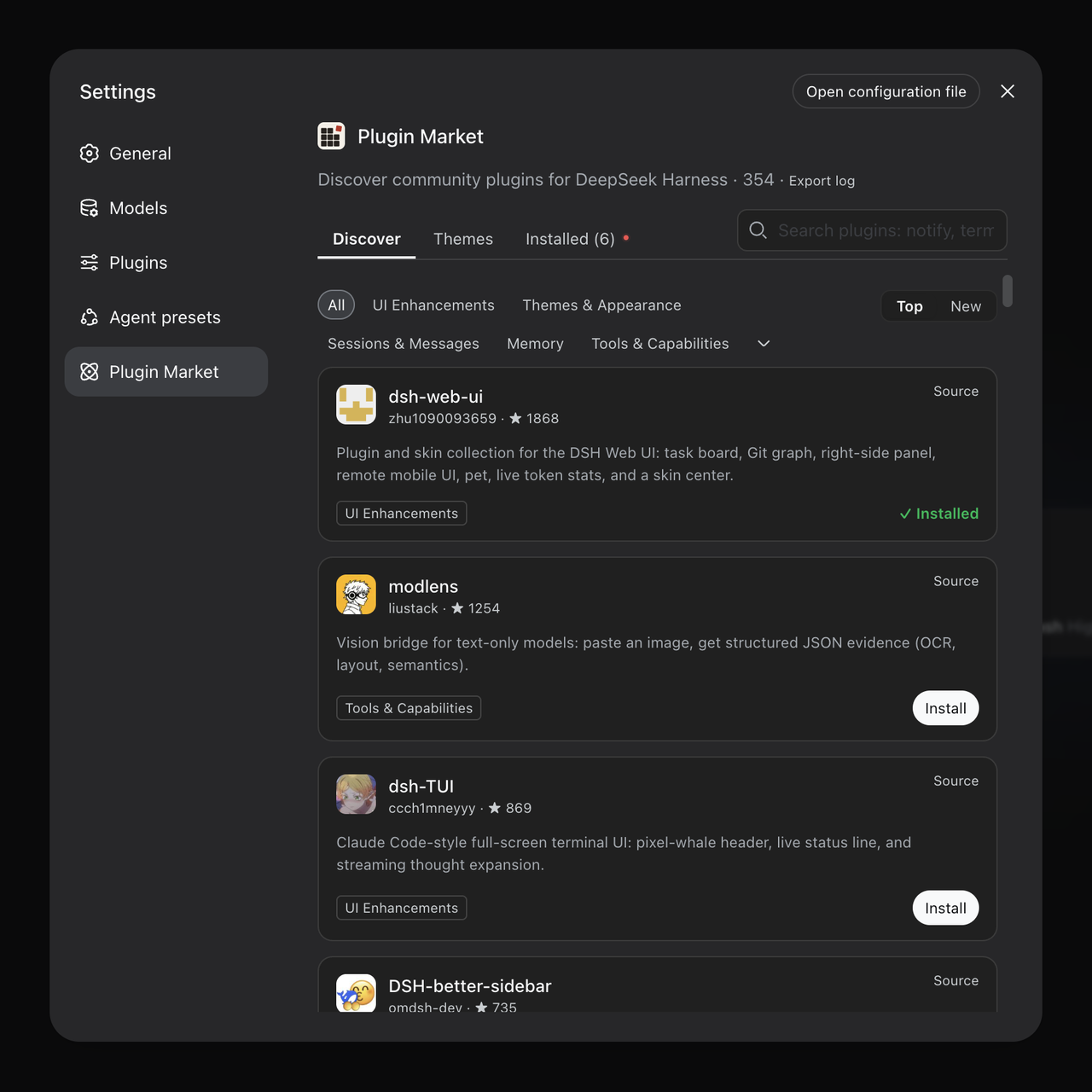
The plugin market for DeepSeek Harness: browse/search/one-click install community plugins and themes, with updates, backup/restore, hot disable, diagnostics, and AI fix.

A persistent whale widget on the DSH web UI that shows DeepSeek balance, today's usage, and per-turn cost, with drag-and-snap and sound effects.