dsh-remote-tailscale
Run the following command in DeepSeek Harness:
dsh plugin install hxt9805/dsh-remote-tailscale
Paste the following prompt into your AI chat to install this plugin:
Run dsh plugin install hxt9805/dsh-remote-tailscale in DeepSeek Harness to install this plugin; source is available at https://github.com/hxt9805/dsh-remote-tailscale
About this plugin
Many people install DSH only to realize that its web UI is local-only — leave the same Wi-Fi and you are locked out, while exposing the port to the public internet feels uneasy. dsh-remote-tailscale exists to close that gap: through a Tailscale tailnet, any device signed in to the same Tailscale account can open the full DSH web UI, WebSocket included, with no shared LAN and no second password to manage.
Security is the first design principle. The plugin publishes exclusively via tailscale serve on its own HTTPS port (default 8455, 443 is refused) behind a loopback proxy on 127.0.0.1. It never runs tailscale funnel and never touches the public internet. Publishing is off by default and toggled with a single switch in Settings; if Tailscale drops the connection the plugin reports the failure instantly, clears the URL and QR code, and republishes with 5/15/30/60-second backoff when the link returns.
This plugin is for anyone already running DSH and Tailscale who wants to reach the local web UI from a phone, tablet, or another computer regardless of network. Whether you are checking model conversations on the commute or switching to a different machine for work, signing into the same Tailscale account and opening the .ts.net address or scanning the QR code is all it takes — secure, straightforward, and with zero public exposure.
Use Cases
- Open your local DSH web UI from a phone during a commute
- Access DSH across different Wi-Fi networks or cities
- Share one DSH interface across all devices on the same tailnet
Best For
- Developers already running DSH and Tailscale
- Users who switch between phone, tablet, and desktop for DSH
- Self-hosting users who require zero public internet exposure
Related Plugins
A service-oriented sidebar framework for DSH, offering a full workbench with file explorer, embedded browser, real terminal, Git panel, and extensible plugin services.
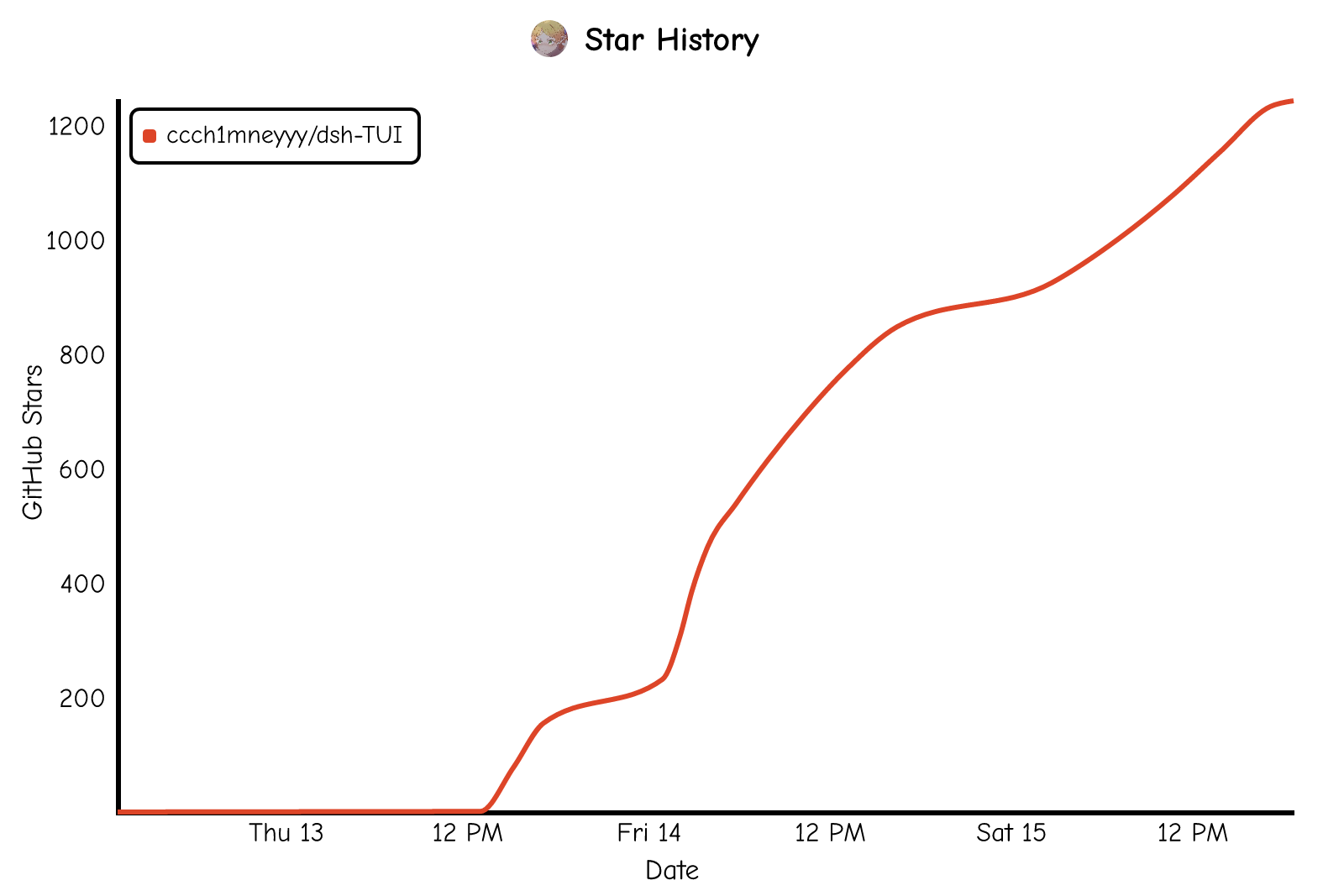
A beautiful, practical Claude Code-style TUI plugin with pixel whale top bar, flowing glow title, real-time status line, streaming thought expansion, time rewind, context progress bar and TPS gauge — zero core changes.
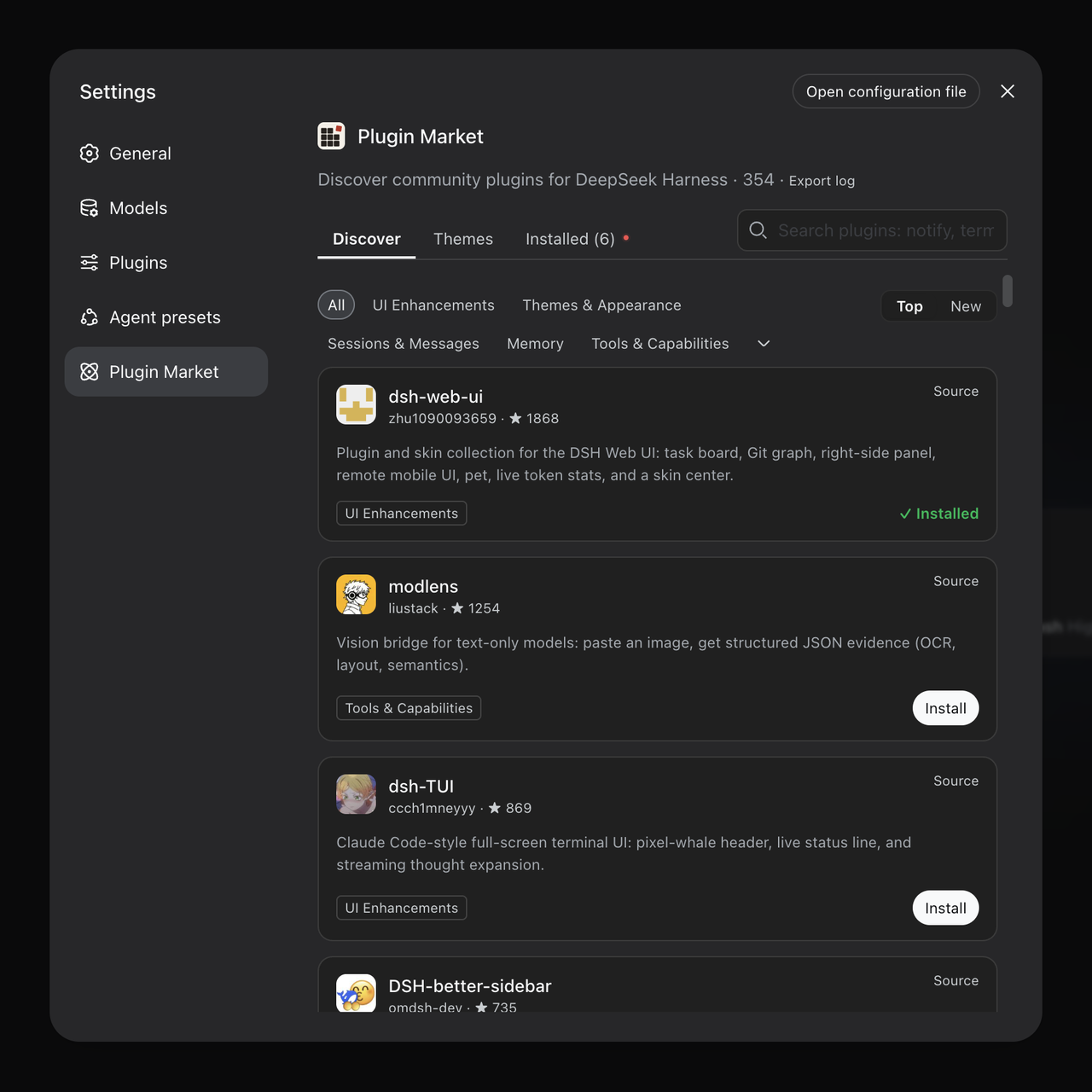
The plugin market for DeepSeek Harness: browse/search/one-click install community plugins and themes, with updates, backup/restore, hot disable, diagnostics, and AI fix.

A persistent whale widget on the DSH web UI that shows DeepSeek balance, today's usage, and per-turn cost, with drag-and-snap and sound effects.