dsh-model-provider-badge
Run the following command in DeepSeek Harness:
dsh plugin install cKNKSnd/dsh-model-provider-badge
Paste the following prompt into your AI chat to install this plugin:
Run dsh plugin install cKNKSnd/dsh-model-provider-badge in your terminal (source: https://github.com/cKNKSnd/dsh-model-provider-badge) and restart the dsh web process to activate the badge.
About this plugin
When you run multiple model providers through the DSH web client, the stock model selector only shows the model name — the provider label is buried behind an extra click. The moment you switch between opencode-go, OpenRouter, or any other channel, it becomes easy to lose track of where your requests are actually routed. dsh-model-provider-badge drops a small read-only badge right beside the model selector (bottom-right of the composer, left of the send button) so the current provider name is visible at a glance, no menu required.
The badge reads the same per-session model directory store that the stock selector uses, so it stays in sync the instant you change model or provider. If the store is idle it lazily loads on its own, meaning you get a reading even before opening the selector. Styling mirrors the official model label (13px / weight 500 / secondary color), truncating with an ellipsis past 140 px, with the full value available as a tooltip on hover.
It is a pure browser-side UI plugin with zero server logic and no profile edits. Ideal for anyone who juggles multiple providers in DSH web or occasionally switches to non-official channels for comparison — one small badge that removes the mental overhead of double-checking.
Use Cases
- Glide your eyes to the badge to confirm where the current request is routed
- Verify the provider of a non-official model channel without opening any menu
- Keep track of the active vendor during multi-provider comparison tests
Best For
- Developers who routinely connect multiple model providers via DSH web
- Testers who occasionally switch to non-official channels for benchmarking
- Heavy users who want to eliminate the overhead of double-checking routing
Related Plugins
A service-oriented sidebar framework for DSH, offering a full workbench with file explorer, embedded browser, real terminal, Git panel, and extensible plugin services.
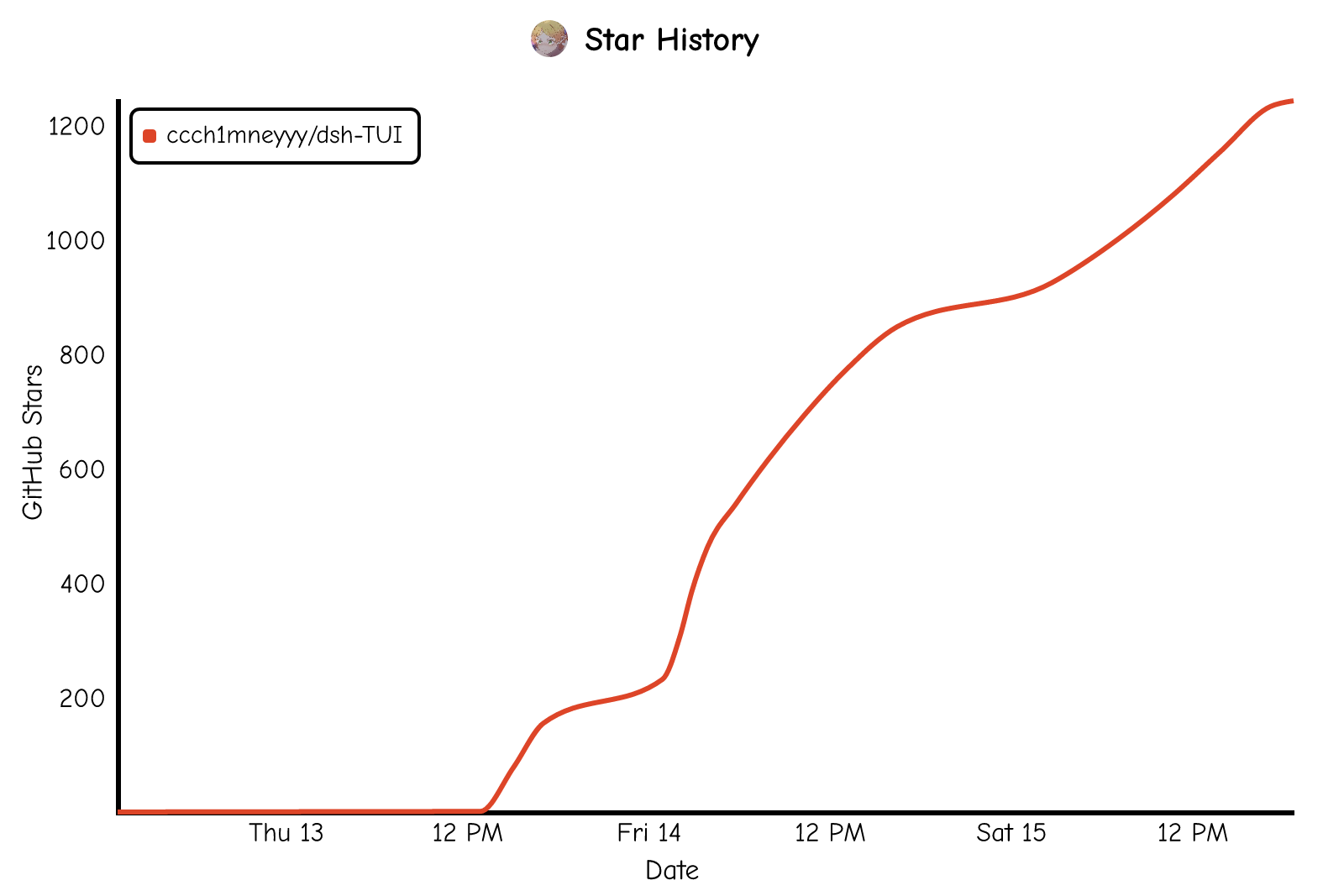
A beautiful, practical Claude Code-style TUI plugin with pixel whale top bar, flowing glow title, real-time status line, streaming thought expansion, time rewind, context progress bar and TPS gauge — zero core changes.
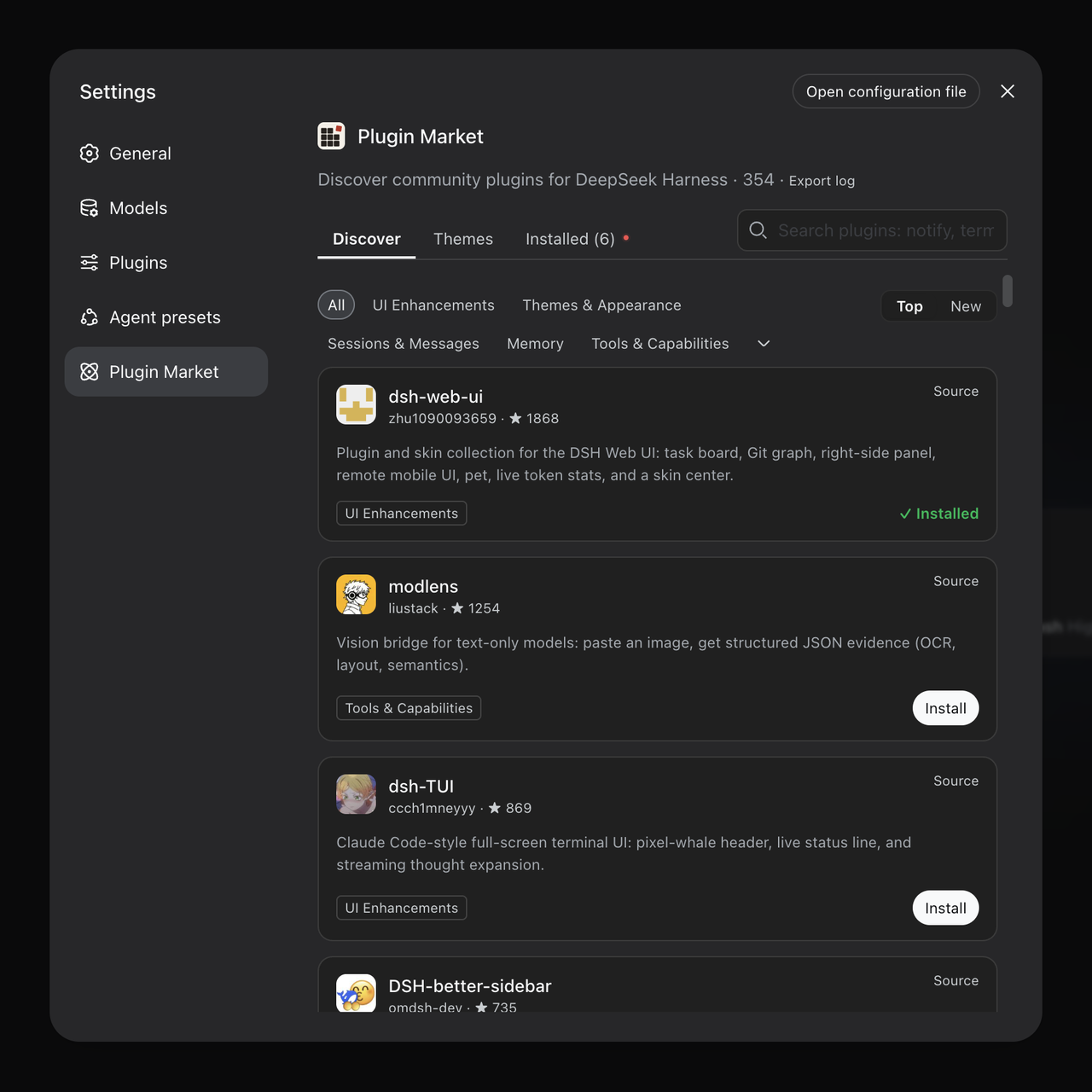
The plugin market for DeepSeek Harness: browse/search/one-click install community plugins and themes, with updates, backup/restore, hot disable, diagnostics, and AI fix.

A persistent whale widget on the DSH web UI that shows DeepSeek balance, today's usage, and per-turn cost, with drag-and-snap and sound effects.