dsh-web-noOpenBrowser
Run the following command in DeepSeek Harness:
dsh plugin install lovezi0/dsh-web-noOpenBrowser
Paste the following prompt into your AI chat to install this plugin:
Run dsh plugin install lovezi0/dsh-web-noOpenBrowser in a DeepSeek Harness CLI environment to install; the open-source repository is at https://github.com/lovezi0/dsh-web-noOpenBrowser .
About this plugin
Starting from dsh 0.1.0-rc.8, Web mode pops a browser window to the local port 3080 every time the service boots. If you run the service on a headless server, prefer managing your own browser tabs, or simply find the auto-window intrusive, this plugin is your fix — install it once and openBrowser stays off for good, no more tacking --no-open onto every command.
The implementation is deliberately minimal: a single Cordis bundle patch (one cordis.patch.yml) that targets the web-runtime config line by id and overrides openBrowser to false. There is zero JavaScript, no build step, no npm publishing, and no runtime dependencies. Unlike the --no-open CLI flag which is per-invocation, this patch writes into the runtime config as a persisted default, surviving restarts and new sessions without any extra typing.
It is built for people running dsh Web on a remote box or in CI, accessing the UI through an SSH tunnel, or anyone who wants to keep the 3080 endpoint quiet unless they explicitly open it themselves. If you are perfectly happy with the auto-popup, you likely do not need this plugin — but if that little window has been nagging you, dsh-web-noOpenBrowser makes it go away for good.
Use Cases
- Running dsh Web on a headless remote server without spawning unwanted browser processes
- Accessing port 3080 over an SSH tunnel and choosing when to open the browser yourself
- Eliminating implicit browser dependencies in CI pipelines or automation environments
Best For
- Ops engineers who run dsh Web services long-term on servers or in containers
- Developers who prefer to manage their own browser tabs rather than having the service pop one up automatically
- Remote users who reach the dsh Web UI through SSH tunnels or reverse proxies
Related Plugins
A service-oriented sidebar framework for DSH, offering a full workbench with file explorer, embedded browser, real terminal, Git panel, and extensible plugin services.
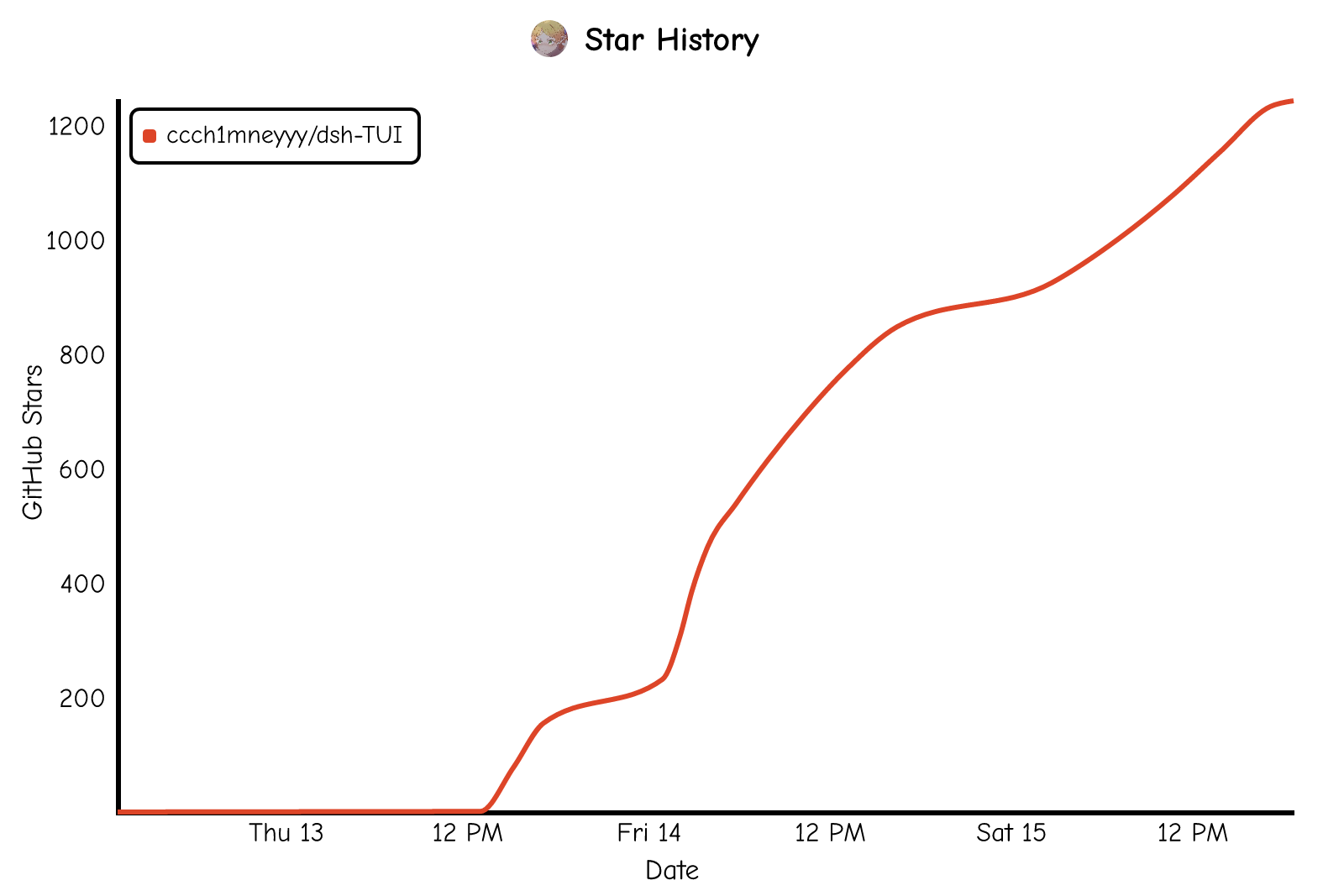
A beautiful, practical Claude Code-style TUI plugin with pixel whale top bar, flowing glow title, real-time status line, streaming thought expansion, time rewind, context progress bar and TPS gauge — zero core changes.
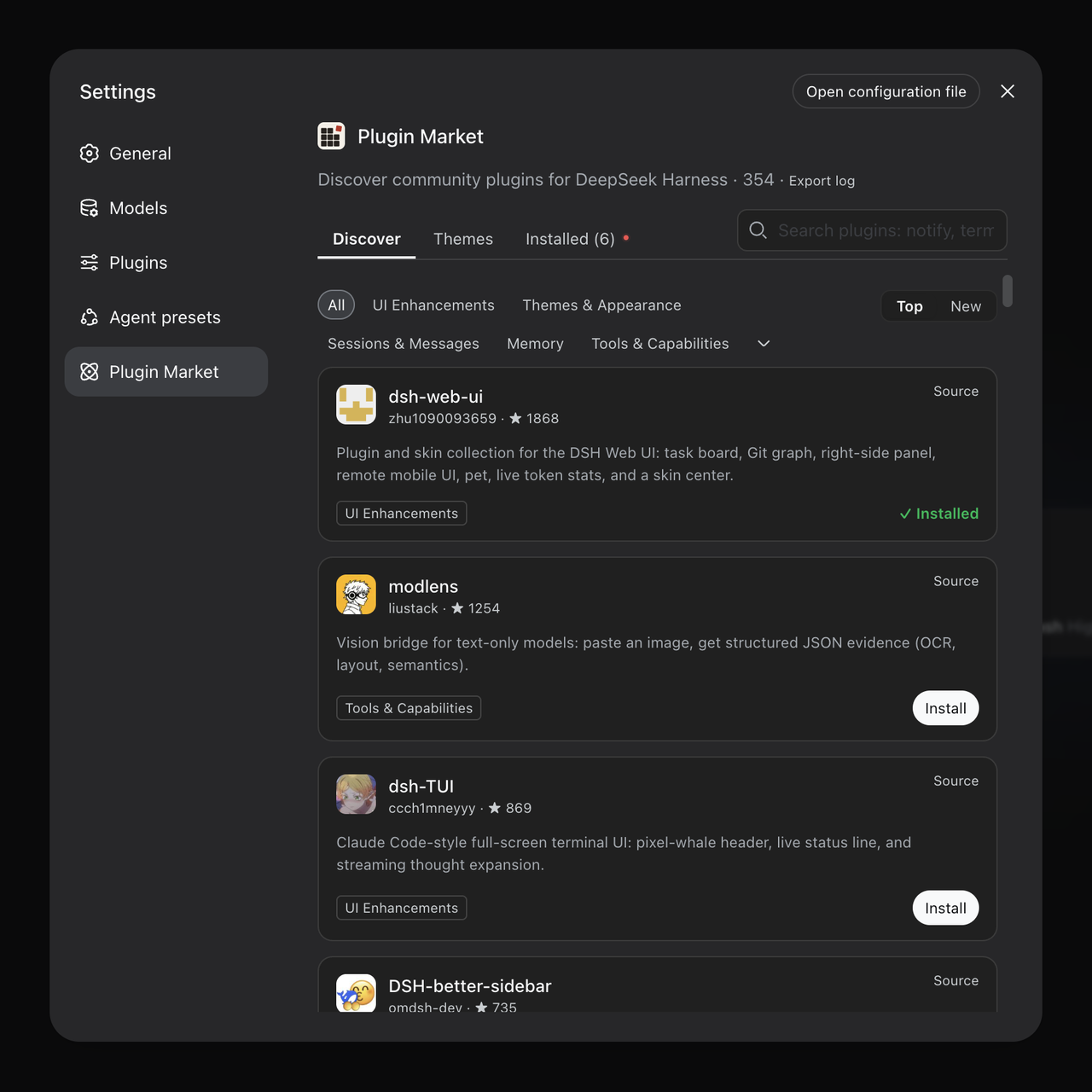
The plugin market for DeepSeek Harness: browse/search/one-click install community plugins and themes, with updates, backup/restore, hot disable, diagnostics, and AI fix.

A persistent whale widget on the DSH web UI that shows DeepSeek balance, today's usage, and per-turn cost, with drag-and-snap and sound effects.