dsh-worktree
Run the following command in DeepSeek Harness:
dsh plugin install navid-kianfar/dsh-worktree
Paste the following prompt into your AI chat to install this plugin:
Run dsh plugin install navid-kianfar/dsh-worktree in your terminal to install the plugin; the source lives at https://github.com/navid-kianfar/dsh-worktree, then add it to the bundle list in $DSH_HOME/profiles/web/package.json and restart the profile.
About this plugin
When you run parallel tasks inside the DeepSeek Harness Web Client, switching branches or worktrees typically means dropping to a terminal and running git by hand. dsh-worktree tucks those actions into a small chip in the session header, so you can switch, create, and remove worktrees without ever leaving the current session.\n\nThe branch panel offers fuzzy search, lists local and remote-tracking branches side by side with ahead/behind counters, and supports creating, renaming, and deleting branches. The worktree panel handles locking, unlocking, removal, and pruning stale entries. When uncommitted changes exist, the plugin uses git switch --merge to carry them across and aborts on conflict; force-delete requires typing the name as a confirmation step. New worktrees are placed via a configurable path template and can be auto-registered as a Workspace with a session opened right away.\n\nIf you routinely juggle multiple tasks in DeepSeek Harness, hop between feature and hotfix branches, or rely on git worktrees for parallel development, this plugin keeps the entire switching workflow inside the Web interface and eliminates the repeated back-and-forth to a terminal.
Use Cases
- Switch between multiple feature branches directly in the Web Client without opening a terminal
- Create an isolated worktree for each task and auto-register it as a Workspace with a session
- Lock, remove, or prune stale worktrees to reclaim disk space
Best For
- Developers who use the DeepSeek Harness Web Client daily
- Teams that rely on git worktrees to work on multiple branches in parallel
- Users who prefer to handle branch and worktree operations entirely within the Web interface
Related Plugins
A service-oriented sidebar framework for DSH, offering a full workbench with file explorer, embedded browser, real terminal, Git panel, and extensible plugin services.
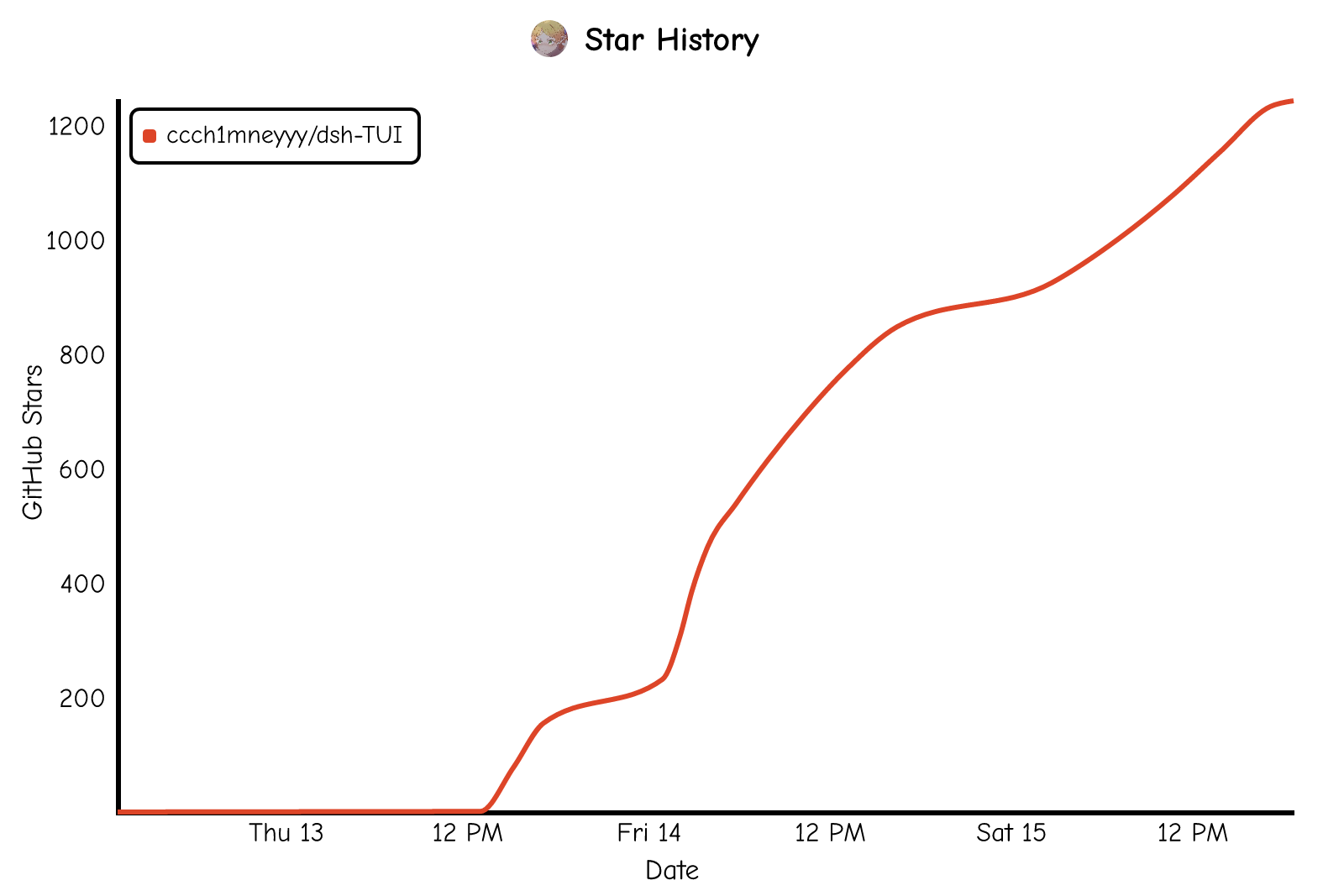
A beautiful, practical Claude Code-style TUI plugin with pixel whale top bar, flowing glow title, real-time status line, streaming thought expansion, time rewind, context progress bar and TPS gauge — zero core changes.
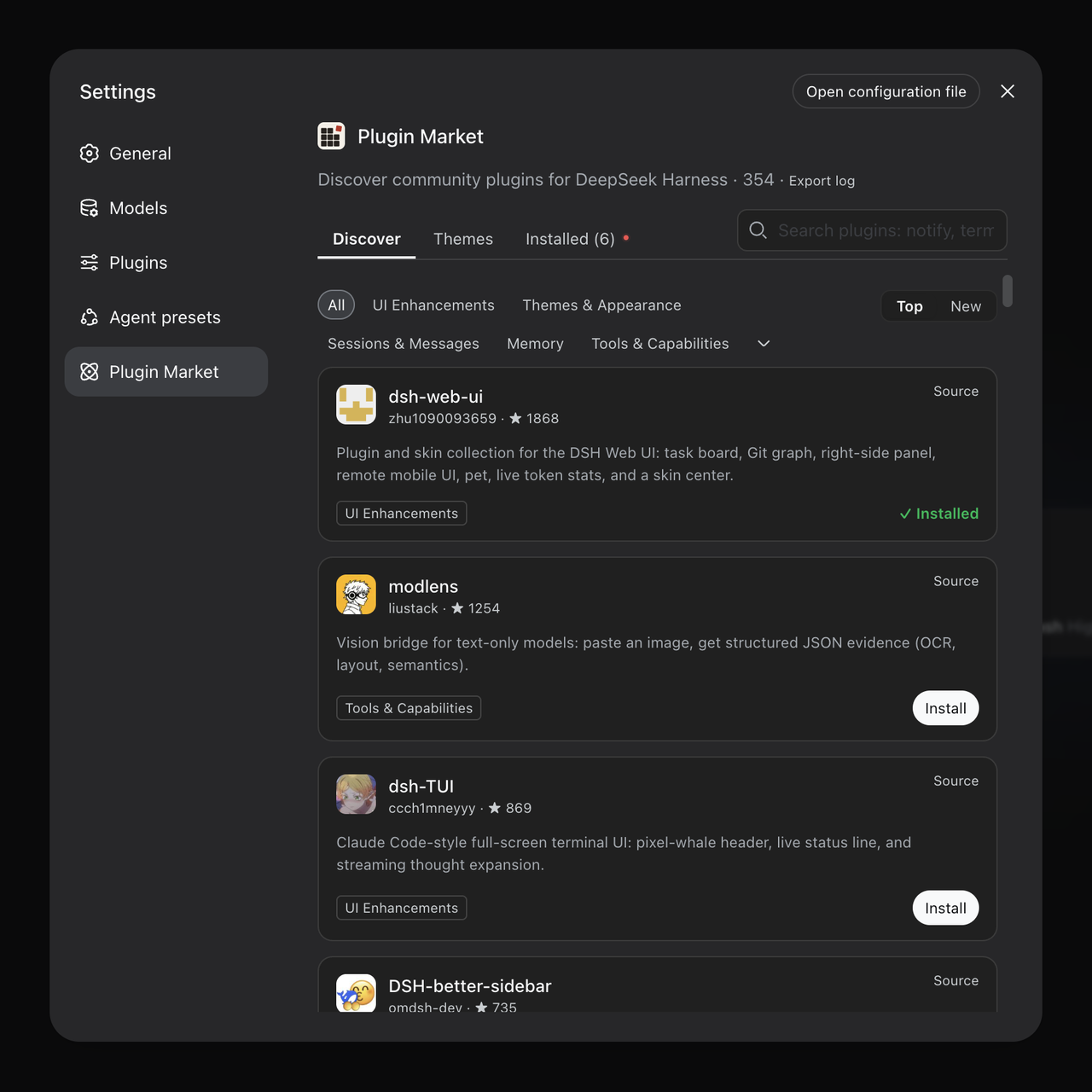
The plugin market for DeepSeek Harness: browse/search/one-click install community plugins and themes, with updates, backup/restore, hot disable, diagnostics, and AI fix.

A persistent whale widget on the DSH web UI that shows DeepSeek balance, today's usage, and per-turn cost, with drag-and-snap and sound effects.