dsh-dshx
Run the following command in DeepSeek Harness:
dsh plugin install YZz-S/dsh-dshx
Paste the following prompt into your AI chat to install this plugin:
Run dsh plugin install YZz-S/dsh-dshx in your terminal to install; source at https://github.com/YZz-S/dsh-dshx .
About this plugin
DSH Web GUI is a lightweight agent frontend, but once you want to connect external MCP servers, maintain skill bundles, define custom slash commands, or curate context memory, there is no unified surface to operate and monitor those resources. dshx fills that gap by packaging an MCP client hub, skill management, slash-command registry, memory store, and prompt library into a single mountable extension suite.
The MCP hub is the centerpiece: it speaks stdio, Streamable HTTP, and SSE out of the box, with a per-server state machine, exponential-backoff auto-reconnect, a ring-buffer log, and a live tool-discovery panel. Discovered tools are bridged to the model as native tools named mcp____. The web management console rides on the same local DSH web server (port 3080), offering five tabs—one per module—plus a JSON API under /dshext/api/* for scripted workflows. Every module also exposes model-facing tools (memory_write, skill_create, command_define, and so on), so you can simply ask the agent in natural language to create a skill, write a memory note, or define a command for you.
dshx is well suited for developers who already run the DSH Web GUI and want to extend their agent declaratively—particularly when juggling multiple MCP servers, sharing memory and skills across projects, or codifying recurring workflows as named slash commands. It is pure ESM JavaScript with no build step and zero additional npm dependencies.
Use Cases
- Connect and manage multiple MCP servers from one DSH Web GUI console
- Share memory, skills, and custom slash commands across projects
- Review and edit prompt sections and persona via a local web dashboard
- Ask the agent in natural language to create skills, write memories, or define commands
Best For
- Developers extending the DSH Web GUI with declarative agent capabilities
- Engineers who frequently switch MCP servers or maintain multi-tool pipelines
- Users who want to codify recurring workflows as slash commands or skill bundles
Related Plugins
A service-oriented sidebar framework for DSH, offering a full workbench with file explorer, embedded browser, real terminal, Git panel, and extensible plugin services.
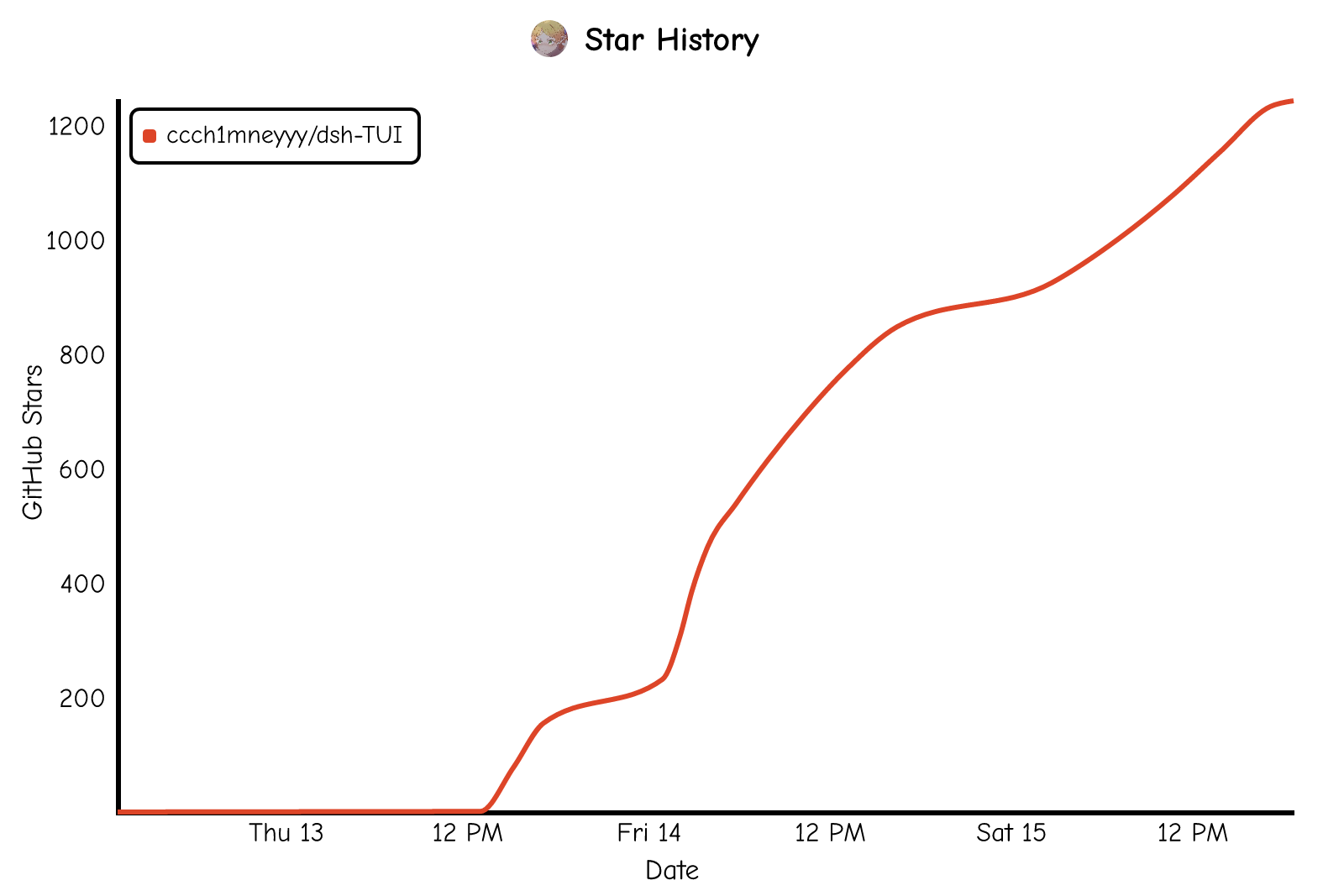
A beautiful, practical Claude Code-style TUI plugin with pixel whale top bar, flowing glow title, real-time status line, streaming thought expansion, time rewind, context progress bar and TPS gauge — zero core changes.
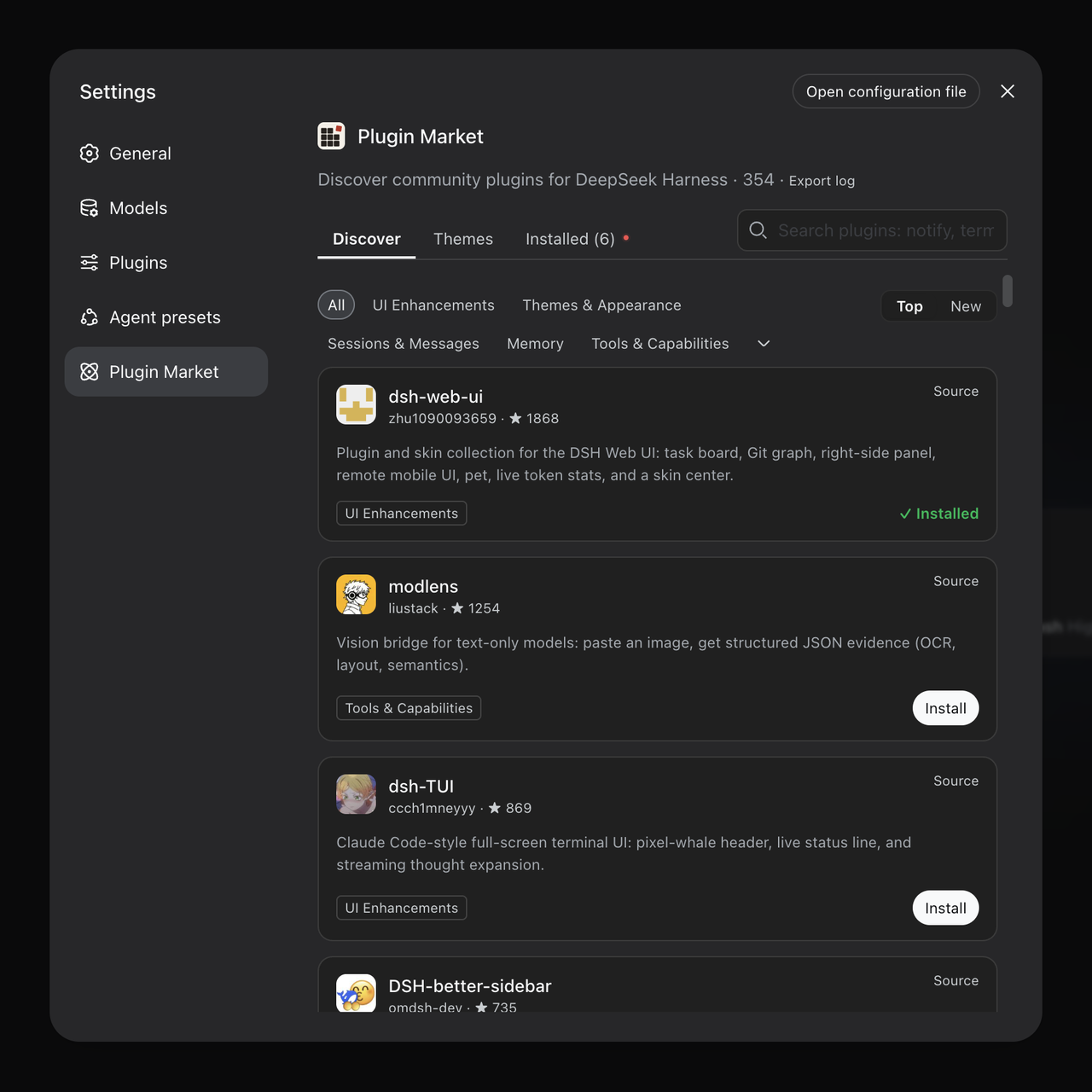
The plugin market for DeepSeek Harness: browse/search/one-click install community plugins and themes, with updates, backup/restore, hot disable, diagnostics, and AI fix.

A persistent whale widget on the DSH web UI that shows DeepSeek balance, today's usage, and per-turn cost, with drag-and-snap and sound effects.