dsh-hash-edit
Run the following command in DeepSeek Harness:
dsh plugin install ddv12138/dsh-hash-edit
Paste the following prompt into your AI chat to install this plugin:
Visit https://github.com/ddv12138/dsh-hash-edit for installation details, then run dsh plugin install ddv12138/dsh-hash-edit in your DeepSeek Harness profile to install.
About this plugin
Editing by line number has a long-standing failure mode: once surrounding context shifts, you land on the wrong line and risk corrupting the file. dsh-hash-edit replaces that fragility with a per-line, 3-character base-62 hash anchor that is stable across edits. Every tool call addresses a line by anchor alone—no line number, no raw-text matching—and any stale or ambiguous anchor is hard-rejected with a descriptive error code. There is no fuzzy fallback, so the edit you execute is always the edit you intended.
The plugin exposes three tools: read (paged, line-level output that records the served range), replace (single-interval edit per call, with replace or delete semantics), and undo_last_replace (byte-exact restoration including BOM, line endings, and anchors). After each write, a fresh anchor block is automatically appended so subsequent references never go stale. The single-level undo record persists in .dsh-hash-edit/store.json, surviving process restarts. Mounting the bundle also takes over the built-in edit tool at the agent scope, hides the raw edit, and enforces a one-edit-per-message discipline—no extra configuration needed.
It is aimed at DSH users who rely on AI agents to modify code or long documents and need deterministic, corruption-proof editing—particularly in multi-turn sessions on large files where line-number drift would otherwise accumulate into mistakes.
Use Cases
- Multi-turn AI agent editing of large code files without line-number drift
- Undoing the last replacement accurately even after a process restart
- Production-grade file editing where fuzzy matching is strictly unacceptable
Best For
- Developers who frequently rely on DSH agents to modify code or config files
- Engineering teams that demand deterministic, auditable file editing
- AI workflow users who want to take over built-in edit behavior to reduce agent mistakes
Related Plugins
A service-oriented sidebar framework for DSH, offering a full workbench with file explorer, embedded browser, real terminal, Git panel, and extensible plugin services.
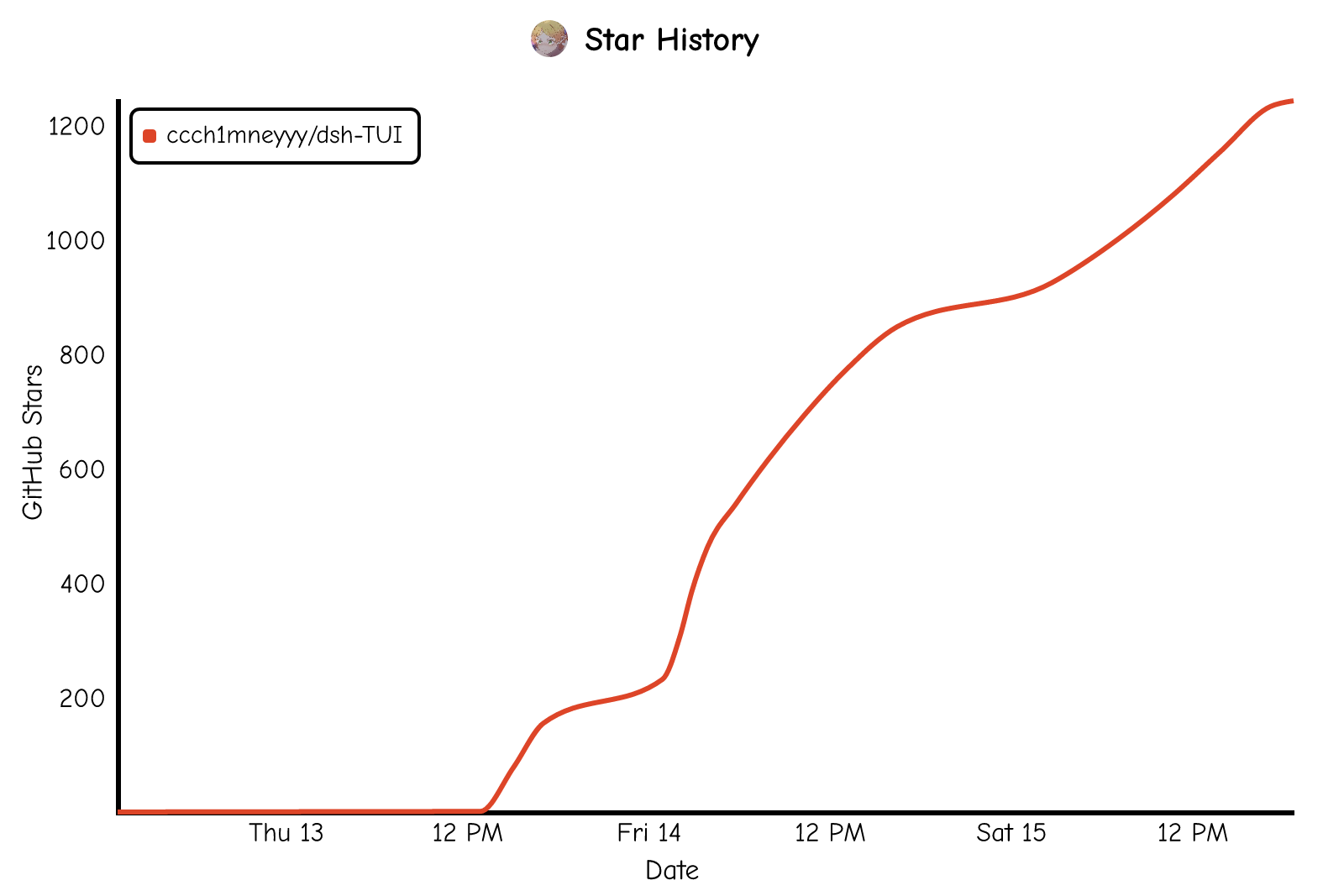
A beautiful, practical Claude Code-style TUI plugin with pixel whale top bar, flowing glow title, real-time status line, streaming thought expansion, time rewind, context progress bar and TPS gauge — zero core changes.
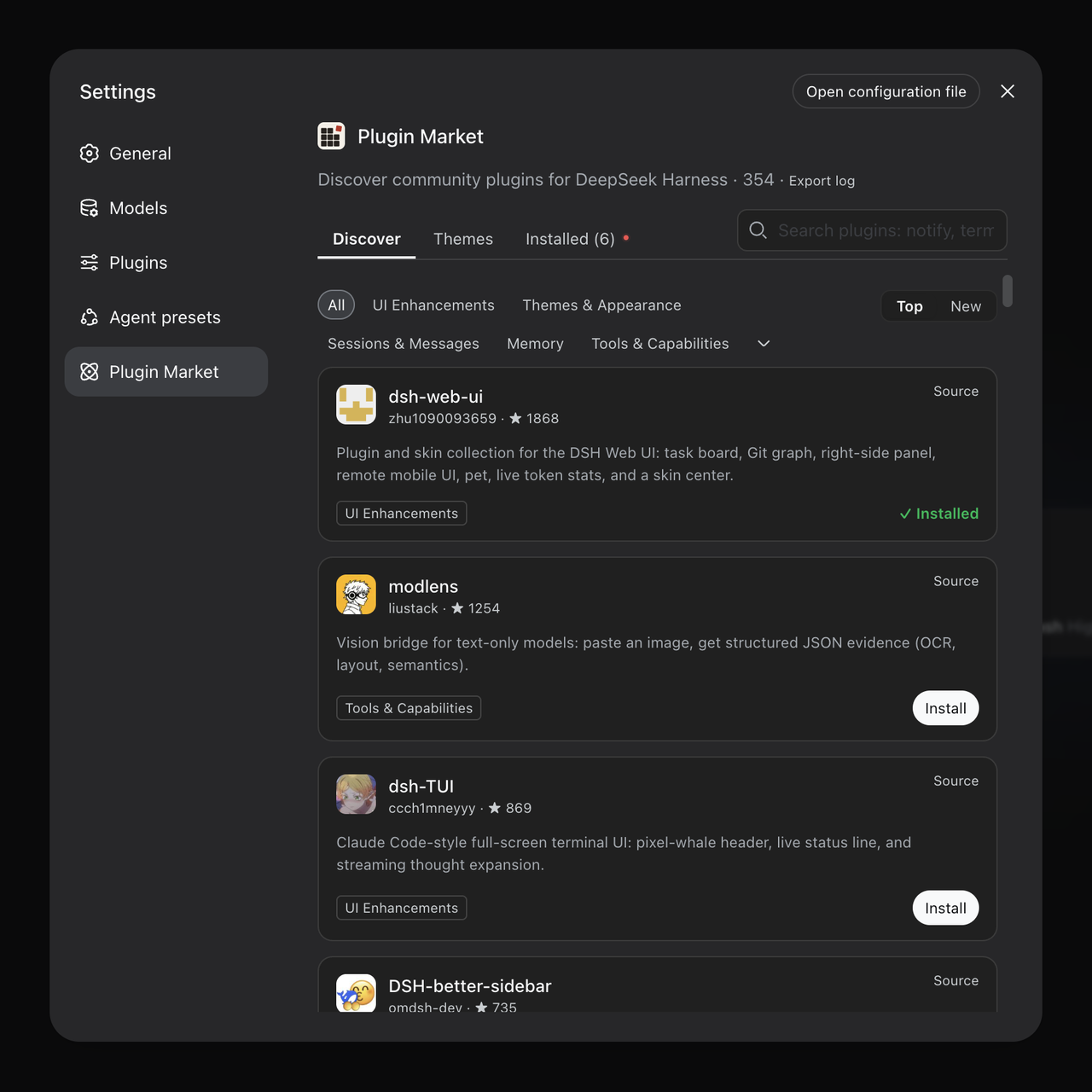
The plugin market for DeepSeek Harness: browse/search/one-click install community plugins and themes, with updates, backup/restore, hot disable, diagnostics, and AI fix.

A persistent whale widget on the DSH web UI that shows DeepSeek balance, today's usage, and per-turn cost, with drag-and-snap and sound effects.