dsh-model-vendor-badge
Run the following command in DeepSeek Harness:
dsh plugin install Townrain/dsh-model-vendor-badge
Paste the following prompt into your AI chat to install this plugin:
Run dsh plugin install Townrain/dsh-model-vendor-badge in the DeepSeek Harness terminal (source: https://github.com/Townrain/dsh-model-vendor-badge), then refresh the page to see the vendor badge appear next to the model selector.
About this plugin
A small vendor pill now sits right next to the model selector in the DeepSeek Harness web composer. It solves a practical problem: when you route through aggregators like OpenRouter, the model name alone rarely tells you which provider is actually serving the request. This badge puts the answer in plain sight, so you no longer need to open a popup to double-check.
The pill registers into the conversation.input.right seat, immediately left of the model selector, and reads the same per-session ModelDirectory (ctx.modelDirectories) that the selector itself renders from. Switch the model from the seat menu, the /model popup, or the host, and the badge updates live with no stale state. Known provider route ids get a brand-colored dot; unknown routes fall back to a neutral one, making at-a-glance identification effortless.
Everything is pure client-side presentation: no host code injection, no RPC calls, no settings entries, no session-event listeners. Uninstalling leaves nothing behind. It is a perfect fit for users who hop between providers and routes frequently and want the interface to always make clear which backend is doing the heavy lifting.
Use Cases
- Confirming the active provider at a glance while switching models through aggregators like OpenRouter
- Seeing the vendor update instantly after changing models from the seat menu, /model popup, or host without opening extra panels
- Distinguishing among multiple connected providers such as DeepSeek, Pi AI, and OpenRouter in a mixed-model workflow
Best For
- DeepSeek Harness users who frequently switch between providers and routing paths
- Developers using aggregators like OpenRouter who want the UI to always reflect the true inference source
- Users who prefer lightweight, zero-config, purely front-end plugins with no residual state
Related Plugins
A service-oriented sidebar framework for DSH, offering a full workbench with file explorer, embedded browser, real terminal, Git panel, and extensible plugin services.
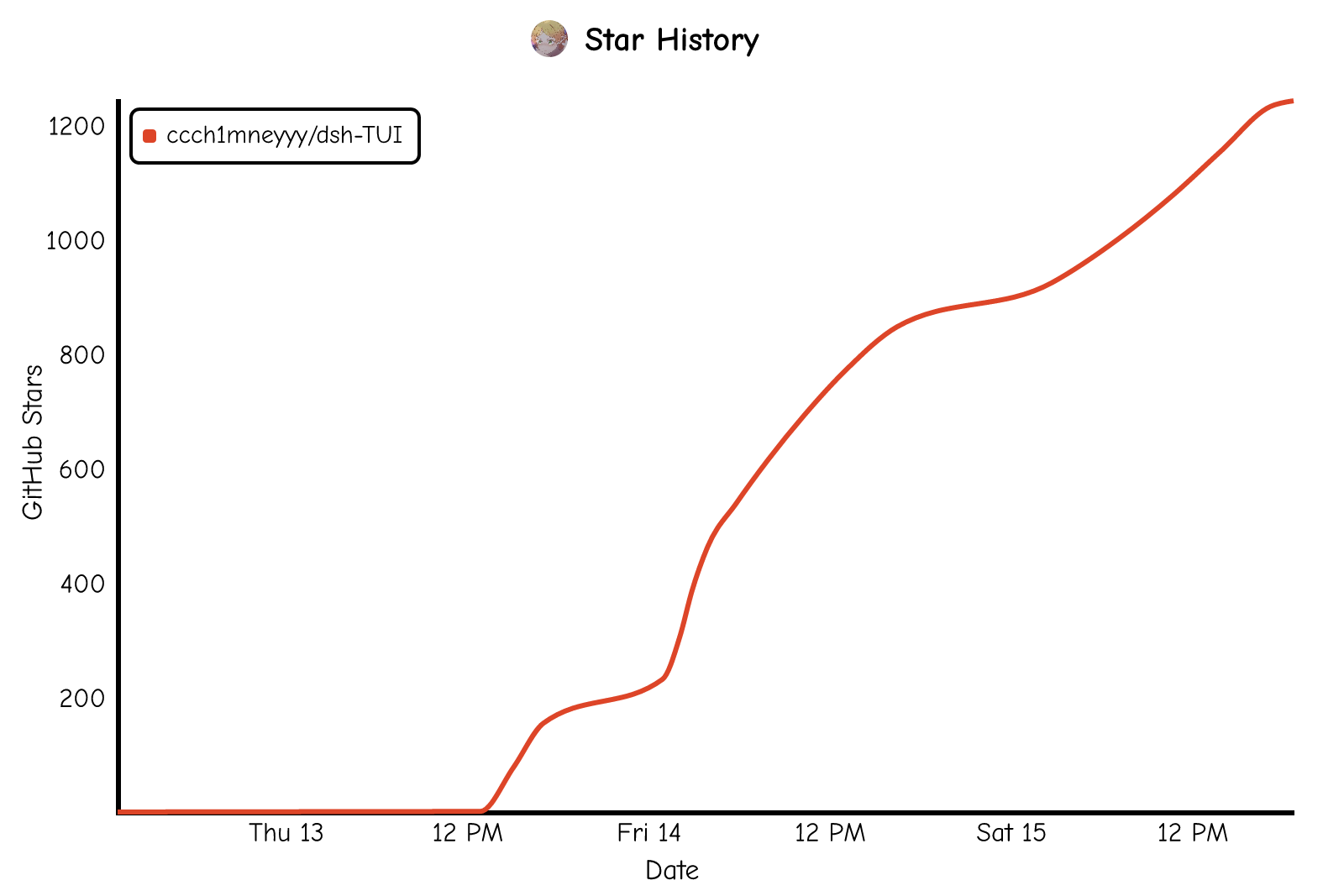
A beautiful, practical Claude Code-style TUI plugin with pixel whale top bar, flowing glow title, real-time status line, streaming thought expansion, time rewind, context progress bar and TPS gauge — zero core changes.
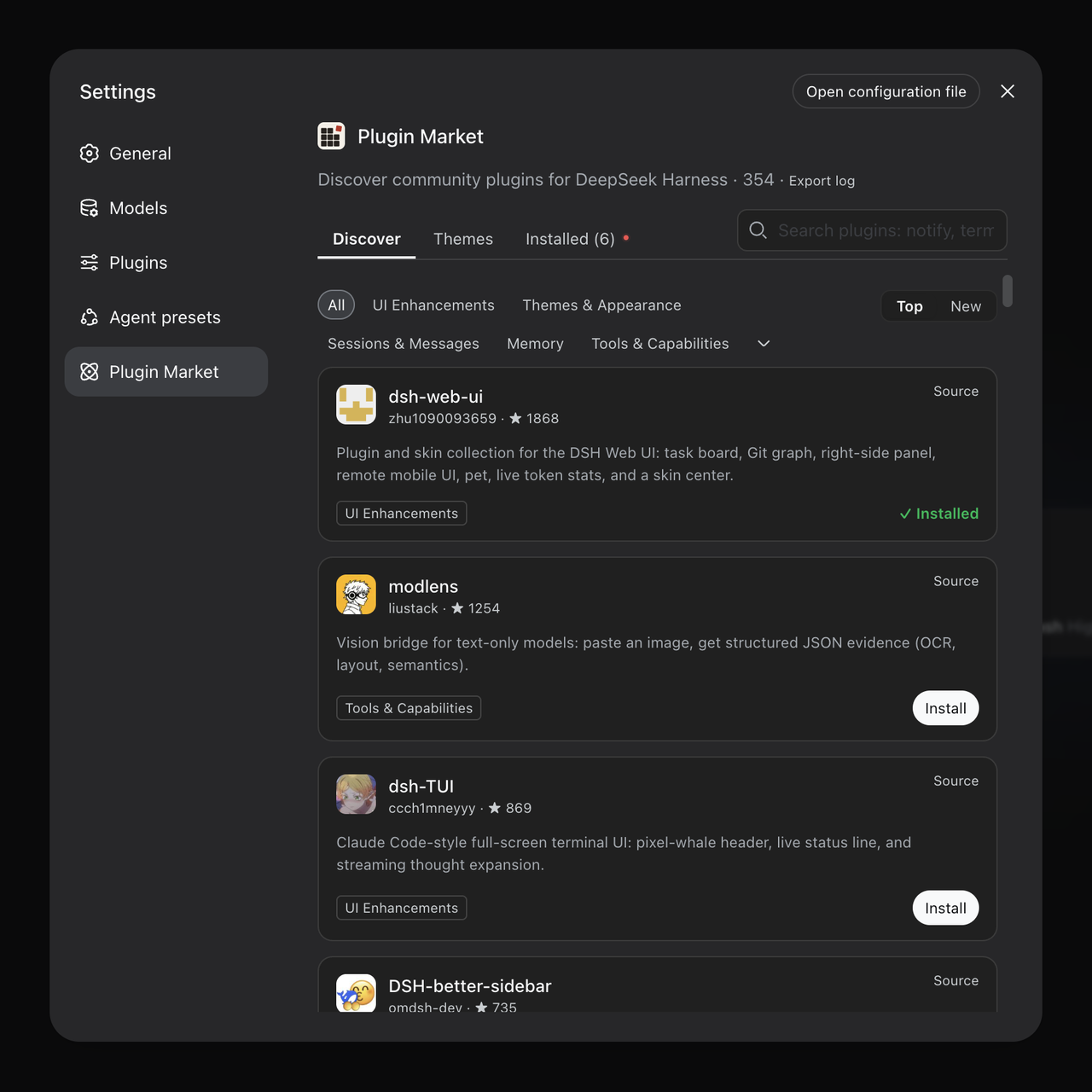
The plugin market for DeepSeek Harness: browse/search/one-click install community plugins and themes, with updates, backup/restore, hot disable, diagnostics, and AI fix.

A persistent whale widget on the DSH web UI that shows DeepSeek balance, today's usage, and per-turn cost, with drag-and-snap and sound effects.