interactive-component-integration
Run the following command in DeepSeek Harness:
dsh plugin install Duoasa/interactive-component-integration
Paste the following prompt into your AI chat to install this plugin:
Run dsh plugin install Duoasa/interactive-component-integration in DeepSeek Harness to install the plugin from https://github.com/Duoasa/interactive-component-integration into your current profile.
About this plugin
The hardest failure when integrating a third-party interactive component is rarely that the page breaks. It is silent rendering-pipeline drift: default parameters are off by one, the DPR strategy has changed, a post-processing pass is missing, an animation loop is never cleaned up. The page looks close enough, yet it is no longer doing what the authoritative implementation does.
interactive-component-integration is an agent skill that enforces five non-negotiable principles: replicate the authoritative rendering pipeline before touching any visual parameter; document every intentional deviation with its reason, visible impact, and verification method; contain component code, assets, selectors, and cache behavior within the owning boundary; explicitly handle DPR caps, animation loops, resize, reduced motion, and API-failure fallbacks; and complete QA against normalized viewport states, marking any unexecuted check as not tested or blocked rather than passing by assumption.
If your work involves moving creative-coding demos, WebGL shaders, scroll-driven effects, sensor-reactive components, or third-party animation libraries from a playground into a production page, and you want the agent to align the rendering contract before writing code and deliver a credible QA report before calling it done, this skill is built for that workflow.
Use Cases
- Porting a third-party WebGL or shader effect from a playground into a production page
- Integrating scroll-driven or pointer-reactive animated components while preserving the rendering pipeline
- Deploying sensor or webcam-reactive components on mobile with proper fallback and performance boundaries
Best For
- Frontend engineers who need to turn creative-coding demos into maintainable production code
- Teams using agents to assist with frontend integration and QA sign-off
- Design-engineering teams with hard requirements on rendering fidelity and delivery quality
Related Plugins
A service-oriented sidebar framework for DSH, offering a full workbench with file explorer, embedded browser, real terminal, Git panel, and extensible plugin services.
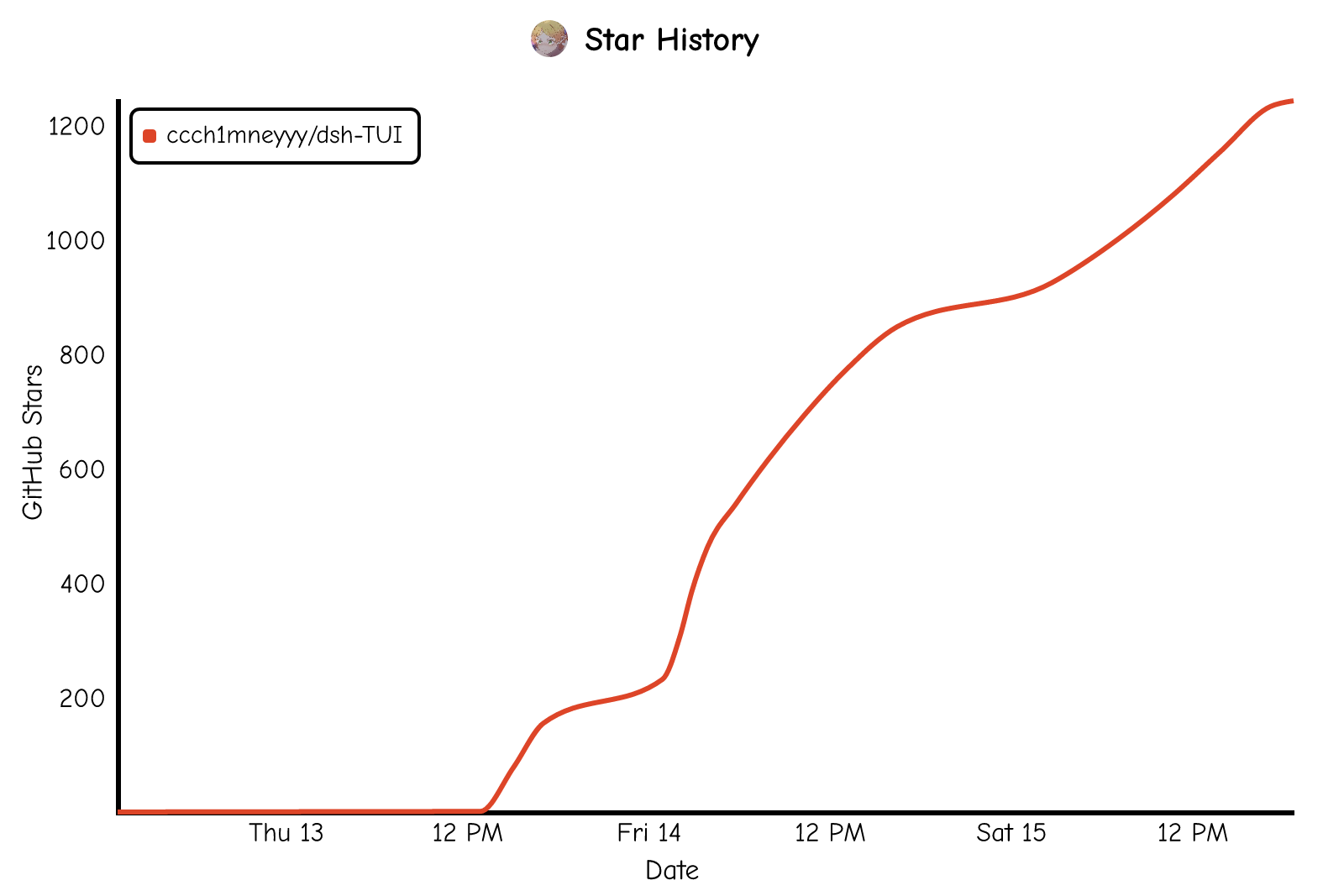
A beautiful, practical Claude Code-style TUI plugin with pixel whale top bar, flowing glow title, real-time status line, streaming thought expansion, time rewind, context progress bar and TPS gauge — zero core changes.
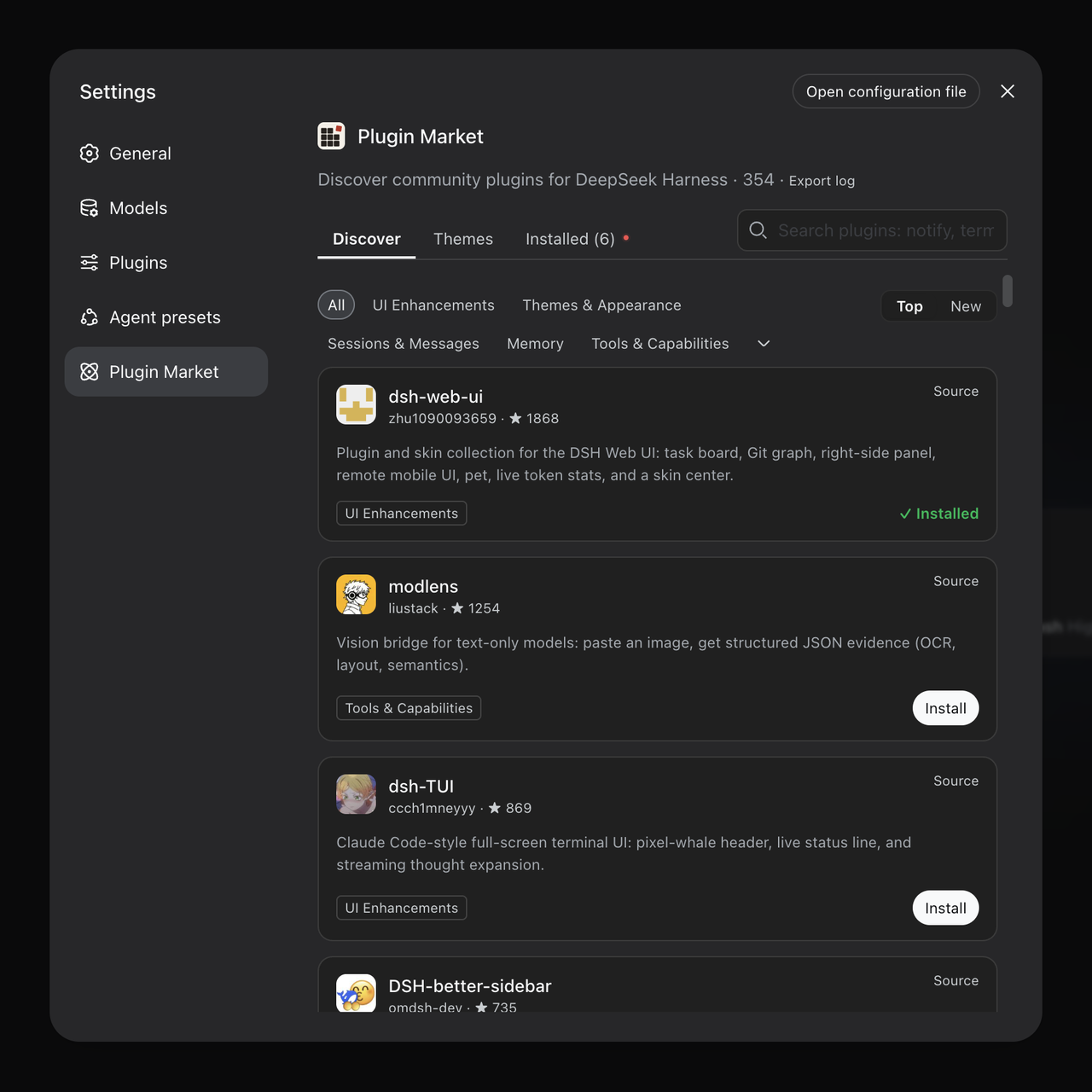
The plugin market for DeepSeek Harness: browse/search/one-click install community plugins and themes, with updates, backup/restore, hot disable, diagnostics, and AI fix.

A persistent whale widget on the DSH web UI that shows DeepSeek balance, today's usage, and per-turn cost, with drag-and-snap and sound effects.