oh-my-deepseek-harness
Run the following command in DeepSeek Harness:
dsh plugin install hatsuyuki0103/oh-my-deepseek-harness
Paste the following prompt into your AI chat to install this plugin:
Install this plugin in DeepSeek Harness by running dsh plugin install hatsuyuki0103/oh-my-deepseek-harness; the source is available at https://github.com/hatsuyuki0103/oh-my-deepseek-harness.
About this plugin
Working with DeepSeek Harness day to day often means manually stringing together clarification rounds, goal tracking, subagent routing, and quality gates. The pieces exist, but the glue is always on you. oh-my-deepseek-harness ports the OMX skill philosophy from oh-my-codex and rewrites every workflow around DSH-native tools, delivering 24 trigger-by-name skills that turn ad-hoc coordination into repeatable, structured pipelines.
Skills span the full delivery arc. A Socratic deep-interview skill progressively extracts ambiguity and converges on an executable spec. Consensus planning runs Planner, Architect, and Critic in sequence with ADR deliberation. On the execution side, a persistent ralph loop enforces session discipline, a visual-ralph skill drives pixel-level UI iteration against reference images using DSH vision models, a workflow-orchestrated team skill coordinates parallel subagents with shared task lists, and an adversarial nine-scenario e2e QA skill stress-tests the result. Quality gates include dual-channel code review, seven-dimension security review, Red-Green-Refactor TDD, and build-fix with root-cause isolation.
Whether you are a solo developer who wants to fire up autopilot for a single command covering interview, plan, execute, review, and QA, or an architect coordinating multiple subagents in a team setup, this pack encodes your working discipline into steps the model can actually follow so your attention stays on judgment rather than orchestration.
Use Cases
- Converting vague requirements into executable specs via Socratic deep-interview rounds
- Orchestrating parallel subagent teams to advance multiple dev tasks with unified verification
- Driving pixel-level frontend UI iterations from reference images using vision-model scoring
Best For
- Solo developers who want to encode working discipline into model-executable steps
- Architects coordinating multiple subagents on parallel DSH projects
- Engineering teams pursuing full-loop delivery from planning through adversarial QA
Related Plugins
A service-oriented sidebar framework for DSH, offering a full workbench with file explorer, embedded browser, real terminal, Git panel, and extensible plugin services.
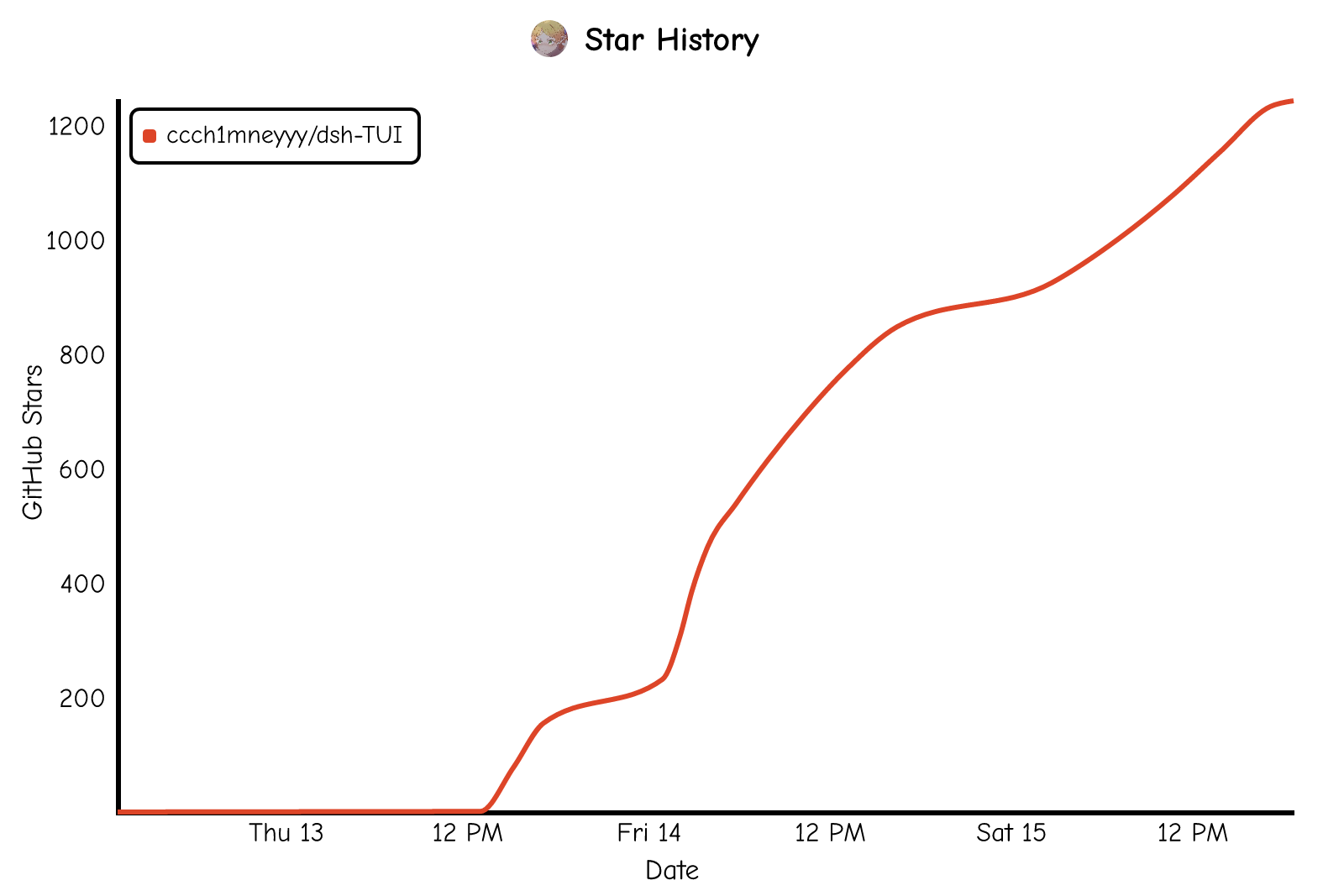
A beautiful, practical Claude Code-style TUI plugin with pixel whale top bar, flowing glow title, real-time status line, streaming thought expansion, time rewind, context progress bar and TPS gauge — zero core changes.
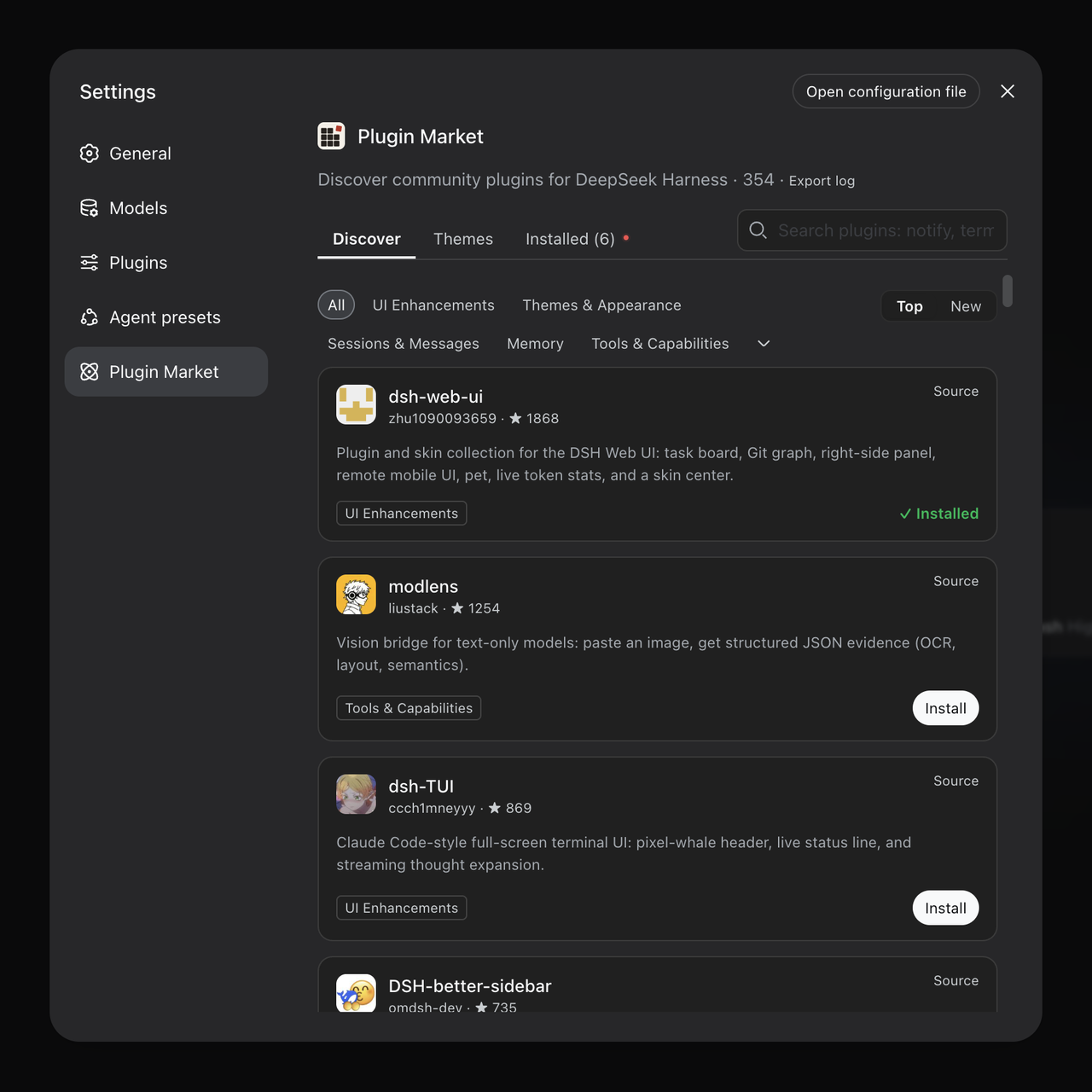
The plugin market for DeepSeek Harness: browse/search/one-click install community plugins and themes, with updates, backup/restore, hot disable, diagnostics, and AI fix.

A persistent whale widget on the DSH web UI that shows DeepSeek balance, today's usage, and per-turn cost, with drag-and-snap and sound effects.