dsh-settings-ui
Run the following command in DeepSeek Harness:
dsh plugin install KaramachiA217/dsh-settings-ui
Paste the following prompt into your AI chat to install this plugin:
Run dsh plugin install KaramachiA217/dsh-settings-ui in your terminal; the source lives at https://github.com/KaramachiA217/dsh-settings-ui — after install, restart the host to access the ctx.settingsUi settings-page and floating-panel APIs.
About this plugin
Building a DeepSeek Harness plugin that needs a settings page or a floating panel usually means hand-rolling form components, tuning CSS variables from scratch, wiring up a load/save/busy/error state machine, and defending against revision conflicts. Across a growing plugin family the visual drift and maintenance burden add up fast.
dsh-settings-ui exposes a ctx.settingsUi service with three API tiers: pluginCard for the rc7 official Plugins-tab card, section for classic settings-page cards, and overlay for free-form floating panels with drag, minimize, z-order, and position persistence. A full atomic component family and a declarative form system (createSettingsStore + useSettings) handle load, save, busy, error, saved-flash, and revision-conflict out of the box, all aligned to the official --dsw-* semantic tokens—no hand-written CSS or state logic required.
It is aimed at DeepSeek Harness plugin authors who need to ship settings pages or overlay panels and want a single, consistent visual language across their plugin family without repeating boilerplate.
Use Cases
- Add a consistent settings-page card to a DeepSeek Harness plugin without hand-rolling forms or state logic
- Build a draggable, minimizable, cross-tab synced floating panel
- Keep a uniform visual language and interaction style across multiple plugins
Best For
- DeepSeek Harness developers who need a settings UI for their plugin
- Small teams maintaining multiple plugins and wanting a consistent UI style
- Plugin authors who want zero-boilerplate components instead of hand-written CSS and state machines
Related Plugins
A service-oriented sidebar framework for DSH, offering a full workbench with file explorer, embedded browser, real terminal, Git panel, and extensible plugin services.
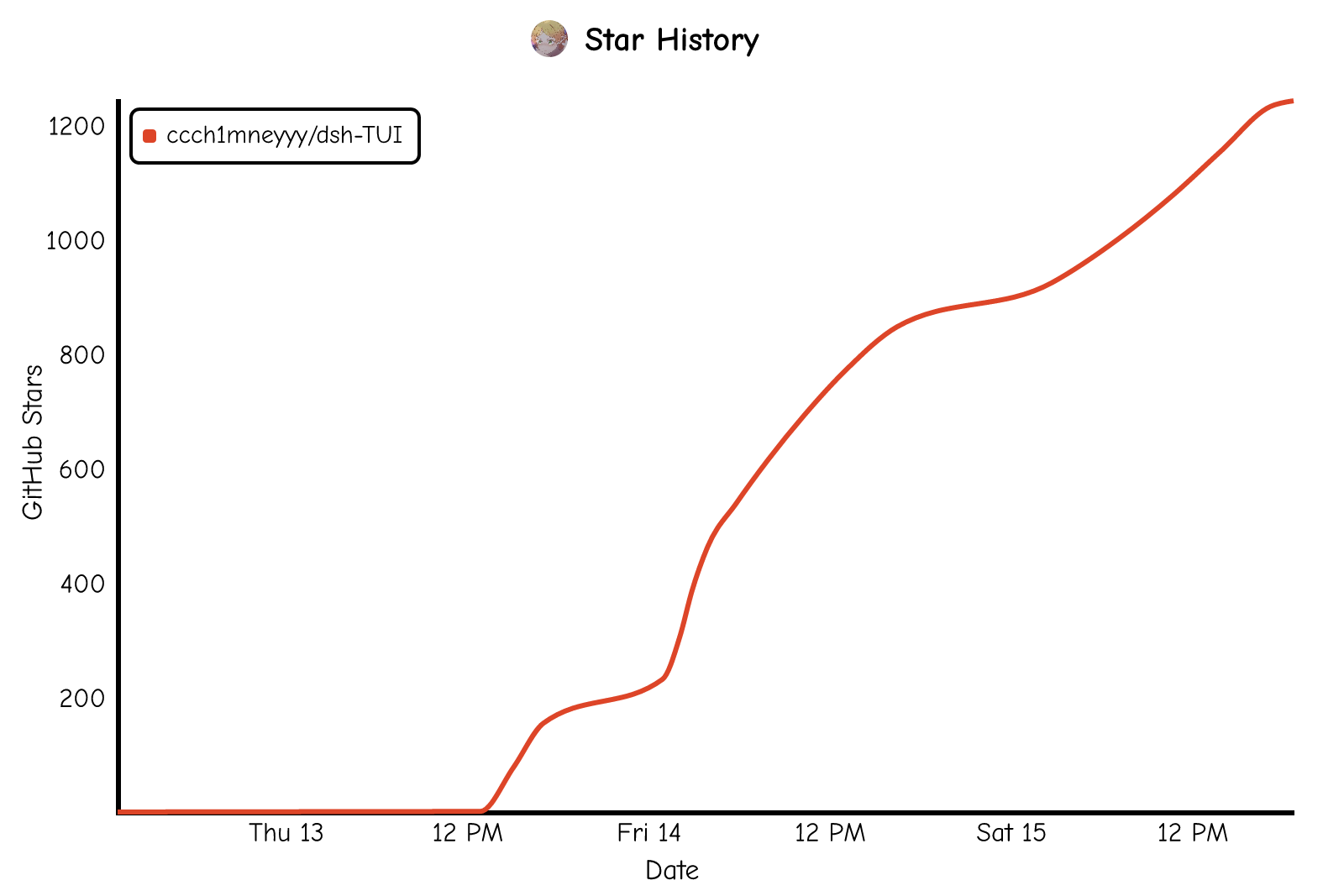
A beautiful, practical Claude Code-style TUI plugin with pixel whale top bar, flowing glow title, real-time status line, streaming thought expansion, time rewind, context progress bar and TPS gauge — zero core changes.
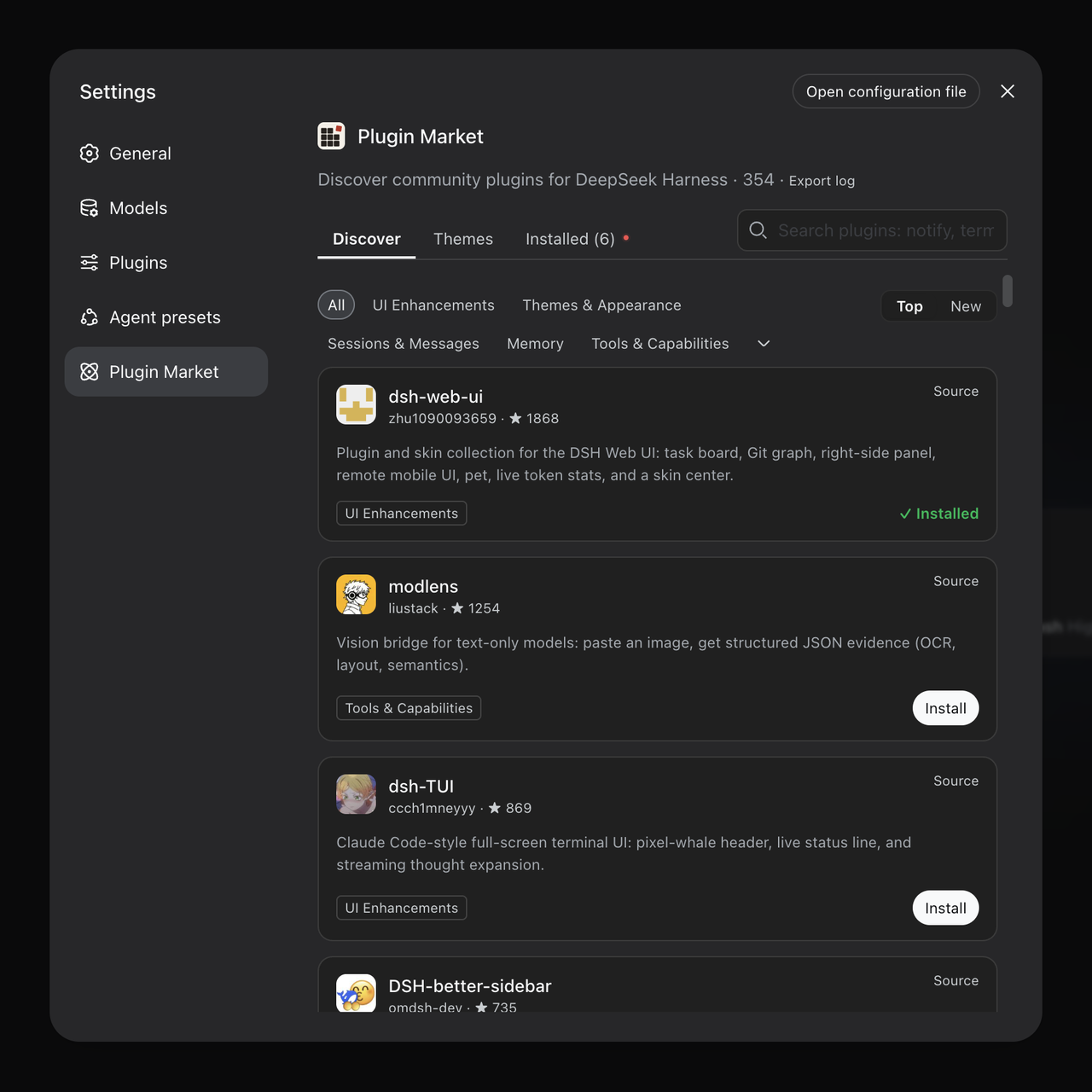
The plugin market for DeepSeek Harness: browse/search/one-click install community plugins and themes, with updates, backup/restore, hot disable, diagnostics, and AI fix.

A persistent whale widget on the DSH web UI that shows DeepSeek balance, today's usage, and per-turn cost, with drag-and-snap and sound effects.