dsh-remote-host
Run the following command in DeepSeek Harness:
dsh plugin install w2112515/dsh-remote-host
Paste the following prompt into your AI chat to install this plugin:
Run dsh plugin install w2112515/dsh-remote-host in DeepSeek Harness to install this plugin, the source repository is at https://github.com/w2112515/dsh-remote-host , and follow the README to run the setup script for dependency linking and environment configuration after installation.
About this plugin
If you already run the official DSH web service on your PC but lack a secure path for an Android phone to join, dsh-remote-host fills that gap. It does not change how the host runs — the web server stays bound to 127.0.0.1 and is never exposed on a public hostname — and simply layers a phone remote-access channel on top of the existing setup.
Pairing is straightforward: run invite on the host, and the terminal prints a dsh-remote:// URI, a QR code, and an eight-digit confirmation code. On the phone side, a sideloaded signed APK scans or pastes the link and enters the code to complete binding. Once paired, the phone talks directly to the host's advertised IPv4 address without keeping an SSH session open, and both LAN and public-IPv4 environments work. The host policy page surfaces the current session authorization state, and a security key file is generated on first start — losing it means every phone must re-pair.
This plugin suits users who primarily use DSH on a PC but need occasional phone access when away. Be aware that the current release is built on DSH 0.1.1-rc.2+ and does not include Firebase push, cellular-only acceptance, or macOS native support; Windows lacks the iroh binary but can still pair over LAN or a public IPv4 address.
Use Cases
- Access a home or office DSH host from an Android phone when away from the desk
- Pair a phone over LAN without exposing DSH web to a public hostname
- Assess the impact of losing the security key file on existing phone pairings
Best For
- Users who run DSH on a PC and occasionally need phone access
- Security-conscious self-hosters who do not want DSH web on a public hostname
- Android users looking for mobile access into the DSH ecosystem
Related Plugins
A service-oriented sidebar framework for DSH, offering a full workbench with file explorer, embedded browser, real terminal, Git panel, and extensible plugin services.
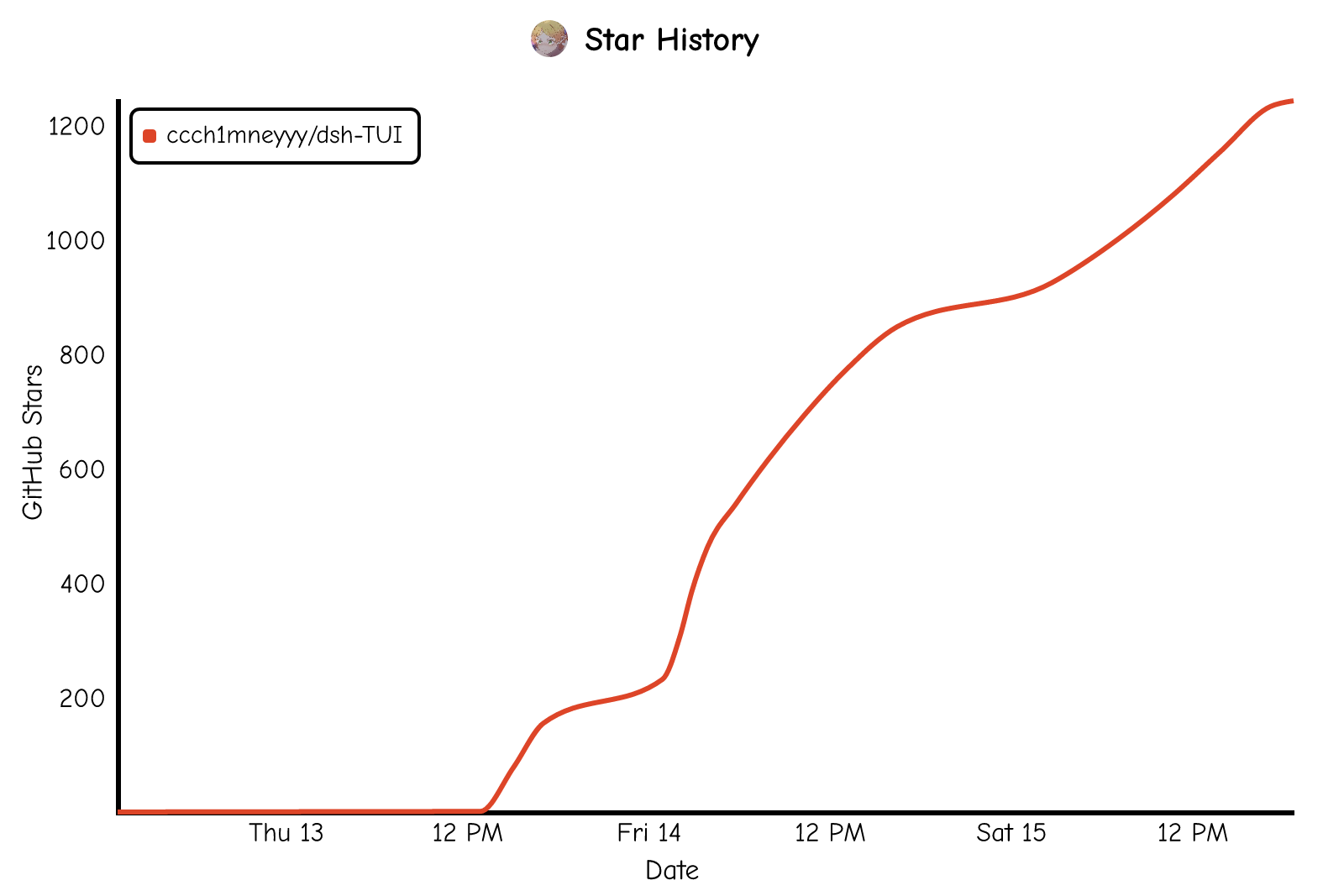
A beautiful, practical Claude Code-style TUI plugin with pixel whale top bar, flowing glow title, real-time status line, streaming thought expansion, time rewind, context progress bar and TPS gauge — zero core changes.
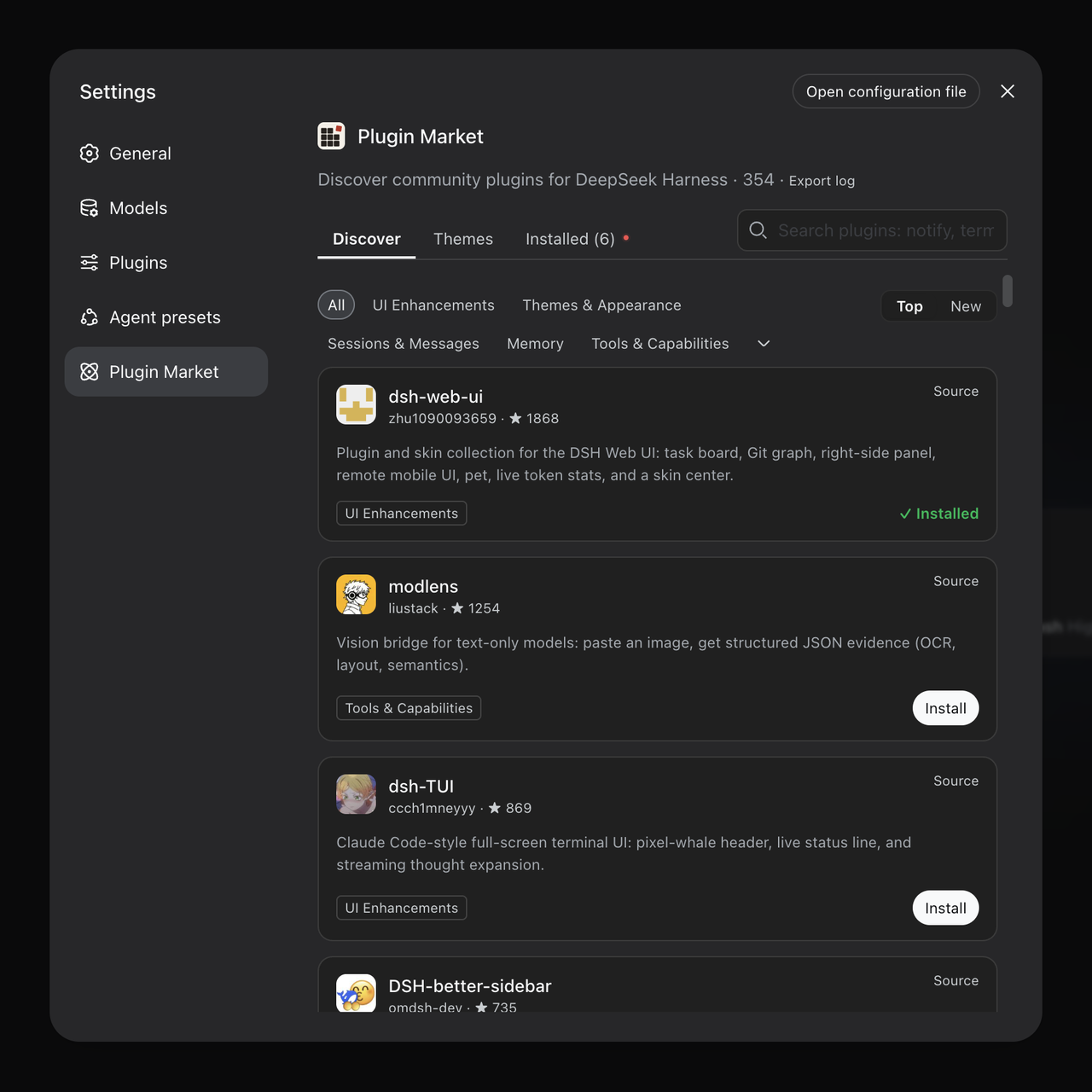
The plugin market for DeepSeek Harness: browse/search/one-click install community plugins and themes, with updates, backup/restore, hot disable, diagnostics, and AI fix.

A persistent whale widget on the DSH web UI that shows DeepSeek balance, today's usage, and per-turn cost, with drag-and-snap and sound effects.