dsh-multi-lang-ui
Run the following command in DeepSeek Harness:
dsh plugin install asd13006/dsh-multi-lang-ui
Paste the following prompt into your AI chat to install this plugin:
Please run dsh plugin install asd13006/dsh-multi-lang-ui inside DeepSeek Harness to install the multi-language UI plugin; the source repository is https://github.com/asd13006/dsh-multi-lang-ui .
About this plugin
The DeepSeek Harness Web UI ships with only two interface languages — Simplified Chinese and English. For developers whose preferred locale is Traditional Chinese, Japanese, Korean, French, German, or Spanish, every screen is wall-to-wall text in a language they would rather not decode. dsh-multi-lang-ui plugs that gap: it registers six additional languages in the Settings → General → Language menu, each backed by 700+ hand-polished strings translated string-by-string from the English baseline rather than a raw machine pass.
What sets it apart is the three-layer fallback that keeps the UI intact as DSH evolves. New or changed upstream strings are caught on the fly — zh-TW converts Simplified to Traditional via a 720+ character lookup table, while the other five languages fall back to the complete English dictionaries. A MutationObserver additionally rewrites non-dictionary display content (such as plugin-market descriptions) in zh-TW mode, while always excluding inputs, code blocks, and other interactive elements. Language preference persists in localStorage, the plugin is a zero-dependency, zero-network, zero-telemetry client bundle, and no per-string re-translation is needed after upstream releases.
If you use DeepSeek Harness outside a Simplified-Chinese or English environment, or your team works across languages and everyone expects a native-language interface, this is a drop-in plugin: install it and the menu lights up, remove it and DSH starts exactly as before, with no upstream package touched in between.
Use Cases
- Opening the DSH Web UI and expecting the interface in Japanese, Korean, French, or another native locale
- A cross-language team where every member reads the UI in their own language
- Upstream releases add new strings but the six extra languages remain readable without manual re-translation
Best For
- Daily DSH users whose working language is not Simplified Chinese or English
- Engineers on cross-language teams who prefer a native-language interface to reduce cognitive load
- Users who want a zero-dependency, zero-network, plug-and-play plugin with clean removal
Related Plugins

whale-girl is a desktop pet in the DSH Web GUI (bottom-right for instant companionship) — draggable, feedable, playable; completed tasks, sessions and companionship time accrue into seniority levels, titles, and memories.
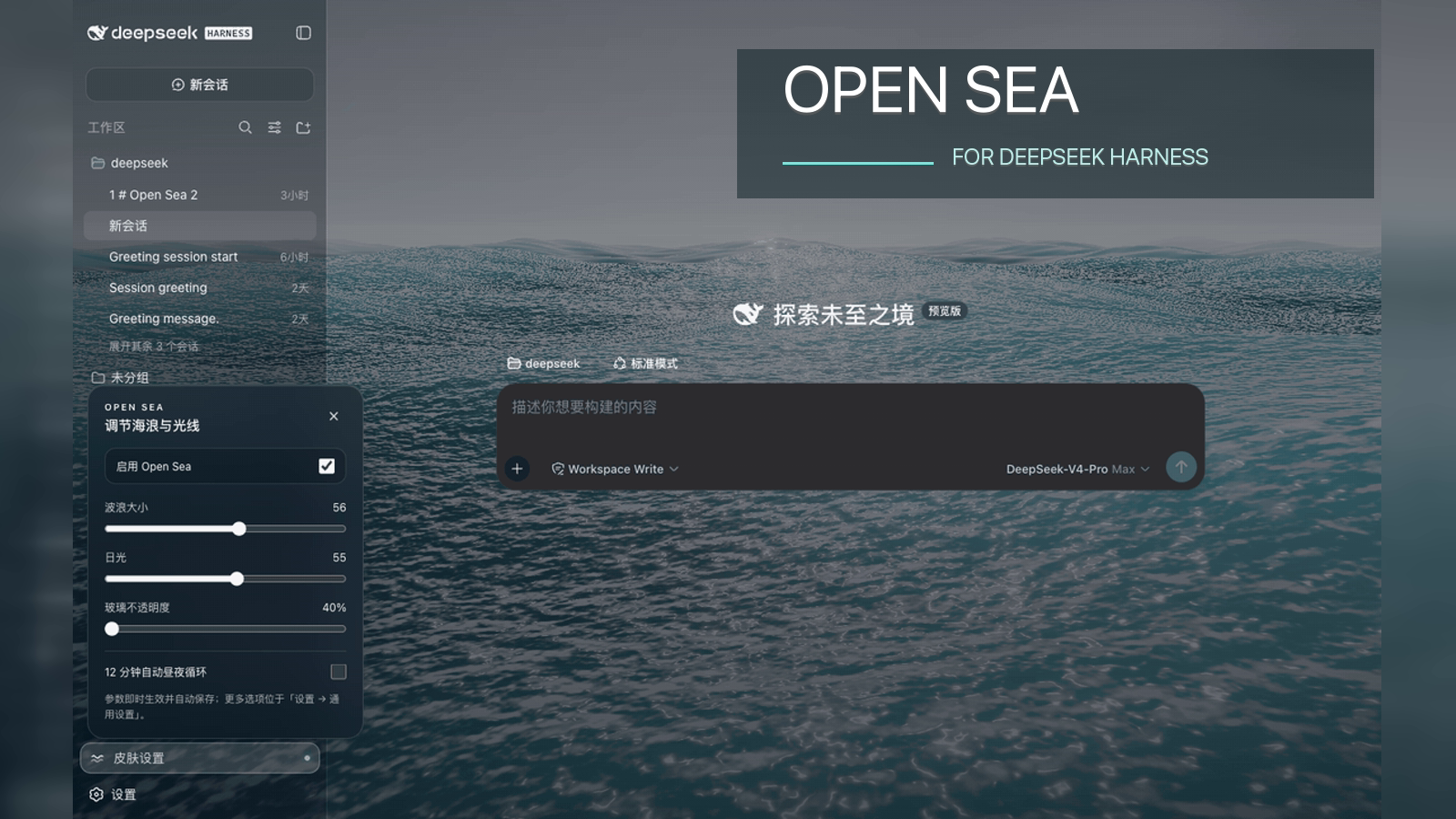
A WebGPU ocean skin for DeepSeek Harness with five-wave Gerstner waves, translucent theme, day/night cycle, and quick controls, installable as plugin or extension.
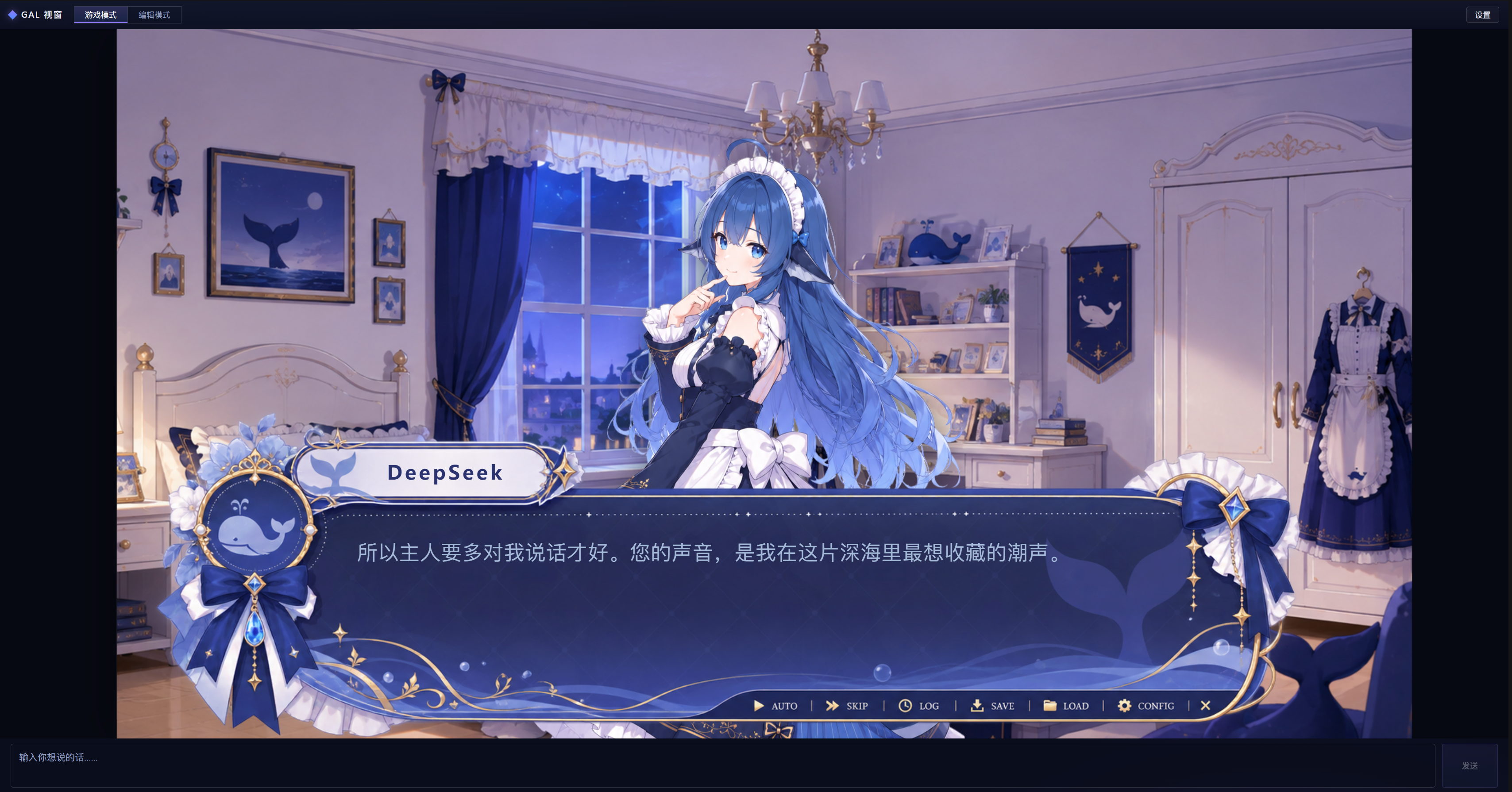
A Galgame-style conversation view and visual scene editor for DSH web sessions, with a real-time editing mode.
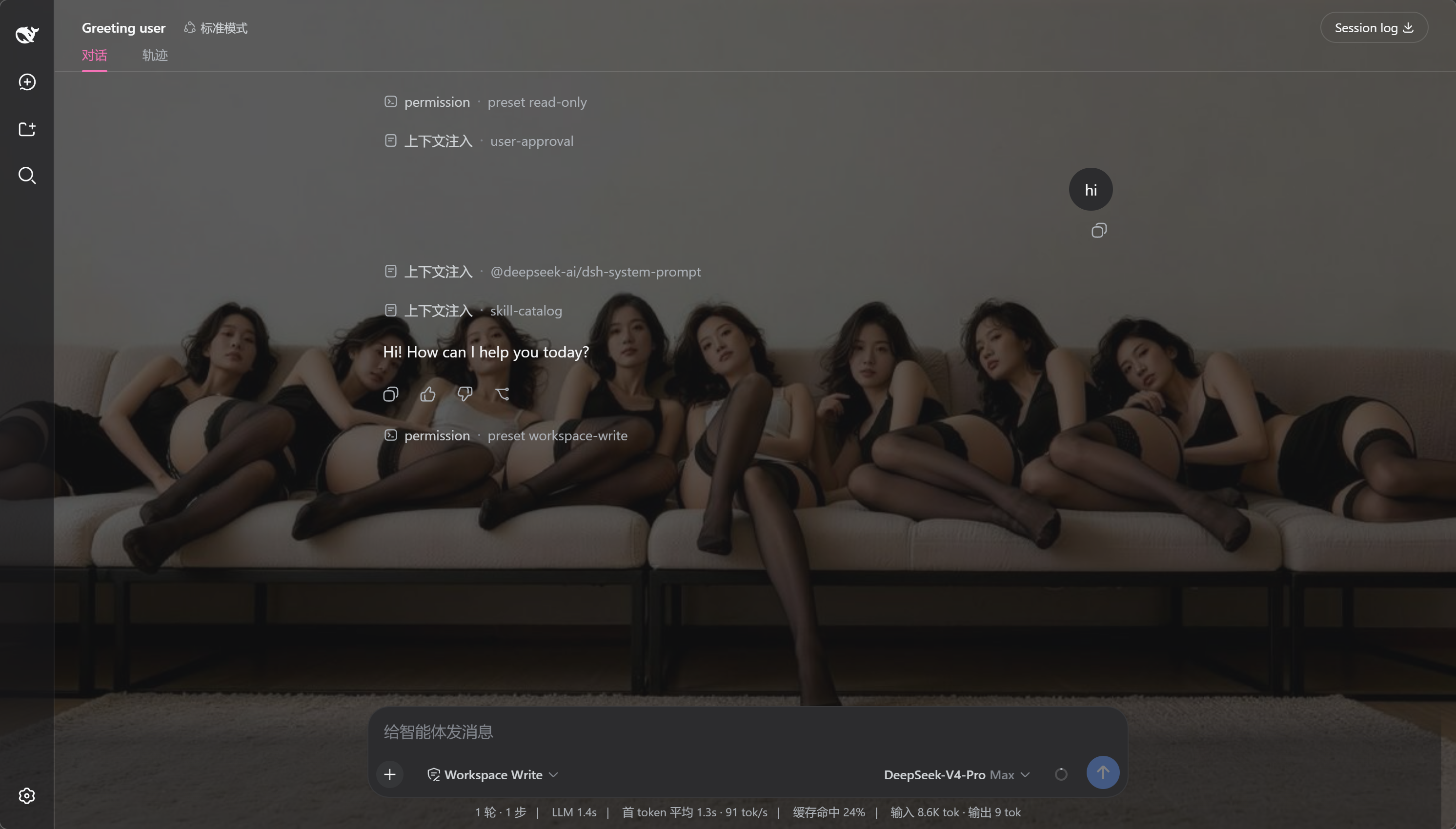
A native skinning plugin for DeepSeek Harness: 8 designer themes, wallpapers, accent colors, and shareable theme packs, built purely on design tokens.