dsh-model-balance
Run the following command in DeepSeek Harness:
dsh plugin install jacujay/dsh-model-balance
Paste the following prompt into your AI chat to install this plugin:
Install from the DSH plugin market or run dsh plugin install jacujay/dsh-model-balance; the project is hosted at https://github.com/jacujay/dsh-model-balance.
About this plugin
Switching between multiple model providers in DSH and wanting to check your balance or quota usually means opening a new tab, logging into each vendor console, and losing your flow context. dsh-model-balance puts that check right into the composer input row: a small diamond icon beside the model name, hover to peek, click to refresh, all without leaving your workflow.
The plugin auto-detects the current default model vendor from DSH configuration (provider id first, baseURL hostname as fallback) and ships built-in support for seven common providers—DeepSeek, Moonshot/Kimi, MiniMax, StepFun, Zhipu GLM, SiliconFlow, and OpenRouter. It handles two result kinds: monetary balance (with granted vs topped-up breakdown where the API offers it) and per-model percentage quotas. For API-compatible proxies like New API, or any other endpoint, the Settings page lets you add a custom balance URL with response field path and auth method. Throughout, API keys are resolved host-side by DSH and never sent to the browser; the local config file stores endpoint metadata only, no secrets.
Built for anyone running DSH web who juggles multiple providers, needs an at-a-glance view of remaining balance or usage, or routes models through a relay gateway.
Use Cases
- Checking current balance or quota when switching model providers without opening a new browser tab
- Viewing remaining tokens and usage across multiple models through a New API relay gateway
- Refreshing balance inside DSH web while API keys stay resolved host-side locally
Best For
- DSH web developers connecting multiple model providers
- Users routing model requests through New API or compatible relay proxies
- Users who prioritize API key security and want keys to never reach the browser
Related Plugins
A service-oriented sidebar framework for DSH, offering a full workbench with file explorer, embedded browser, real terminal, Git panel, and extensible plugin services.
A beautiful, practical Claude Code-style TUI plugin with pixel whale top bar, flowing glow title, real-time status line, streaming thought expansion, time rewind, context progress bar and TPS gauge — zero core changes.
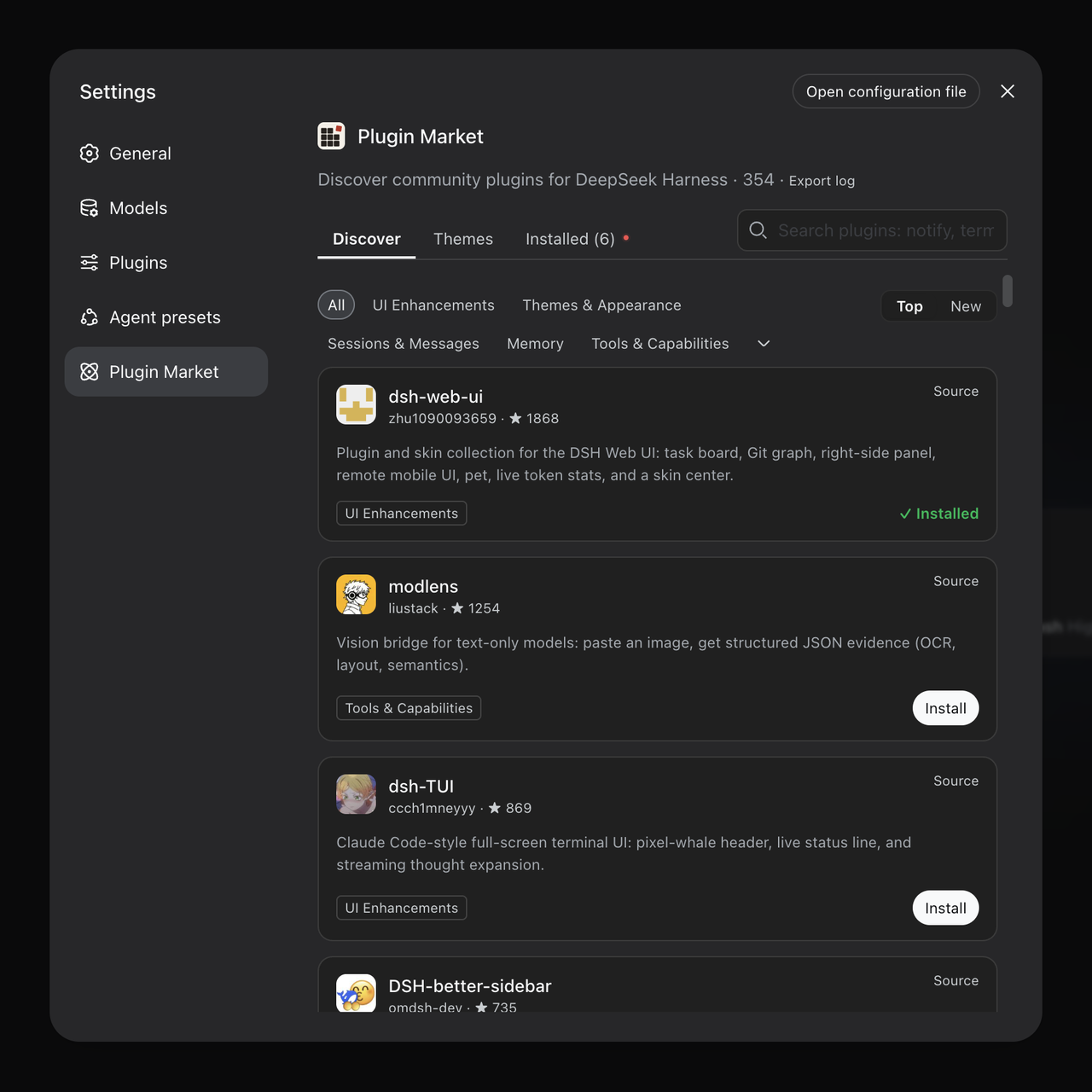
The plugin market for DeepSeek Harness: browse/search/one-click install community plugins and themes, with updates, backup/restore, hot disable, diagnostics, and AI fix.

A persistent whale widget on the DSH web UI that shows DeepSeek balance, today's usage, and per-turn cost, with drag-and-snap and sound effects.