dsh-voice-kit
Run the following command in DeepSeek Harness:
dsh plugin install aaaadrop/dsh-voice-kit
Paste the following prompt into your AI chat to install this plugin:
Run dsh plugin install aaaadrop/dsh-voice-kit in your terminal. The source is hosted at https://github.com/aaaadrop/dsh-voice-kit. After installation, restart DSH Desktop and refresh the web GUI to activate the plugin.
About this plugin
The DeepSeek Harness web GUI has always been a purely text-based experience: type to talk, read to understand. Long sessions with the model can tire your hands, and lengthy replies are easy to skim without absorbing. dsh-voice-kit brings real voice interaction into DSH. A microphone button appears in the composer, and dictated speech is transcribed on the host side and appended to your draft without ever overwriting existing text. Every assistant message gains a read-aloud button at its tail for one-tap listening.
Read-aloud offers three engine tiers for different network conditions. Microsoft neural voices are free and natural, synthesized locally via msedge-tts with caching, and automatically routed through your system proxy on restricted networks. Cloud neural voices connect to SiliconFlow CosyVoice2 or any OpenAI-compatible speech service, work directly from mainland China without a proxy, and share the same credential you configured for voice recognition. System voices provide a fully offline fallback that works everywhere. Playback streams in sentence-boundary chunks: the first chunk is audible within roughly one second while later chunks download in the background. Markdown formatting and emoji are stripped before speaking, the viewport scrolls to the active message, and an on-screen bubble shows what is being read.
The plugin is well suited for DSH Desktop users who want to reduce typing fatigue, consume long AI replies hands-free, or keep a smooth voice workflow even behind proxies. Voice recognition supports two paths: the browser Web Speech API or a host-side OpenAI-compatible transcription service, so at least one will work in most setups. The settings panel includes one-tap presets, a live reachability probe for each engine, and a key-status indicator, making troubleshooting far less guesswork.
Use Cases
- Cut down typing fatigue during long AI sessions by dictating instead of typing
- Free your hands to listen to lengthy assistant replies while commuting or resting
- Keep a usable voice workflow behind proxies via three engine tiers
Best For
- Daily heavy DSH Desktop users who want to lower the physical cost of typing
- Users with accessibility needs or hand fatigue who prefer hands-free input
- Users behind proxies or restricted networks who still need local or cloud TTS and ASR
Related Plugins
A service-oriented sidebar framework for DSH, offering a full workbench with file explorer, embedded browser, real terminal, Git panel, and extensible plugin services.
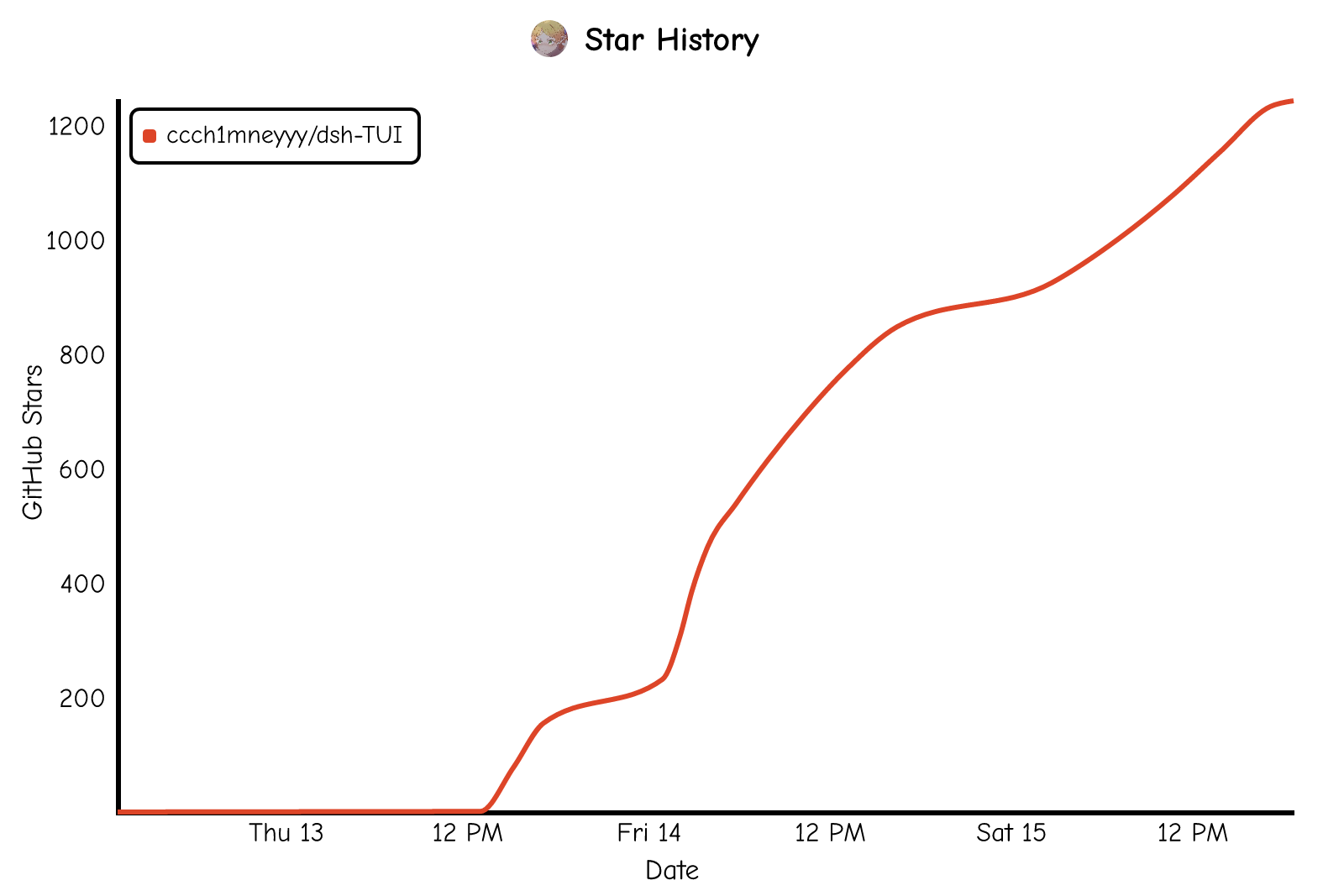
A beautiful, practical Claude Code-style TUI plugin with pixel whale top bar, flowing glow title, real-time status line, streaming thought expansion, time rewind, context progress bar and TPS gauge — zero core changes.
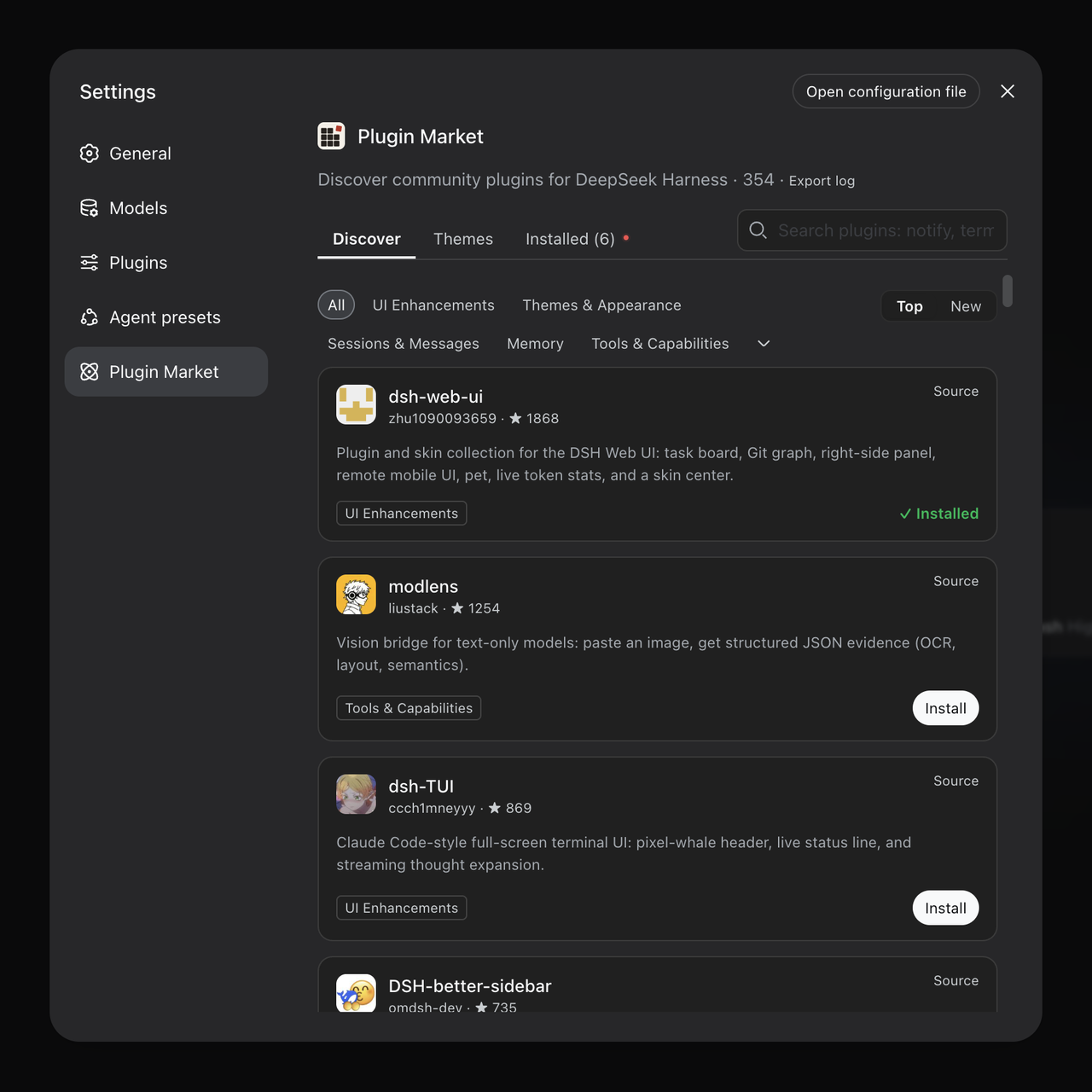
The plugin market for DeepSeek Harness: browse/search/one-click install community plugins and themes, with updates, backup/restore, hot disable, diagnostics, and AI fix.

A persistent whale widget on the DSH web UI that shows DeepSeek balance, today's usage, and per-turn cost, with drag-and-snap and sound effects.