dsh-telegram-control
Run the following command in DeepSeek Harness:
dsh plugin install jackControls/dsh-telegram-control
Paste the following prompt into your AI chat to install this plugin:
Run dsh plugin install jackControls/dsh-telegram-control in DeepSeek Harness to install the remote control plugin from https://github.com/jackControls/dsh-telegram-control.
About this plugin
DeepSeek Harness keeps your agents running locally, but walking away from your desk means losing the ability to converse with an agent, check job status, or respond to permission prompts. dsh-telegram-control turns Telegram into a pocket remote: a bot runs inside the harness process, speaks to the Telegram Bot API over long-polling with zero extra runtime deps, and plain text you send lands as a normal user follow-up in the selected conversation. The agent reply — thinking blocks marked with a 💭 included — is pushed to your phone the instant its turn closes.
It goes well beyond a message relay. A full command surface (/status, /agents, /jobs, /kill, /cancel, /watch, and more) keeps you oriented at a glance; inline Allow/Reject buttons surface harness permission requests right in your chat, and the message is edited with the outcome once you decide. Authorization is strictly chat-allowlist based with a fail-closed default: an empty list denies everyone, and unlisted chats only ever see an onboarding hint with their own chat id — no commands, no agent access, nothing else.
Built for dsh users who run long, multi-agent workloads and need to keep an eye on progress — or approve a sandbox escalation — from across the room or across town. One machine, one phone, full control.
Use Cases
- Keep conversing with an agent and reading replies from your phone after walking away from the desk
- Approve or reject sandbox-escalation requests with inline buttons on your phone
- Check background job status, cancel a turn, or live-forward agent output from anywhere
Best For
- dsh users running long multi-agent workloads who need to check progress on the go
- Developers who want their local harness to be a pocket tool rather than a desktop-only surface
- Solo users who prefer a command-line-style interface and do not want to build a separate mobile UI
Related Plugins
A service-oriented sidebar framework for DSH, offering a full workbench with file explorer, embedded browser, real terminal, Git panel, and extensible plugin services.
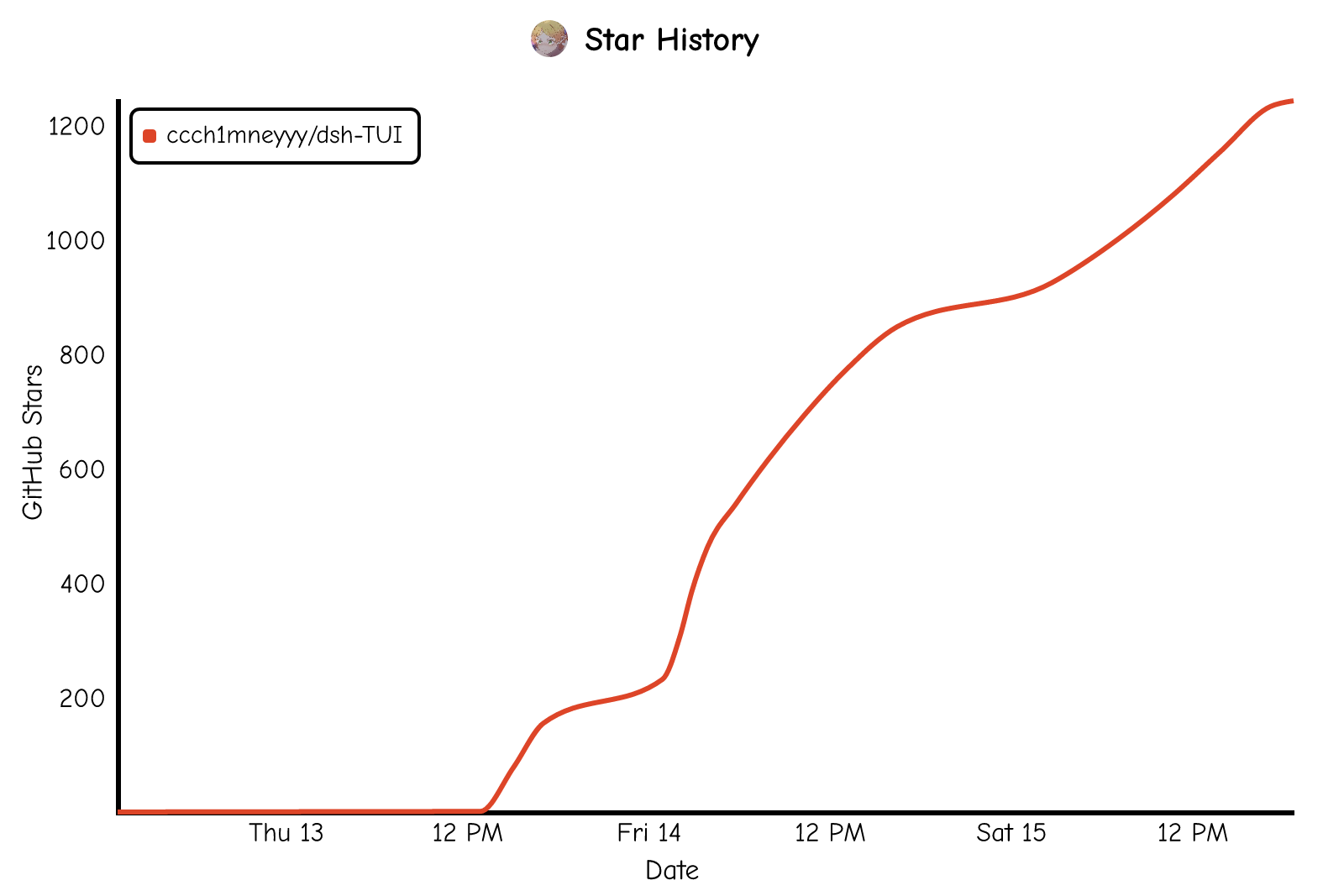
A beautiful, practical Claude Code-style TUI plugin with pixel whale top bar, flowing glow title, real-time status line, streaming thought expansion, time rewind, context progress bar and TPS gauge — zero core changes.
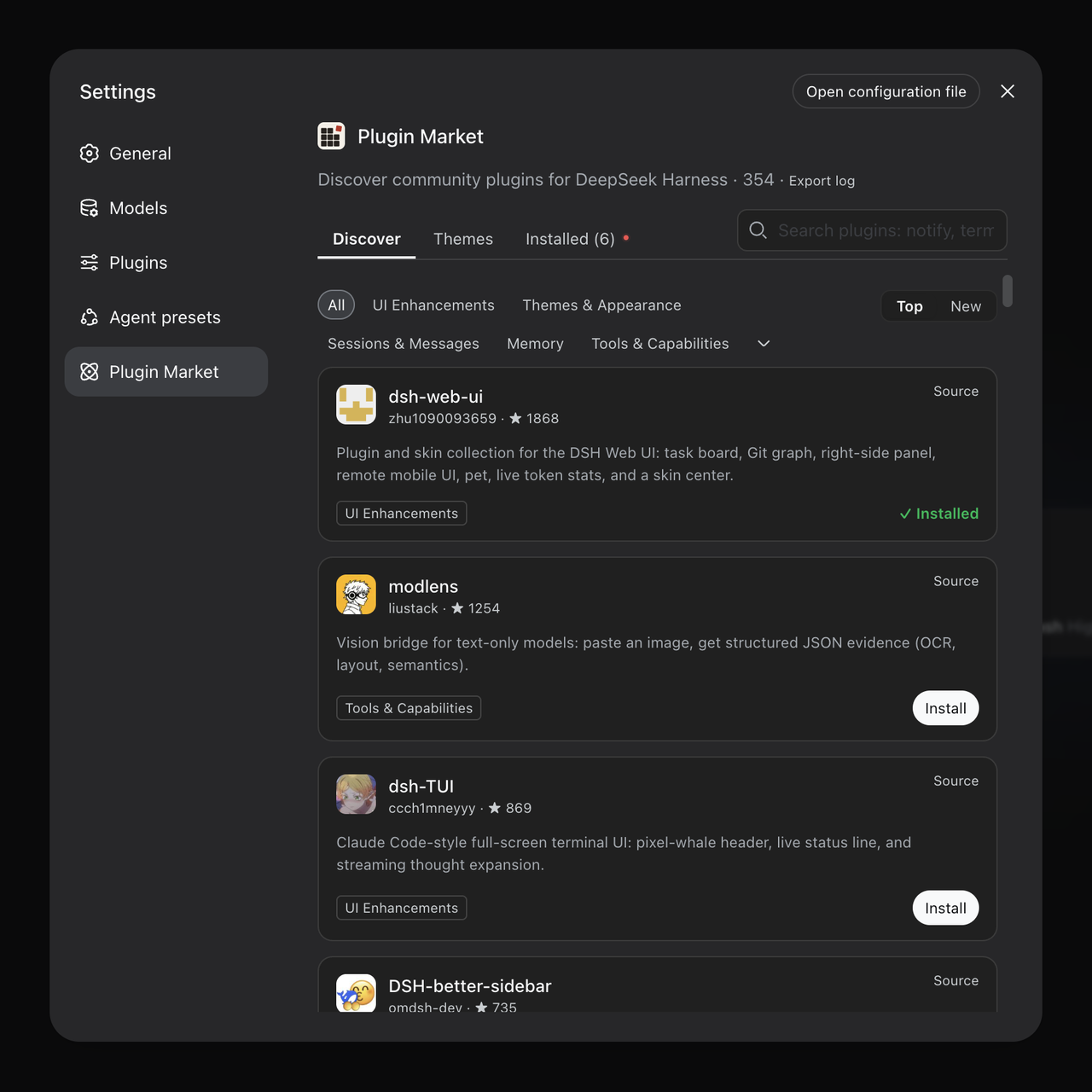
The plugin market for DeepSeek Harness: browse/search/one-click install community plugins and themes, with updates, backup/restore, hot disable, diagnostics, and AI fix.

A persistent whale widget on the DSH web UI that shows DeepSeek balance, today's usage, and per-turn cost, with drag-and-snap and sound effects.