dsh-tui
Run the following command in DeepSeek Harness:
dsh plugin install nexlineai/dsh-tui
Paste the following prompt into your AI chat to install this plugin:
Install the full-screen terminal agent plugin in DeepSeek Harness by running dsh plugin install nexlineai/dsh-tui; source code is available at https://github.com/nexlineai/dsh-tui.
About this plugin
DeepSeek Harness ships a web UI and a one-shot headless mode, but has never offered a true interactive terminal agent. dsh-tui fills that gap: it is not a model wrapper or a plain chat REPL, but a full-screen TUI that drives the real Harness agent runtime — file editing, shell execution, subagent delegation, plan mode, sessions, and permissions all work exactly as they do in the browser.
The experience is built for flow: answers stream token-by-token, reasoning blocks render in dim italics with per-turn effort control, and tool calls appear as boxed cards with lifecycle markers (running / done / error) plus argument and result previews. A complete slash-command suite covers session resume, live permission switching, conversation compaction, a trajectory event timeline, environment diagnostics, and model selection. Markdown rendering handles fenced code, headings, bold, and lists, while mouse-wheel and PgUp/PgDn scrolling work across iTerm2, Terminal.app, kitty, alacritty, xterm, and other mainstream terminals on macOS and Linux.
It is aimed squarely at terminal-first developers: those who prefer a keyboard-driven workflow, run the harness over SSH, or operate inside a multiplexer such as tmux or herdr — where a browser tab is friction, not a feature. Open your terminal, and the full agent workspace is already there.
Use Cases
- Monitor live reasoning blocks and tool card lifecycles with a keyboard-first flow
- Drive the Harness agent remotely over SSH without opening a browser
- Manage multiple agent sessions inside tmux or herdr and resume any of them instantly
Best For
- Keyboard-first developers who live in the terminal for daily work
- Engineers who operate the Harness agent remotely via SSH or inside tmux or herdr
- Power users who prefer a pure-terminal workflow over browser or Electron apps
Related Plugins
A service-oriented sidebar framework for DSH, offering a full workbench with file explorer, embedded browser, real terminal, Git panel, and extensible plugin services.
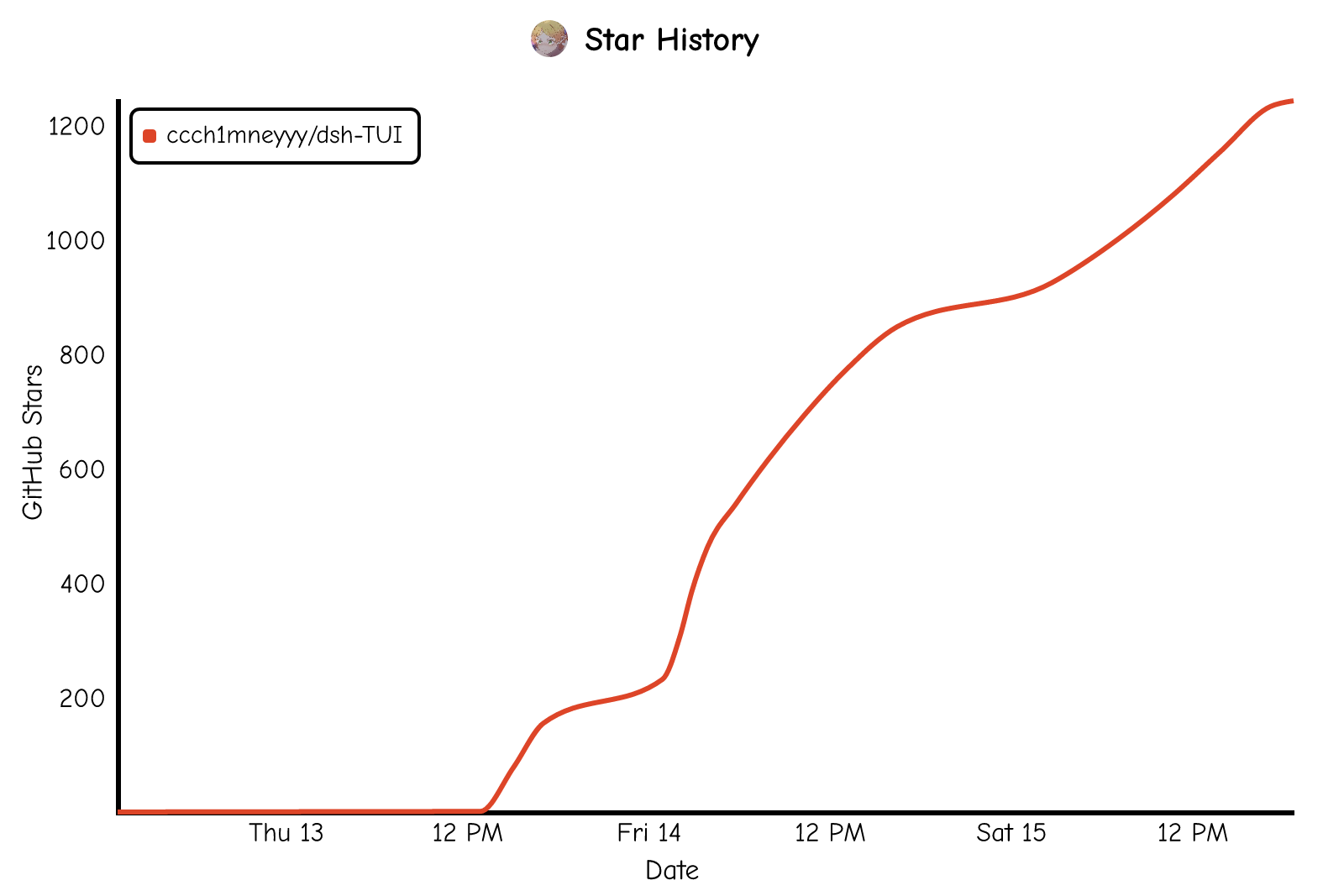
A beautiful, practical Claude Code-style TUI plugin with pixel whale top bar, flowing glow title, real-time status line, streaming thought expansion, time rewind, context progress bar and TPS gauge — zero core changes.
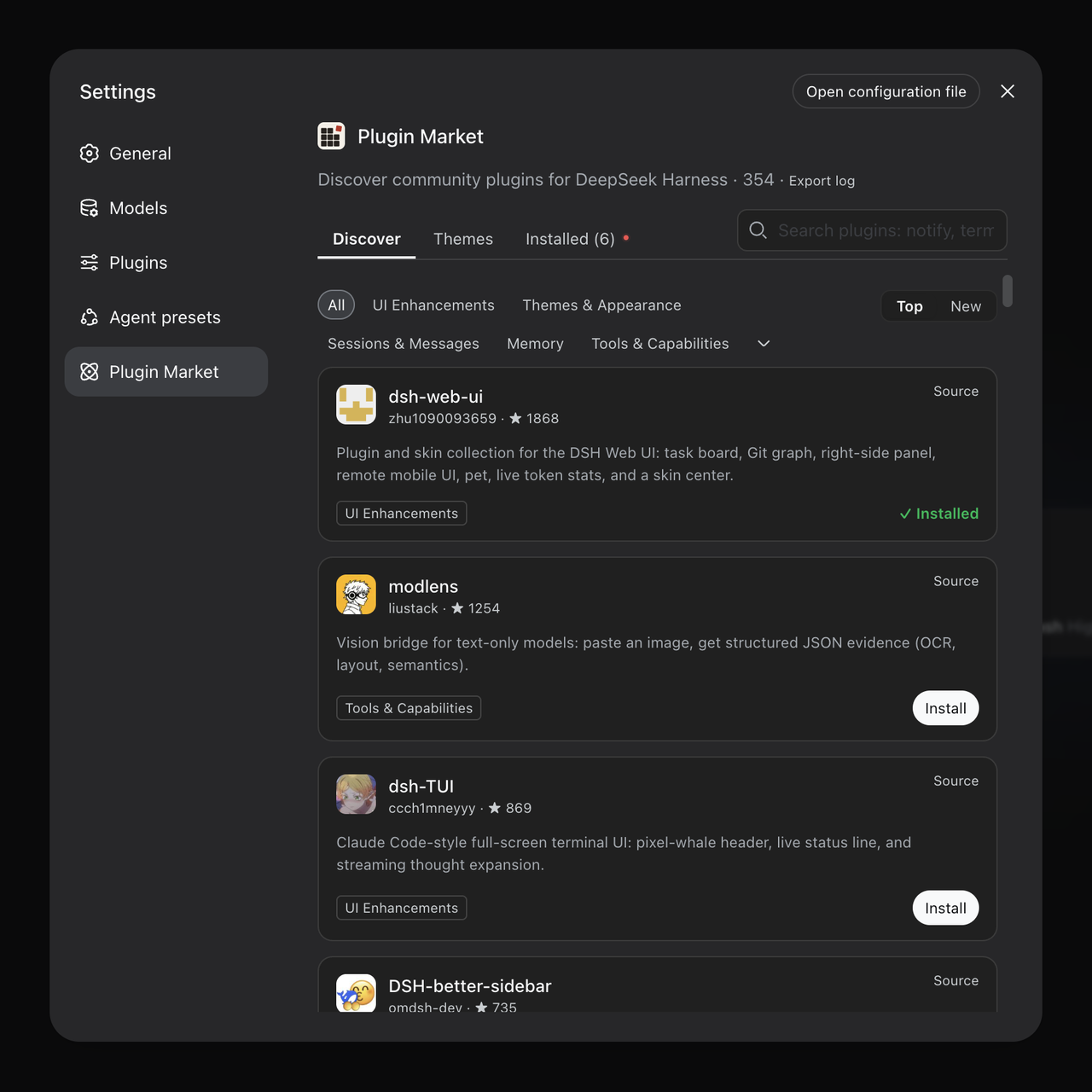
The plugin market for DeepSeek Harness: browse/search/one-click install community plugins and themes, with updates, backup/restore, hot disable, diagnostics, and AI fix.

A persistent whale widget on the DSH web UI that shows DeepSeek balance, today's usage, and per-turn cost, with drag-and-snap and sound effects.