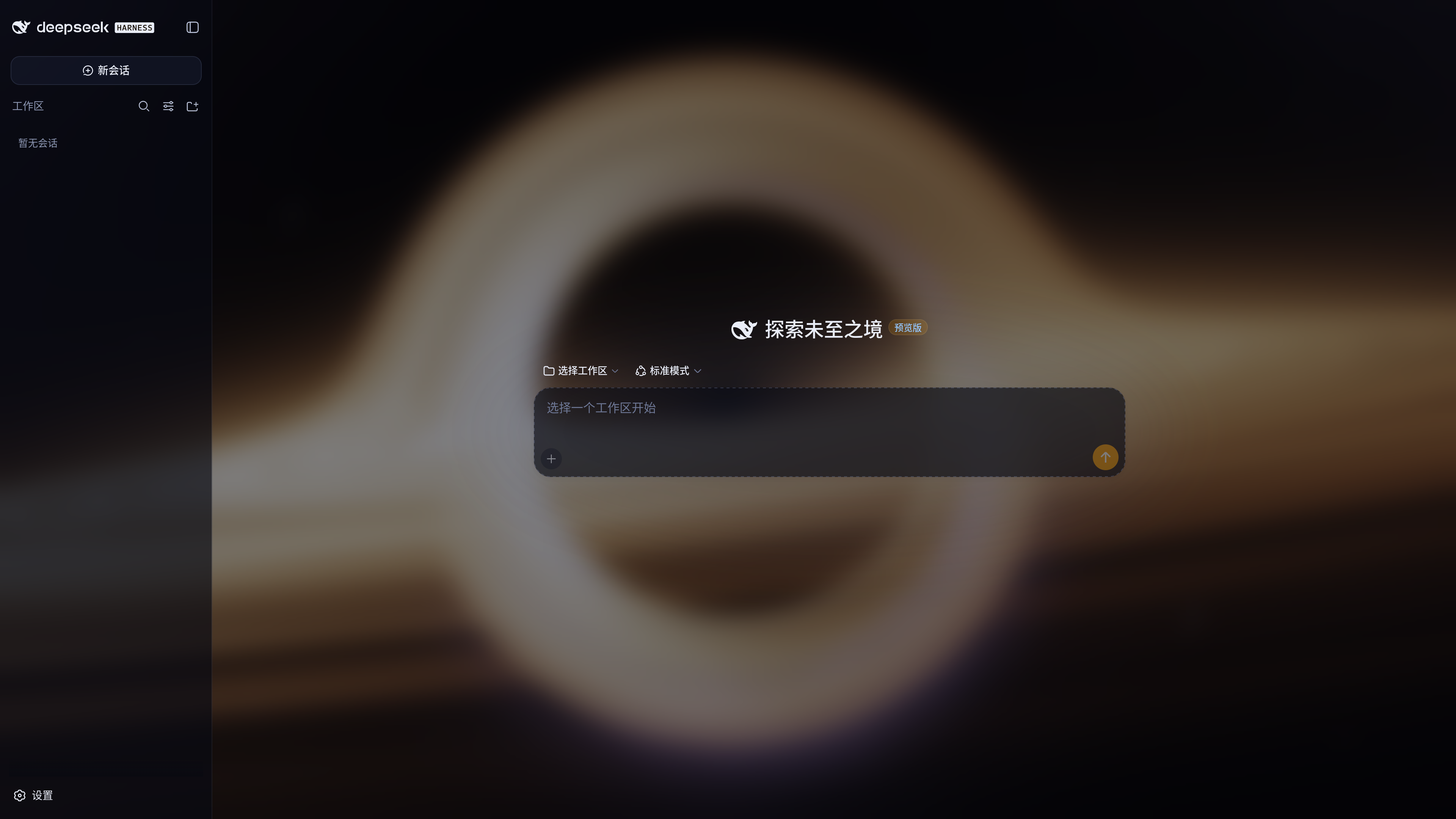
dsh-theme-blackhole
Run the following command in DeepSeek Harness:
dsh plugin install jiangwangyang/dsh-theme-blackhole
Paste the following prompt into your AI chat to install this plugin:
Run dsh plugin install jiangwangyang/dsh-theme-blackhole in the DeepSeek Harness terminal to install; the source is at https://github.com/jiangwangyang/dsh-theme-blackhole . After installation, enable it via Settings > General > Theme - Black Hole.
About this plugin
Every code tool ships with the same flat gray backdrop. dsh-theme-blackhole puts a real-time ray-traced Schwarzschild black hole behind the DeepSeek Harness Web UI. Null-geodesic light bending, the accretion disk, and the photon ring all emerge naturally from per-pixel geodesic integration in the fragment shader, not from pre-baked textures. Translucent glass panels with a 16 px backdrop blur let the black hole glow softly behind your content, while the brand accent shifts to accretion-disk amber.
Performance is treated as a first-class concern: half-resolution rendering, a 30 fps cap, reduced-motion support, and a pure-black fallback when WebGL is unavailable. The theme toggle lives in its own theme-blackhole namespace, syncs bidirectionally with the appearance setting, persists across reloads, and never flashes the default palette on boot.
Built for developers who use the dsh web interface daily and want a workspace that feels alive without sacrificing frame rate or accessibility. All that is needed is a profile with a web server; headless profiles are not supported.
Screenshots
Use Cases
- Switching to a real-time black hole background during daily dsh Web UI sessions
- Creating an immersive deep-space visual for DeepSeek Harness demos
- Replacing the default theme with deep-space glass panels and amber accents
Best For
- Developers who want a visually immersive workspace
- Theme enthusiasts who customize their dsh Web UI appearance
- Geeks interested in relativistic astrophysics visualization
Related Plugins

whale-girl is a desktop pet in the DSH Web GUI (bottom-right for instant companionship) — draggable, feedable, playable; completed tasks, sessions and companionship time accrue into seniority levels, titles, and memories.
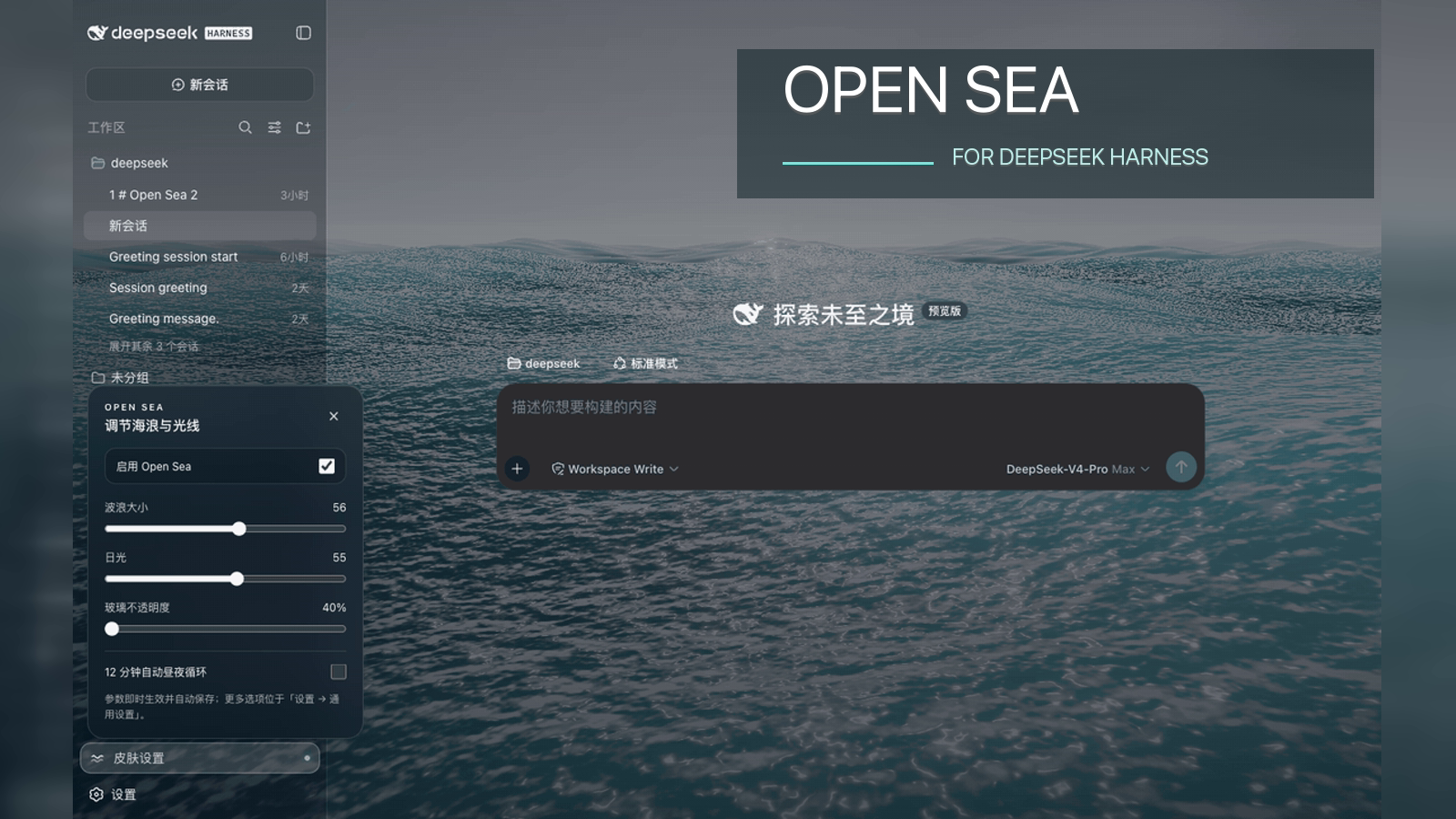
A WebGPU ocean skin for DeepSeek Harness with five-wave Gerstner waves, translucent theme, day/night cycle, and quick controls, installable as plugin or extension.
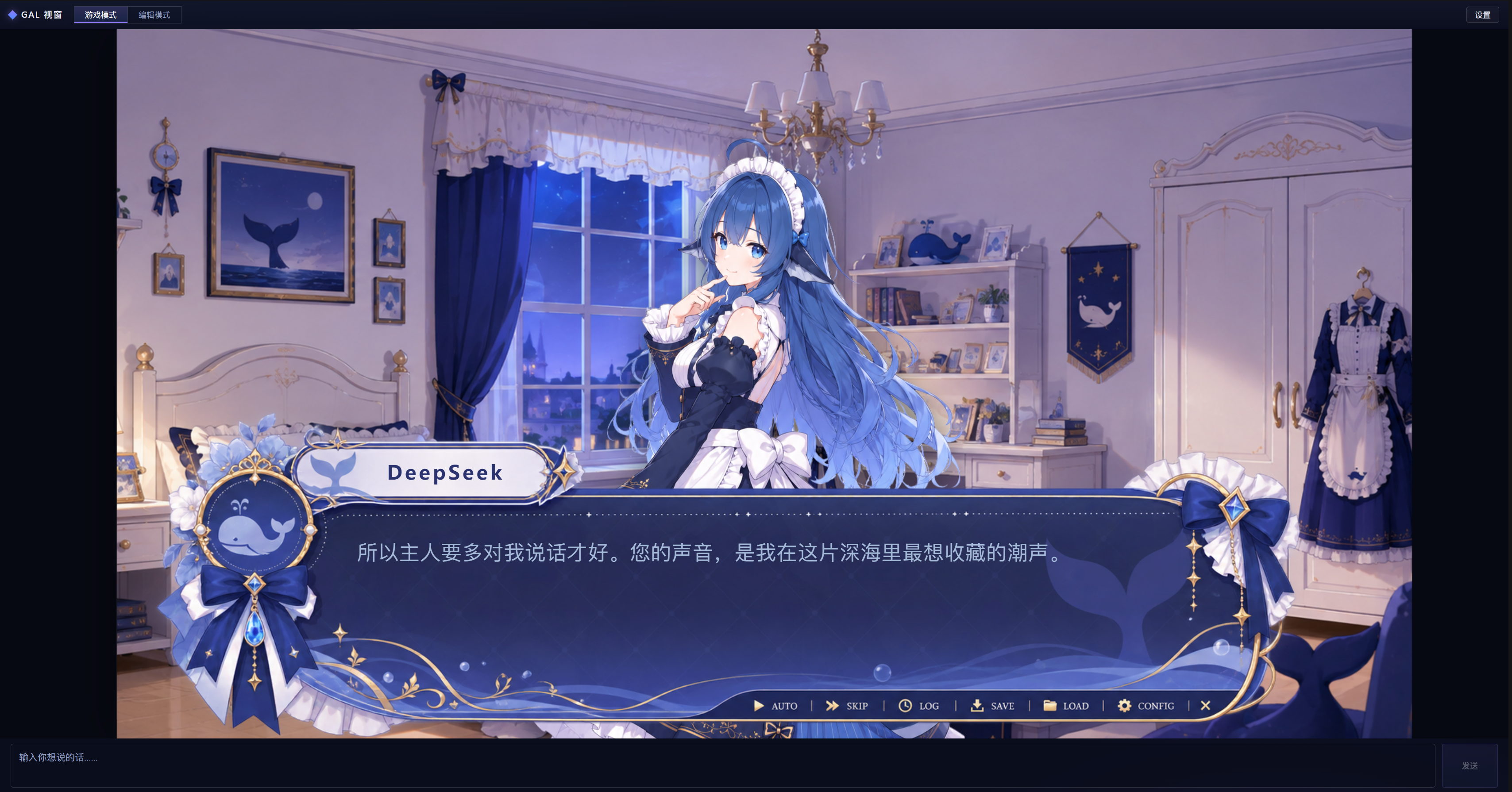
A Galgame-style conversation view and visual scene editor for DSH web sessions, with a real-time editing mode.

A native skinning plugin for DeepSeek Harness: 8 designer themes, wallpapers, accent colors, and shareable theme packs, built purely on design tokens.