dsh-local-plugin-installer
Run the following command in DeepSeek Harness:
dsh plugin install JMweitao/dsh-local-plugin-installer
Paste the following prompt into your AI chat to install this plugin:
In DeepSeek Harness Web, go to Settings → Plugins → Install local plugin, then select your local source directory or paste the repository URL https://github.com/JMweitao/dsh-local-plugin-installer to install.
About this plugin
Working on DSH plugins often means bouncing between a terminal, a build step, and a web refresh just to see a change land. dsh-local-plugin-installer collapses that loop into a single visual panel under Settings → Plugins in DSH Web, covering directory selection, pnpm build execution, and profile installation so local and Git-based plugin development no longer requires constant window-switching.
The panel accepts two source types. For a local directory you can kick off pnpm build directly from the UI and watch the command, working directory, exit code, stdout, and stderr rendered live. Before installing it validates that the target ships both a package.json and a dsh.bundle.patch declaration, catching incomplete builds early. Git or GitHub URLs are pulled by the package manager, making it straightforward for a team to drop a repo-based plugin into their web profile without memorising CLI flags.
It is built for engineers actively developing or shipping DSH plugins, whether that means prototyping on a laptop or letting teammates install a repository plugin into their individual web profiles with minimal friction.
Use Cases
- Build and install a locally edited plugin into your current Web profile quickly
- Install a team-shared DSH plugin from a Git repository with one click
- Watch pnpm build command, output, and errors in real time from the Web UI
Best For
- Engineers developing or debugging DSH plugins locally
- Team developers who need to load repo-based plugins into their Web environment
- DSH users who prefer a visual workflow over repeated terminal commands
Related Plugins
A service-oriented sidebar framework for DSH, offering a full workbench with file explorer, embedded browser, real terminal, Git panel, and extensible plugin services.
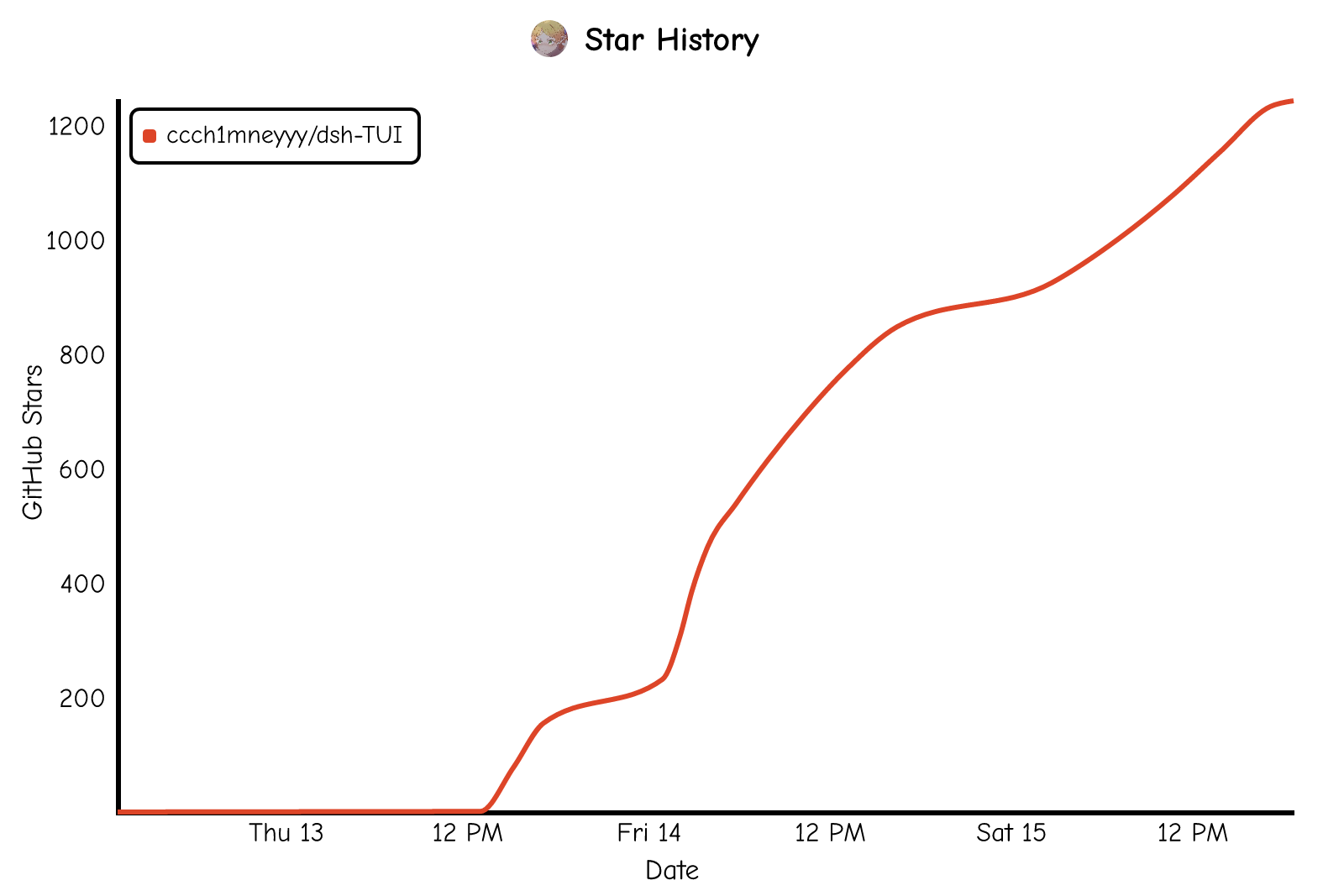
A beautiful, practical Claude Code-style TUI plugin with pixel whale top bar, flowing glow title, real-time status line, streaming thought expansion, time rewind, context progress bar and TPS gauge — zero core changes.
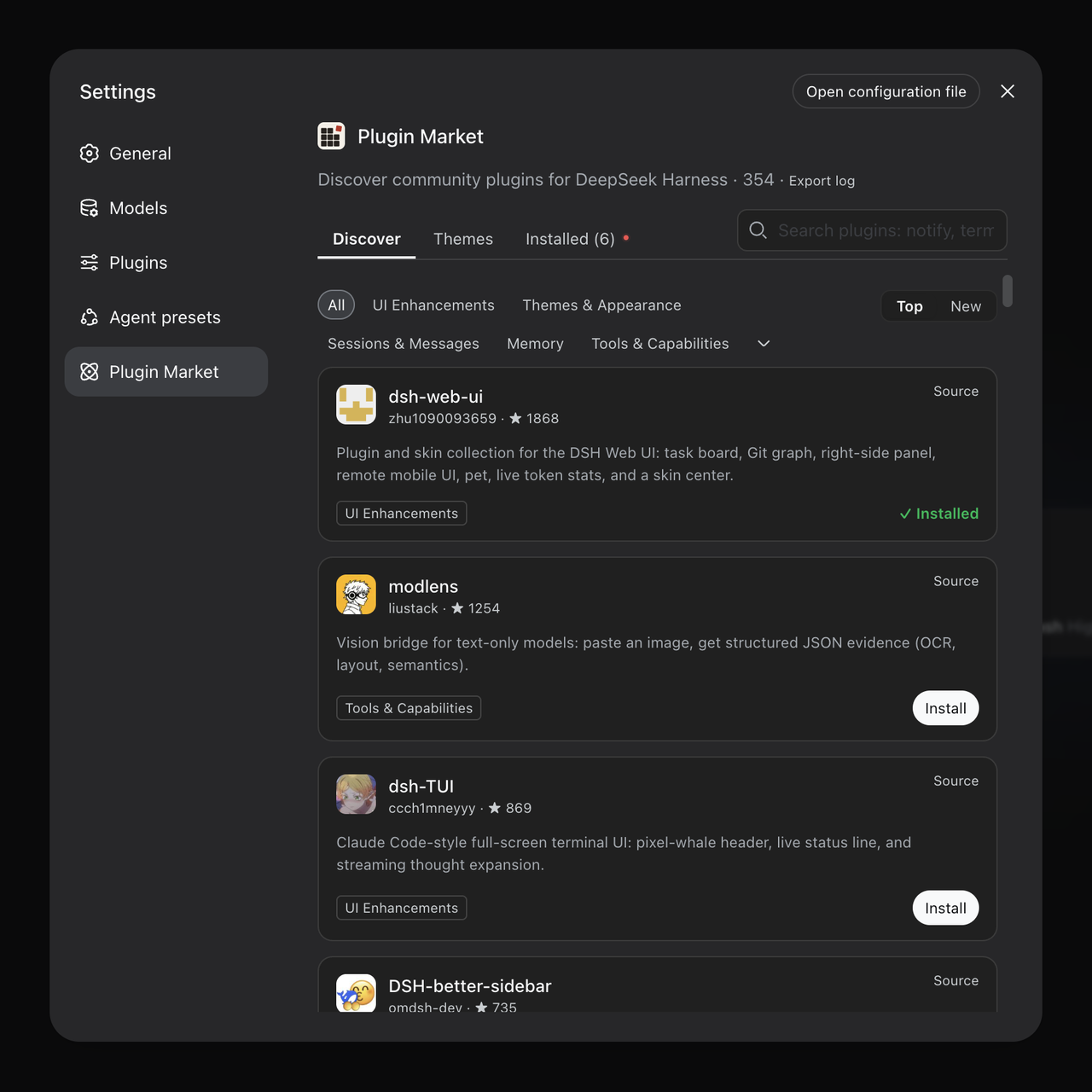
The plugin market for DeepSeek Harness: browse/search/one-click install community plugins and themes, with updates, backup/restore, hot disable, diagnostics, and AI fix.

A persistent whale widget on the DSH web UI that shows DeepSeek balance, today's usage, and per-turn cost, with drag-and-snap and sound effects.