dsh-chat-image-lightbox
Run the following command in DeepSeek Harness:
dsh plugin install loyalchiiina/dsh-chat-image-lightbox
Paste the following prompt into your AI chat to install this plugin:
Run dsh plugin install loyalchiiina/dsh-chat-image-lightbox in your DeepSeek Harness terminal to install the plugin; the source repository is available at https://github.com/loyalchiiina/dsh-chat-image-lightbox .
About this plugin
In DeepSeek Harness, images embedded in AI responses are rendered as static markdown by default — you cannot zoom in, download them, or scroll through a set. dsh-chat-image-lightbox turns every chat image into an interactive visual experience: click to open a full-screen lightbox, zoom further with the mouse wheel, drag to pan, and navigate between multiple images with arrow keys, on-screen buttons, or touch swipes.
When a single message contains several images, the plugin automatically collapses them into a tidy three-column thumbnail grid. Tapping any thumbnail loads the full-resolution original so you see true quality when zooming. Toolbar buttons, navigation arrows, and the caption all hide when the lightbox closes, keeping the chat layout clean. Built-in features include same-origin download with a browser save-as dialog, prefetching of adjacent images for instant navigation, proper ARIA dialog semantics with focus management, and a MutationObserver that automatically enhances any new images appearing in the conversation.
Ideal for developers who work with image content through DSH — analysing, comparing, or annotating visuals without leaving the chat. Supports mainstream formats (jpg, png, gif, webp, bmp, svg, ico); tiff and heic must be converted beforehand. Requires DeepSeek Harness 2.0 or later with the webServer service, and Node.js 22 or above.
Use Cases
- Zoom into fine details of images in AI responses
- Switch and compare across multiple analysis images
- Download images from chat with one click
Best For
- Developers processing image content via DSH
- Users who frequently generate or analyze images with AI
- Teams that need to browse multiple images within the chat interface
Related Plugins
A service-oriented sidebar framework for DSH, offering a full workbench with file explorer, embedded browser, real terminal, Git panel, and extensible plugin services.
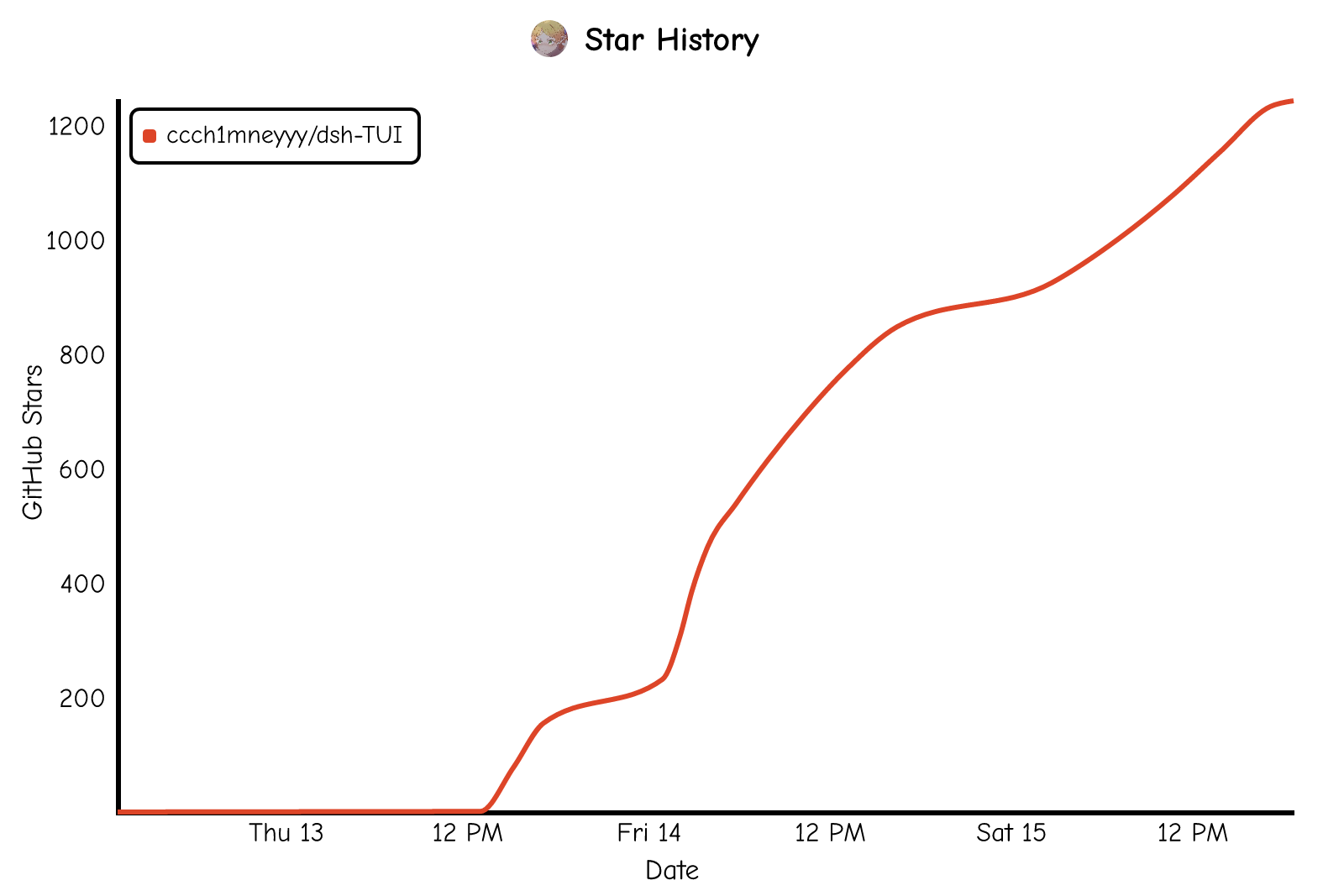
A beautiful, practical Claude Code-style TUI plugin with pixel whale top bar, flowing glow title, real-time status line, streaming thought expansion, time rewind, context progress bar and TPS gauge — zero core changes.
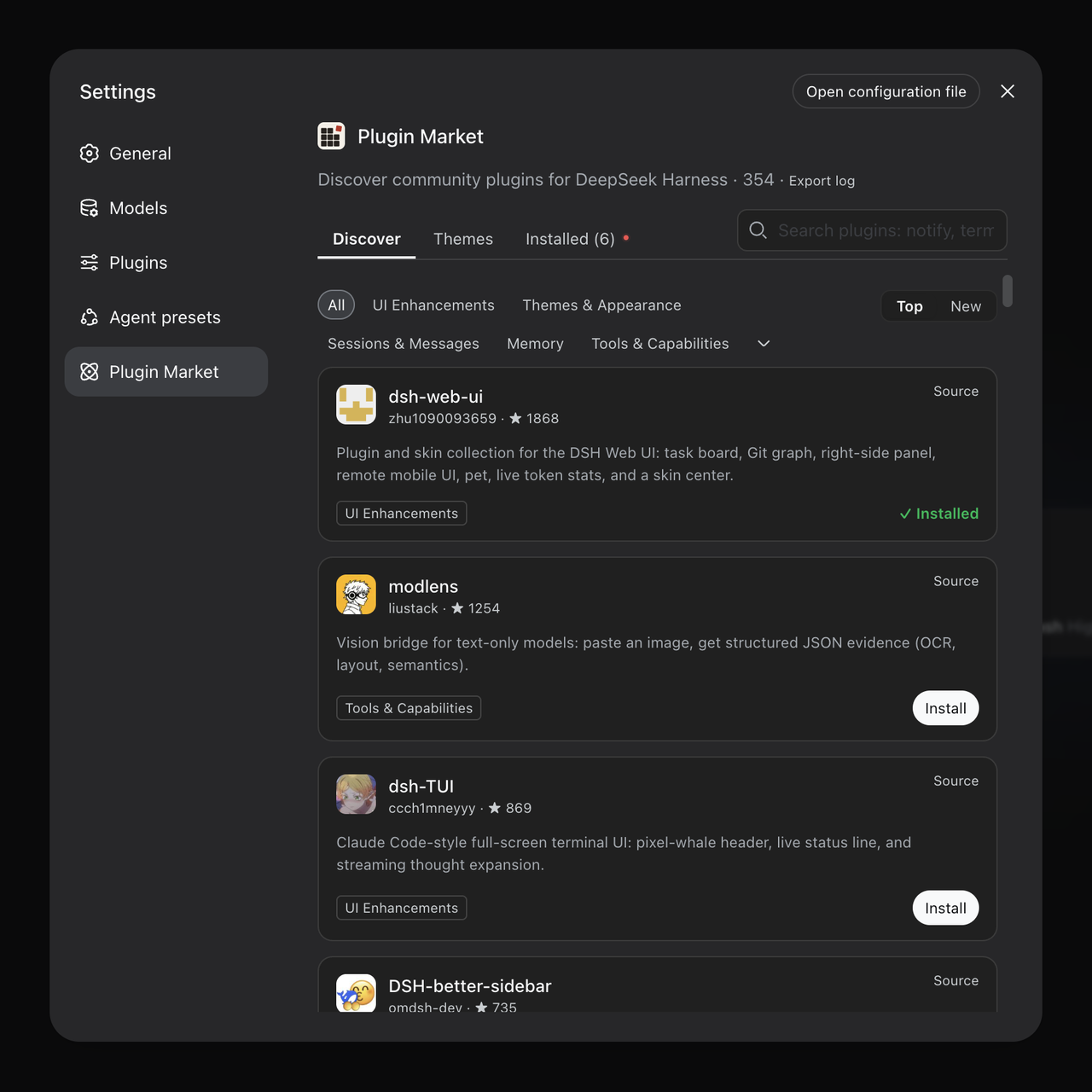
The plugin market for DeepSeek Harness: browse/search/one-click install community plugins and themes, with updates, backup/restore, hot disable, diagnostics, and AI fix.

A persistent whale widget on the DSH web UI that shows DeepSeek balance, today's usage, and per-turn cost, with drag-and-snap and sound effects.